Cropping Patterns in India: Factors, Changes and Challenges
12 Nov 2026
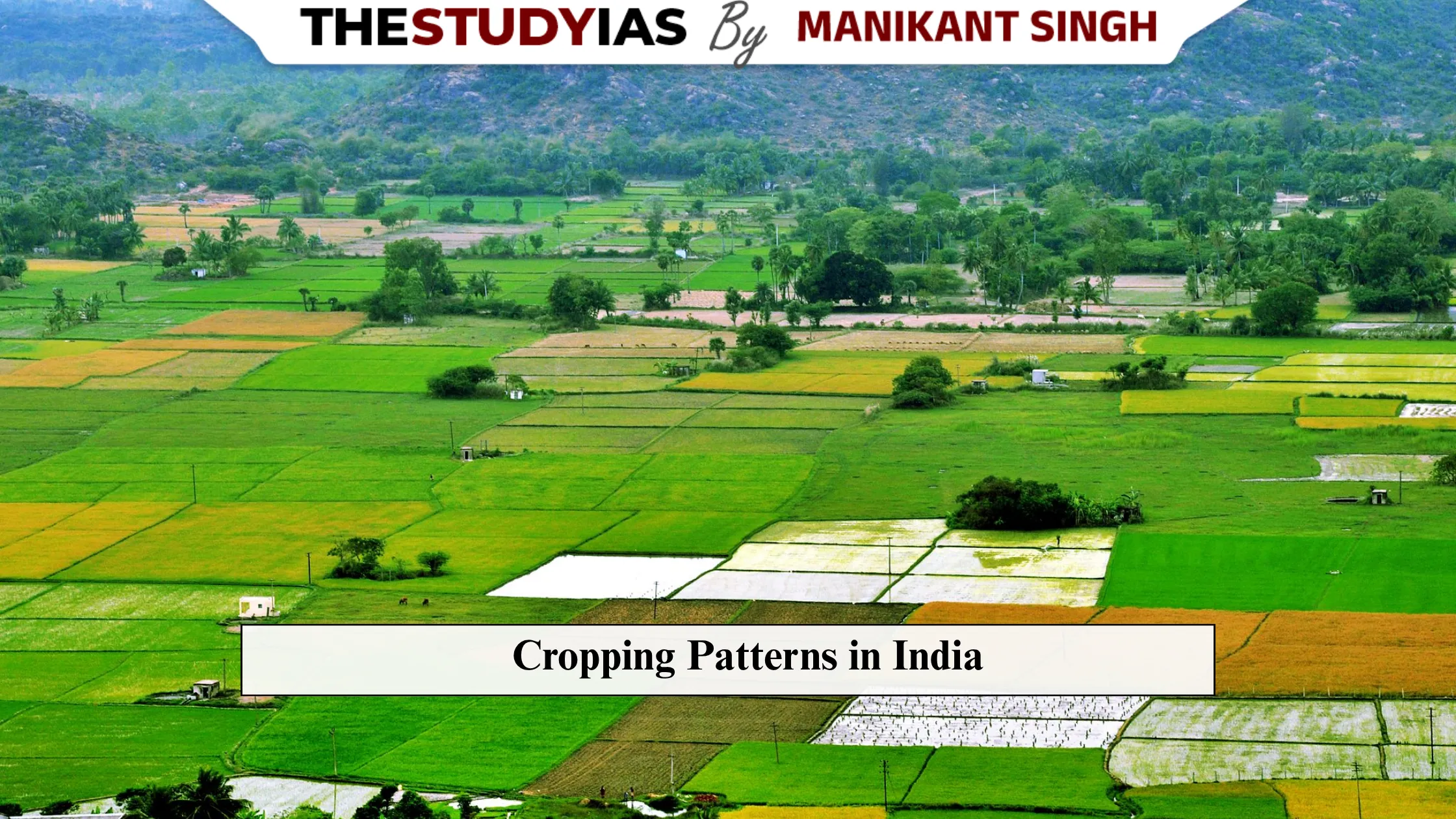
Cropping Patterns in India: Factors, Changes and Challenges
Agriculture is one of the most important sectors of the Indian economy, supporting food security, rural employment and industrial development. The diversity of India's climate, soil conditions, rainfall patterns and irrigation facilities has resulted in considerable regional variation in agricultural practices.
One of the most important features of Indian agriculture is its cropping pattern, which determines what crops are cultivated, where they are grown, in which seasons they are cultivated and how agricultural land is utilised. Over the years, India's cropping patterns have undergone significant changes due to the Green Revolution, irrigation expansion, technological advancements, market demand, government policies, climate change and changing consumption patterns.
However, the growing concentration of certain crops, excessive groundwater extraction, soil degradation and regional inequalities have raised concerns about the sustainability of India's agricultural system. For UPSC Civil Services Examination, cropping patterns are an important topic under GS Paper III: Major Crops and Cropping Patterns in Various Parts of the Country.
What is a Cropping Pattern?
A cropping pattern refers to the proportion of agricultural land allocated to different crops, their geographical distribution and their arrangement across agricultural seasons in a particular region or period. It explains the relationship between land utilisation, crop selection, climatic conditions, irrigation facilities and agricultural practices.
For example, Punjab and Haryana have traditionally developed a rice-wheat cropping pattern, whereas Maharashtra has significant areas under cotton, soybean and pulses. Cropping patterns are not permanent. They change according to rainfall, temperature, soil fertility, market prices, government procurement policies, technology and farmers' economic decisions.
Cropping Pattern vs Cropping System
These two concepts are related but not identical.
A cropping pattern describes the agricultural composition of a region, whereas a cropping system explains the methods and relationships through which crops are cultivated.
Major Cropping Seasons in India
India has three major cropping seasons: Kharif, Rabi and Zaid. These seasons are largely influenced by the southwest monsoon, winter temperatures and the availability of irrigation.
Kharif Crops
Kharif crops are generally sown with the onset of the southwest monsoon and harvested towards the end of the monsoon or during autumn. They generally require warm temperatures and, depending on the crop, adequate rainfall. Major Kharif crops include rice, maize, cotton, soybean, groundnut, jowar and bajra.
Rabi Crops
Rabi crops are generally sown during the winter season and harvested in spring. They require relatively cool conditions during their growing period. Many Rabi crops benefit from irrigation, particularly in regions with limited winter rainfall. Major Rabi crops include wheat, gram, mustard, barley, peas and lentils.
Zaid Crops
Zaid crops are cultivated during the short period between the Rabi and Kharif seasons. These crops generally depend on irrigation because rainfall is often limited during this period. Major Zaid crops include watermelon, muskmelon, cucumber and summer vegetables.
Major Crops and Their Regional Distribution in India
India's agricultural diversity is reflected in the regional distribution of foodgrains, pulses, oilseeds, commercial crops and horticultural crops.
Rice
Rice is a major foodgrain crop and an important part of India's food security system. It generally requires warm temperatures, adequate moisture and a suitable supply of water during its growing period. Major rice-producing states: West Bengal, Uttar Pradesh, Punjab, Telangana, Andhra Pradesh, Odisha, Chhattisgarh and Tamil Nadu. Rice cultivation is widespread in eastern, southern and northern irrigated regions of India.
Wheat
Wheat is a major Rabi crop cultivated primarily in northern and central India. It requires relatively cool conditions during the growing period and dry, sunny weather during maturation and harvesting. Major wheat-producing states: Uttar Pradesh, Madhya Pradesh, Punjab, Haryana, Rajasthan and Bihar.
Millets
Millets such as jowar, bajra and ragi are important for nutritional security and climate-resilient agriculture.
They can be cultivated under a range of agro-climatic conditions, including relatively dry regions.
Bajra: Rajasthan, Uttar Pradesh, Haryana and Gujarat.
Jowar: Maharashtra, Karnataka, Telangana and Madhya Pradesh.
Ragi: Karnataka, Tamil Nadu, Uttarakhand and Odisha.
Millets have gained importance because of their nutritional value, relatively lower water requirements in many growing conditions and suitability for diversified farming systems.
Pulses
Pulses are important sources of plant-based protein. They also improve soil fertility through biological nitrogen fixation. Major pulses include gram, tur, urad, moong and lentil. Important producing regions include Madhya Pradesh, Maharashtra, Rajasthan, Uttar Pradesh, Karnataka and Andhra Pradesh.
Oilseeds
Oilseeds are important for edible oil production and industrial applications.
Major oilseed crops include mustard, soybean, groundnut, sunflower, sesame and rapeseed.
Soybean: Madhya Pradesh, Maharashtra and Rajasthan.
Groundnut: Gujarat, Rajasthan, Tamil Nadu and Andhra Pradesh.
Mustard: Rajasthan, Uttar Pradesh, Haryana and Madhya Pradesh.
Increasing domestic oilseed production is important for reducing India's dependence on edible oil imports.
Commercial Crops
Commercial crops are primarily cultivated for industrial processing, domestic markets and exports.
Cotton: Gujarat, Maharashtra, Telangana, Rajasthan and Punjab.
Sugarcane: Uttar Pradesh, Maharashtra, Karnataka, Tamil Nadu and Bihar.
Jute: West Bengal, Bihar, Assam and Odisha.
Tea: Assam, West Bengal, Tamil Nadu and Kerala.
Coffee: Karnataka, Kerala and Tamil Nadu.
These crops support agro-based industries, exports and rural employment.
Factors Affecting Cropping Patterns in India
Cropping patterns are influenced by a combination of geographical, climatic, economic, technological and institutional factors.
Geographical Factors
Soil Characteristics
Soil fertility, texture, depth, drainage and moisture-retention capacity influence the suitability of crops in a particular region. For example, black soil is particularly suitable for cotton cultivation because of its clay content and moisture-retention capacity. Alluvial soils support a wide variety of crops, including rice, wheat and sugarcane.
Topography
The slope and elevation of land influence agricultural activities. Plains generally support mechanised farming, while hilly regions may favour terrace cultivation, horticulture and plantation crops.
Availability of Water
Water availability is one of the most important factors determining crop selection. Regions with reliable irrigation can support multiple cropping and water-intensive crops, whereas dry regions often depend on drought-tolerant crops.
Climatic Factors
Rainfall
The amount, distribution and timing of rainfall influence crop selection and agricultural productivity. Rice generally requires relatively high water availability, whereas crops such as bajra and some pulses can be cultivated under comparatively dry conditions.
Temperature
Different crops require different temperature conditions during sowing, growth, flowering and maturation. For example, wheat generally requires cooler conditions during vegetative growth, while rice requires relatively warm conditions.
Length of Growing Season
The duration between sowing and harvesting influences the selection of short-duration and long-duration crop varieties.
Economic Factors
Market Demand and Prices
Farmers generally consider market demand, expected prices and the availability of buyers before selecting crops. Higher prices for particular commodities may encourage farmers to shift towards their cultivation.
Minimum Support Price (MSP)
Government-announced MSPs influence farmers' production decisions, particularly where procurement arrangements are accessible and reliable. However, the impact of MSP depends on actual procurement, market access and regional conditions.
Availability of Agricultural Credit
Access to institutional credit enables farmers to purchase quality seeds, fertilisers, machinery and irrigation equipment. Credit availability can influence both crop selection and investment decisions.
Storage and Transportation Facilities
The availability of warehouses, cold storage, roads and processing facilities influences farmers' ability to cultivate perishable and commercial crops.
Technological Factors
High-Yielding Variety Seeds
The adoption of high-yielding variety seeds has changed cropping patterns by improving productivity and encouraging the cultivation of selected crops.
Mechanisation
Tractors, harvesters, seed drills and other agricultural machinery influence crop choices by reducing labour requirements and enabling timely agricultural operations.
Irrigation Technology
Drip irrigation, sprinkler systems and groundwater extraction have expanded the range of crops that can be cultivated in different regions.
Agricultural Research
Improved seed varieties, pest-resistant crops, biotechnology and climate-resilient agricultural technologies influence cropping decisions.
Institutional and Policy Factors
Government policies also play an important role in determining cropping patterns.
These include:
MSP and procurement policies, which influence crop profitability.
Fertiliser and electricity subsidies, which affect input costs.
Irrigation programmes, which expand water availability.
Crop insurance, which reduces certain production risks.
Agricultural credit policies, which support investment.
Export and import policies, which influence domestic market prices.
Major Changes in Cropping Patterns in India
Indian cropping patterns have changed considerably since Independence. These changes reflect the influence of agricultural policies, technological development, market demand and environmental conditions.
Pre-Green Revolution Period
Before the Green Revolution, Indian agriculture was characterised by low productivity, traditional cultivation methods, limited irrigation and significant dependence on monsoon rainfall. Farmers generally cultivated a variety of crops depending on local climatic and soil conditions. Foodgrain shortages and dependence on imports were major concerns.
Green Revolution and Its Impact
The Green Revolution, introduced during the 1960s, transformed Indian agriculture through the adoption of high-yielding variety seeds, chemical fertilisers, pesticides, irrigation and improved agricultural practices. Its initial impact was particularly visible in wheat cultivation in Punjab, Haryana and western Uttar Pradesh. Rice production also increased substantially in irrigated regions.
Major changes associated with the Green Revolution:
Expansion of wheat and rice cultivation.
Increased use of chemical fertilisers and pesticides.
Expansion of irrigation facilities.
Greater mechanisation of agricultural operations.
Increased agricultural productivity.
Greater regional concentration of selected foodgrain crops.
However, the Green Revolution also contributed to regional disparities and excessive dependence on rice-wheat cultivation in certain areas.
Shift Towards Commercial Crops
Over time, farmers in several regions have shifted towards commercial crops such as cotton, sugarcane, soybean and horticultural commodities. This change has been influenced by market demand, processing industries, export opportunities and expected profitability. Commercialisation has created new income opportunities but has also increased farmers' exposure to market price fluctuations.
Expansion of Horticulture
Horticulture has become an important component of agricultural diversification. The sector includes fruits, vegetables, flowers, spices, plantation crops and medicinal plants. According to the Ministry of Agriculture and Farmers Welfare, India's horticulture production was estimated at 369.05 million tonnes in 2024-25, based on the third advance estimates. The expansion of horticulture has increased the importance of cold chains, processing facilities, transportation and organised agricultural markets.
Increasing Importance of Millets and Pulses
Growing awareness of nutritional security, climate resilience and crop diversification has increased attention towards millets and pulses. The International Year of Millets 2023, led by India's initiative and recognised by the United Nations, further strengthened the global focus on millets. Millets are increasingly promoted as nutritious crops suitable for diversified and resource-efficient agricultural systems.
Growth of Multiple Cropping
Improvements in irrigation, seeds, fertiliser use and agricultural technology have enabled farmers in several regions to cultivate more than one crop on the same agricultural land during a year. According to official land-use statistics cited in a parliamentary reply, India's cropping intensity increased from 142.5% in 2013-14 to 156.8% in 2023-24. This reflects a greater extent of multiple cropping over the period.
Important Cropping Systems Practised in India
Cropping systems describe the methods through which crops are arranged and cultivated on agricultural land.
Monocropping
Monocropping refers to cultivating the same crop on the same agricultural land repeatedly over successive seasons or years.
Advantages:
Simplifies farm management.
Facilitates specialised mechanisation.
Can support large-scale commercial production.
Limitations:
May deplete specific soil nutrients.
Can increase the risk of pest and disease outbreaks.
May reduce agricultural biodiversity.
Multiple Cropping
Multiple cropping refers to cultivating two or more crops on the same agricultural land during a single agricultural year. It helps increase land utilisation and agricultural output. Examples include cultivating rice followed by wheat or growing vegetables after harvesting a cereal crop.
Mixed Cropping
Mixed cropping involves growing two or more crops simultaneously on the same field without a distinct row arrangement. It helps reduce the risk of total crop failure because different crops may respond differently to weather and other environmental conditions. Example: Growing wheat and gram together.
Intercropping
Intercropping involves growing two or more crops simultaneously on the same field in a definite row arrangement. It can improve resource utilisation, diversify farm output and reduce certain pest-related risks. Example: Growing maize and pulses in alternate rows.
Crop Rotation
Crop rotation involves growing different crops sequentially on the same land in a planned order. It can improve soil fertility, break pest cycles and reduce the continuous depletion of specific soil nutrients. Example: Rice-wheat rotation or cereal-pulse rotation.
Relay Cropping
Relay cropping involves sowing the next crop before harvesting the standing crop. It helps reduce the time gap between successive crops. It can be useful in regions where the agricultural growing season is limited.
Regional Cropping Patterns in India
India's regional cropping patterns reflect differences in climate, soil, irrigation, agricultural infrastructure and market access.
Regional cropping patterns are not uniform within states. They vary according to local agro-climatic conditions, irrigation availability and market infrastructure.
Cropping Intensity and Its Significance
Cropping intensity refers to the number of times agricultural land is cultivated during a year.
Net Sown Area refers to the physical area sown with crops at least once during an agricultural year.
Gross Cropped Area includes the total area sown under all crops, counting the same land more than once when multiple crops are cultivated during the year.
For example, if a farmer cultivates wheat and then rice on the same one-hectare plot during a year, the net sown area is one hectare, but the gross cropped area is two hectares.
A higher cropping intensity generally indicates greater utilisation of agricultural land. However, it does not automatically mean that farming is more sustainable or profitable.
Cropping intensity can be improved through:
Expansion of irrigation facilities.
Adoption of short-duration crop varieties.
Improved agricultural technology.
Timely availability of quality seeds and inputs.
Better agricultural credit and market access.
Improved soil and water management.
Challenges Associated with Cropping Patterns in India
Despite improvements in agricultural productivity, India's cropping patterns face several structural and environmental challenges.
Excessive Dependence on Rice-Wheat Cropping System
The concentration of rice-wheat cultivation in parts of northwestern India has created concerns regarding agricultural sustainability. This system is supported by procurement arrangements, irrigation facilities and established market infrastructure. However, excessive concentration can contribute to groundwater depletion, soil nutrient imbalance and limited crop diversification.
Groundwater Depletion
The cultivation of water-intensive crops in water-stressed regions places considerable pressure on groundwater resources. Punjab, Haryana and parts of Rajasthan are particularly important examples of regions facing groundwater stress. A crop's water requirement must be considered alongside local water availability rather than relying only on its market profitability.
Soil Degradation
Continuous cultivation of the same crops, excessive chemical fertiliser use, soil erosion, salinity and inadequate organic matter management can reduce soil fertility. Long-term productivity depends on maintaining soil health and adopting balanced nutrient-management practices.
Climate Change
Changes in temperature, rainfall patterns and the frequency of extreme weather events can affect the suitability of existing cropping patterns. Droughts, floods, heatwaves and unseasonal rainfall can damage crops and create uncertainty for farmers.
Fragmented Landholdings
Small and fragmented agricultural holdings restrict mechanisation, investment and the adoption of certain advanced technologies. They can also make crop diversification and commercial-scale cultivation difficult without collective arrangements.
Market and Price Uncertainty
Farmers may hesitate to shift towards alternative crops if they lack assured buyers, storage facilities, processing infrastructure and remunerative prices. Even when a crop is suitable for a particular region, the absence of reliable market access can discourage its cultivation.
Regional Imbalances
Differences in irrigation, infrastructure, credit access and procurement facilities influence cropping decisions across states. Regions with better market access and irrigation may benefit more from agricultural diversification than areas dependent on rainfed agriculture.
Nutritional and Food Security Concerns
Excessive concentration on a few staple crops can limit the diversity of food production. Greater production of pulses, millets, fruits and vegetables can contribute to nutritional security, provided affordability and distribution are also addressed.
Government Initiatives to Promote Crop Diversification
The Government of India has introduced several programmes to improve agricultural productivity, promote alternative crops and encourage sustainable resource utilisation.
National Food Security Mission (NFSM)
The National Food Security Mission was launched in 2007–08 to increase the production of rice, wheat and pulses through area expansion and productivity enhancement. It supports improved seeds, agricultural technologies, demonstrations and better farm practices.
Pradhan Mantri Krishi Sinchayee Yojana (PMKSY)
PMKSY aims to expand irrigation coverage and improve water-use efficiency. Its guiding principles include Har Khet Ko Pani and Per Drop More Crop. Micro-irrigation technologies such as drip and sprinkler systems can help improve water-use efficiency and support crop diversification.
National Mission on Sustainable Agriculture (NMSA)
NMSA promotes sustainable agricultural practices, climate-resilient farming, efficient resource management and improved agricultural productivity.
PM-KUSUM
The Pradhan Mantri Kisan Urja Suraksha evam Utthaan Mahabhiyan promotes solar energy applications in agriculture. It supports solar power plants, standalone solar pumps and the solarisation of grid-connected agricultural pumps.
Soil Health Card Scheme
The scheme provides farmers with information on the nutrient status of their soil and recommendations for appropriate fertiliser application. It supports balanced nutrient management and helps address soil degradation.
Paramparagat Krishi Vikas Yojana (PKVY)
PKVY promotes organic farming through cluster-based approaches and support for farmers adopting organic agricultural practices.
National Mission on Natural Farming (NMNF)
The mission promotes natural farming practices and seeks to reduce dependence on externally purchased chemical inputs.
National Mission for Edible Oils - Oil Palm (NMEO-OP)
The mission aims to increase domestic crude palm oil production by expanding oil palm cultivation in suitable regions and reducing import dependence.
National Mission on Edible Oils - Oilseeds (NMEO-Oilseeds)
This mission focuses on improving domestic oilseed production through improved seeds, productivity enhancement, better post-harvest management and increased farmer participation.
PM Dhan-Dhaanya Krishi Yojana
Announced in the Union Budget 2025-26, the scheme focuses on improving agricultural productivity, irrigation, storage, crop diversification and credit access in 100 districts with relatively low agricultural productivity.
Crop Diversification: The Need of the Hour
Crop diversification refers to shifting from the cultivation of a limited number of crops towards a wider variety of crops based on agro-climatic suitability, market demand and resource availability. It is particularly important in regions where the existing cropping pattern places excessive pressure on soil and water resources.
Importance of Crop Diversification
Improved Farmers' Income
Diversification into horticulture, pulses, oilseeds and other commercial crops can create additional income opportunities.
However, higher returns depend on market access, production costs and price stability.
Water Conservation
Shifting from water-intensive crops towards suitable less water-intensive crops can reduce pressure on groundwater resources.
Improved Soil Health
Crop rotation, pulses and diversified cropping systems can help improve soil fertility and reduce the continuous depletion of specific nutrients.
Nutritional Security
Greater production of pulses, millets, fruits and vegetables can improve the availability of diverse and nutritious foods.
Climate Resilience
Diversified farming systems can reduce dependence on a single crop and help farmers manage certain climate-related risks.
Major Challenges in Crop Diversification
Lack of assured markets for alternative crops.
Inadequate storage and processing infrastructure.
Limited awareness and access to quality seeds.
Existing MSP and procurement incentives favouring selected crops in some regions.
Farmers' reluctance to shift from established cultivation practices.
Inadequate institutional credit and technical support.
Way Forward for Crop Diversification
Crop diversification should be based on agro-climatic suitability, water availability, market demand and farmers' income requirements. Government support should focus on strengthening alternative crop value chains, improving procurement and marketing arrangements, promoting FPOs, expanding food processing and providing region-specific agricultural extension services.
Way Forward: Towards Sustainable Cropping Patterns
India needs to move from production-oriented crop selection towards a system that balances agricultural productivity, farmers' income and ecological sustainability.
Promote Agro-Climatic Planning
Crop selection should be based on local soil conditions, rainfall, temperature and water availability. Region-specific agricultural planning can prevent unsuitable crop concentration.
Strengthen Agricultural Markets
Farmers need reliable markets for pulses, oilseeds, millets and horticultural crops. Better procurement, storage, processing and transportation facilities can encourage diversification.
Improve Irrigation Efficiency
Drip irrigation, sprinkler systems, watershed development and rainwater harvesting should be promoted, particularly in water-stressed regions.
Encourage Crop Rotation and Mixed Cropping
Crop rotation, intercropping and mixed cropping can improve soil health, diversify output and reduce certain production risks.
Strengthen Agricultural Research
Agricultural universities and ICAR institutions should develop crop varieties suited to local climatic conditions, changing rainfall patterns and emerging pest challenges.
Promote Farmer Producer Organisations
FPOs can help small farmers aggregate their produce, access inputs, improve bargaining power and connect with organised markets.
Reform Agricultural Incentives
Price-support and subsidy policies should encourage sustainable crop choices and efficient use of water, fertilisers and energy.
Strengthen Climate-Resilient Agriculture
Weather forecasting, drought-tolerant varieties, crop insurance, soil conservation and agricultural advisories should be expanded.
Improve Storage and Food Processing
Cold chains, warehouses, grading facilities and agro-processing industries can reduce post-harvest losses and improve farmers' returns from diversified crops.
Cropping Patterns and UPSC GS Paper III Syllabus
Cropping patterns are directly mentioned in the UPSC GS Paper III syllabus under:
Major crops and cropping patterns in various parts of the country.
The topic is also connected with several other areas:
For Mains answers, connect cropping patterns with food security, farmers' income, ecological sustainability, water conservation and climate resilience.
Important Prelims Facts
Kharif crops: Generally sown with the southwest monsoon.
Rabi crops: Generally sown during winter.
Zaid crops: Cultivated between Rabi and Kharif seasons.
Cropping intensity: Ratio of gross cropped area to net sown area, multiplied by 100.
Multiple cropping: Cultivation of more than one crop on the same agricultural land during a year.
Mixed cropping: Growing two or more crops simultaneously without a distinct row arrangement.
Intercropping: Growing two or more crops simultaneously in a definite row arrangement.
Crop rotation: Growing different crops sequentially on the same land.
Green Revolution: Associated with the increased use of high-yielding varieties, irrigation, fertilisers and improved agricultural practices.
ICAR: Indian Council of Agricultural Research, the apex organisation coordinating agricultural research and education in India.
Practice MCQs
Q1. Consider the following statements regarding cropping intensity:
It is calculated using gross cropped area and net sown area.
It indicates the extent of multiple cropping.
A higher cropping intensity always indicates sustainable agricultural practices.
Which of the statements given above is/are correct?
(a) 1 only
(b) 1 and 2 only
(c) 2 and 3 only
(d) 1, 2 and 3
Answer: (b) 1 and 2 only
Explanation: Cropping intensity measures the extent of land utilisation through multiple cropping. A higher value does not automatically indicate sustainability because intensive cultivation can also increase pressure on soil and water resources.
Q2. With reference to cropping systems, consider the following statements:
Mixed cropping involves growing two or more crops simultaneously without a distinct row arrangement.
Intercropping involves growing crops in a definite row arrangement.
Crop rotation involves cultivating the same crop continuously on the same land.
Which of the statements given above is/are correct?
(a) 1 and 2 only
(b) 2 and 3 only
(c) 1 and 3 only
(d) 1, 2 and 3
Answer: (a) 1 and 2 only
Explanation: Crop rotation involves growing different crops sequentially on the same land, not cultivating the same crop continuously.
Q3. Which of the following factors influence cropping patterns in India?
Soil characteristics
Availability of irrigation
Market demand
Government procurement policies
Select the correct answer:
(a) 1 and 2 only
(b) 1, 2 and 3 only
(c) 2, 3 and 4 only
(d) 1, 2, 3 and 4
Answer: (d) 1, 2, 3 and 4
Explanation: Cropping patterns are influenced by geographical, climatic, economic, technological and institutional factors.
Q4. Consider the following statements about crop diversification:
It can reduce excessive dependence on a limited number of crops.
It can support soil health and resource conservation.
It guarantees higher income to every farmer.
Which of the statements given above is/are correct?
(a) 1 and 2 only
(b) 2 and 3 only
(c) 1 and 3 only
(d) 1, 2 and 3
Answer: (a) 1 and 2 only
Explanation: Crop diversification can improve resilience and resource management, but higher income is not guaranteed. Market access, production costs and price realisation remain important.
UPSC Mains Practice Questions
What are cropping patterns? Examine the geographical, climatic and economic factors influencing cropping patterns in India. (GS Paper III)
Discuss the changes in India's cropping patterns since the Green Revolution. What are the major environmental consequences of these changes? (GS Paper III)
Excessive dependence on the rice-wheat cropping system has created serious sustainability concerns in northwestern India. Examine. (GS Paper III)
Crop diversification is essential for improving farmers' income and ensuring sustainable agriculture. Discuss the challenges associated with its adoption in India. (GS Paper III)
Explain the significance of cropping intensity in Indian agriculture. What factors influence its regional variation? (GS Paper III)
How can agro-climatic planning and efficient irrigation practices help transform cropping patterns in India? (GS Paper III)
Frequently Asked Questions
What is a cropping pattern?
A cropping pattern refers to the proportion of agricultural land allocated to different crops, their geographical distribution and their arrangement across agricultural seasons in a particular region.
What are the three major cropping seasons in India?
India has three major cropping seasons: Kharif, Rabi and Zaid. Kharif crops are generally sown during the monsoon, Rabi crops during winter and Zaid crops between the two main seasons.
What are the major factors affecting cropping patterns in India?
The major factors include soil characteristics, rainfall, temperature, irrigation facilities, market demand, agricultural technology, MSP, subsidies, credit availability and government procurement policies.
What is the difference between mixed cropping and intercropping?
Mixed cropping involves growing two or more crops simultaneously without a distinct row arrangement, whereas intercropping involves cultivating crops in a definite row arrangement.
What is crop diversification?
Crop diversification refers to shifting from a limited number of crops towards a wider variety of crops, such as pulses, oilseeds, millets and horticultural crops, to improve agricultural resilience and income opportunities.
Why is the rice-wheat cropping system considered unsustainable in some regions?
In parts of northwestern India, continuous rice-wheat cultivation has contributed to groundwater depletion, soil nutrient imbalance and limited crop diversification. Its sustainability depends on local water availability and resource-management practices.
How is cropping intensity calculated?
Cropping intensity is calculated by dividing gross cropped area by net sown area and multiplying the result by 100.
Conclusion
Cropping patterns are a reflection of India's geographical diversity, agricultural policies, technological development and changing economic priorities. Although the Green Revolution strengthened foodgrain production and food security, the excessive concentration of selected crops in certain regions has created serious environmental and economic challenges.
The future of Indian agriculture depends on moving towards region-specific, diversified and climate-resilient cropping patterns. Better irrigation management, improved agricultural markets, crop diversification, sustainable farming practices and stronger institutional support can help achieve this transition.
India must move beyond the narrow objective of increasing production towards a broader agricultural strategy that ensures food security, farmers' income, nutritional diversity and ecological sustainability.
For more UPSC-oriented articles and preparation resources, explore The Study IAS.
Subscribe to our Youtube Channel for more Valuable Content –TheStudyias
Download the App to Subscribe to our Courses –Thestudyias
The Source’s Authority and Ownership of the Article is Claimed ByTHE STUDY IAS BY MANIKANT SINGH
Comments (0)
Leave a Comment