Terrorism in India: Causes, Financing and Counter Terror Framework
17 Nov 2026
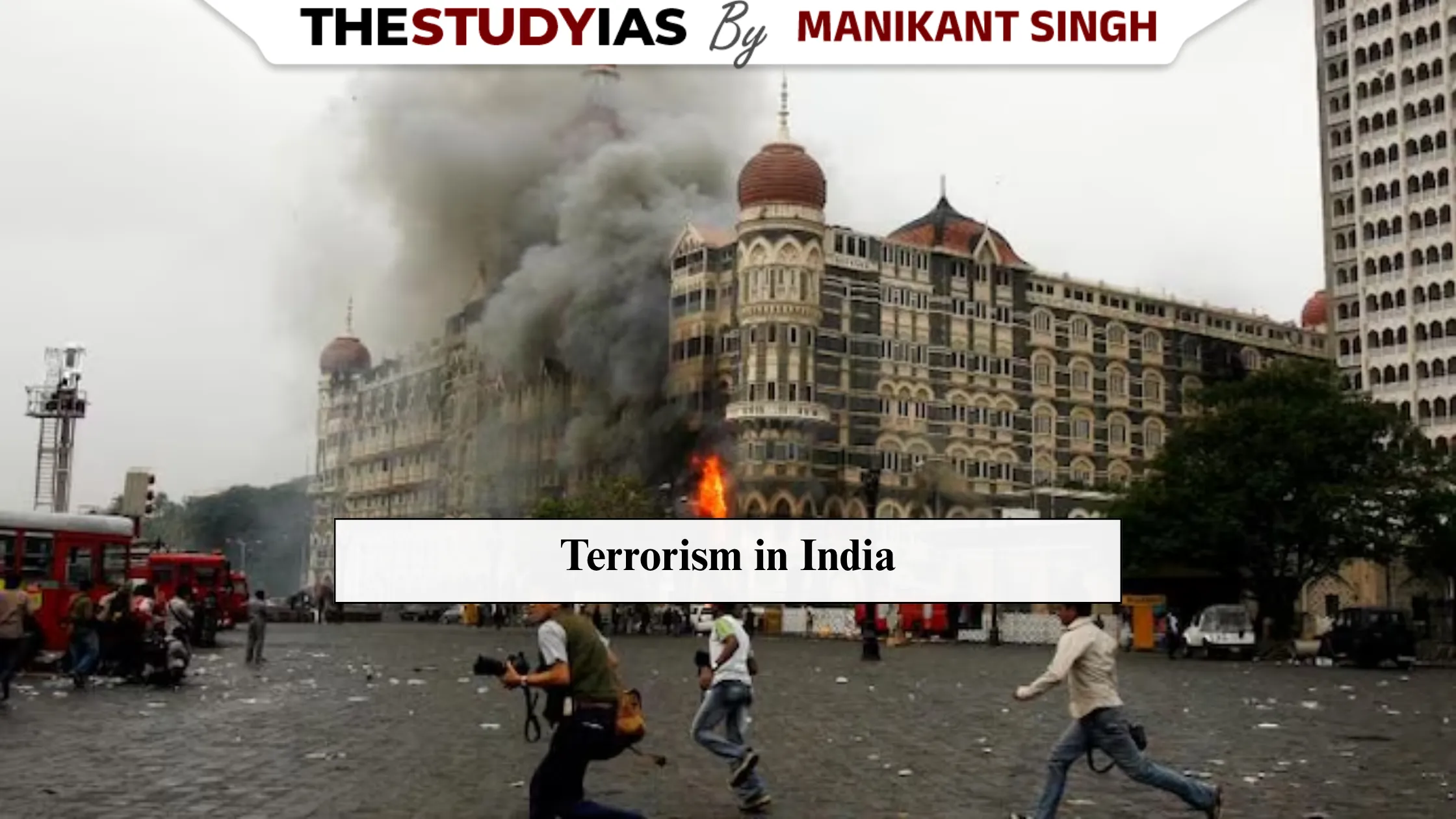
Terrorism in India: Causes, Financing and Counter Terror Framework
Terrorism in India remains one of the most complex challenges to national security, sovereignty and internal stability. It threatens not only the lives of citizens but also economic development, social harmony, democratic institutions and the territorial integrity of the country. India's security environment is particularly complex because terrorism can emerge through cross-border networks, insurgent movements, radicalisation, organised criminal groups and the misuse of modern communication technologies.
Unlike conventional security threats, terrorism does not always involve direct military confrontation. Terrorist organisations increasingly operate through decentralised networks, online recruitment, encrypted communication, financial channels and cross-border support systems. Their activities may involve attacks on civilians, security establishments, public infrastructure and strategic installations.
For India, terrorism has both internal and external dimensions. Cross-border terrorism, radicalisation, insurgency, terror financing, drone-based infiltration and online extremist propaganda create interconnected security challenges. Consequently, India's counter-terrorism strategy requires more than security operations. It demands effective intelligence coordination, financial monitoring, strong legal institutions, international cooperation and inclusive development.
For UPSC aspirants, terrorism is an important topic under General Studies Paper 3 (GS Paper 3), particularly the syllabus area dealing with the role of external state and non-state actors in creating challenges to internal security and the linkages between organised crime and terrorism.
What is Terrorism?
Terrorism generally refers to the deliberate use or threat of violence against civilians, public institutions or other targets to create fear and achieve political, ideological, religious or strategic objectives.
There is no universally accepted comprehensive definition of terrorism under international law. However, several international conventions and United Nations Security Council resolutions address specific terrorist activities and require countries to prevent, criminalise and prosecute them.
Terrorism differs from ordinary criminal activity because its objectives often extend beyond immediate financial or personal gains. Terrorist organisations seek to influence governments, destabilise institutions, spread ideological beliefs or challenge the constitutional and territorial order. In India, the Unlawful Activities (Prevention) Act, 1967 (UAPA) provides the principal statutory framework for dealing with terrorist organisations, terrorist activities and related offences.
Nature and Types of Terrorism in India
India faces different forms of terrorism depending on geographical conditions, political circumstances, organisational structures and external influences.
Cross-Border Terrorism
Cross-border terrorism involves terrorist activities supported, organised or facilitated through networks operating across international borders. Such activities may involve infiltration, training, weapons supply, financial support and logistical assistance.
India has faced this challenge particularly along the India-Pakistan border and in Jammu and Kashmir. Cross-border networks exploit geographical vulnerabilities and local support structures to carry out attacks and destabilise security conditions.
The 1999 IC-814 hijacking, the 2001 Parliament attack and the 26/11 Mumbai terrorist attacks of 2008 are important examples for understanding the evolution of India's counter-terrorism challenges.
Religious Extremism and Radicalisation
Religious extremism becomes a security concern when individuals or organisations justify violence against others to achieve ideological objectives. Radicalisation refers to a process through which individuals increasingly adopt extremist beliefs that may lead them towards support for or participation in violence. Online propaganda, misinformation, extremist networks and recruitment through digital platforms can accelerate this process. However, it is important not to equate any religion or community with terrorism. Counter-radicalisation must focus on violent extremist behaviour rather than religious identity.
Separatist and Ethno-Nationalist Terrorism
Certain movements in India have historically used violence to pursue demands related to political separation, autonomy or ethnic identity. Such challenges have been witnessed in parts of Northeast India and other conflict-affected regions. Historical grievances, ethnic tensions, political exclusion and external support have contributed to the emergence of armed movements. However, not every separatist demand or political movement constitutes terrorism. The use of organised violence against civilians and institutions is an important distinction.
Left-Wing Extremist Violence
Left-Wing Extremism (LWE) is an armed movement influenced by Maoist ideology that seeks to challenge the authority of the Indian state through revolutionary violence.
The movement originated in Naxalbari, West Bengal, in 1967 and subsequently expanded into several parts of central and eastern India.
LWE-related violence has historically involved attacks on security personnel, infrastructure, government establishments and civilians. Its spread has been associated with a combination of governance deficits, socio-economic grievances, land alienation and ideological mobilisation.
Although LWE is generally examined separately under the UPSC syllabus, it is important to understand its relationship with the broader internal security framework.
Cyberterrorism
Cyberterrorism refers to the use of computer networks and digital technologies to carry out or facilitate terrorist activities, particularly where such activities threaten national security or critical infrastructure. Terrorist organisations may misuse digital platforms for propaganda, recruitment, communication, fundraising and coordination. Attacks targeting critical digital infrastructure can also create serious security consequences. The increasing availability of artificial intelligence, encrypted communication and digital financial services has introduced additional challenges for counter-terrorism agencies.
Causes of Terrorism in India
Terrorism does not emerge from a single cause. It develops through a combination of political, economic, social, ideological, geographical and external factors. Understanding these causes is essential for designing an effective counter-terrorism strategy.
Political and Historical Grievances
Historical conflicts, political alienation, disputed territorial claims and demands for self-determination have contributed to insurgency and terrorist activities in certain regions. In areas affected by long-standing conflicts, perceived political exclusion and a lack of trust in institutions can create conditions that extremist organisations attempt to exploit. However, historical grievances do not automatically lead to terrorism. The transition from political dissatisfaction to organised violence often involves extremist mobilisation, recruitment and external assistance.
Socio-Economic Inequality and Development Deficits
Poverty, unemployment, inadequate infrastructure, limited educational opportunities and weak governance can increase vulnerability to extremist mobilisation. In regions where citizens experience poor access to justice, public services and economic opportunities, extremist organisations may exploit dissatisfaction to recruit supporters. However, it would be incorrect to suggest that poverty directly causes terrorism. Many economically disadvantaged individuals never support violence. Socio-economic exclusion is a potential enabling condition, not a sufficient explanation for terrorism.
Religious and Ideological Extremism
Extremist ideologies can be used to justify violence, create hostility towards particular communities and encourage individuals to participate in terrorist activities. Propaganda networks often distort religious, political or historical narratives to legitimise violence and recruit vulnerable individuals. Countering such threats requires community engagement, education, responsible online communication and effective action against organisations promoting violence.
External State and Non-State Actors
External actors can support terrorism through financial assistance, weapons, training, recruitment, propaganda and logistical networks. State-sponsored support to terrorist organisations can make counter-terrorism particularly challenging because it introduces an international security and diplomatic dimension. Non-state actors such as transnational terrorist networks, criminal organisations and extremist groups may also provide operational and financial assistance.
This is particularly relevant to the UPSC syllabus concerning the role of external state and non-state actors in creating challenges to India's internal security.
Porous Borders and Geographical Vulnerabilities
India's extensive land borders, mountainous terrain, forests, riverine boundaries and coastline create challenges for effective border surveillance. Terrorist networks may exploit vulnerable routes for infiltration, arms smuggling, drug trafficking and movement of personnel. The use of drones and advanced communication technologies has further complicated border management, requiring technological modernisation and improved intelligence coordination.
Online Radicalisation and Social Media
Social media platforms and digital communication networks have created new opportunities for extremist organisations to spread propaganda and influence vulnerable individuals. Online radicalisation can occur through extremist content, closed digital communities, encrypted messaging and misinformation. Digital platforms may also be misused for recruitment, fundraising and the coordination of terrorist activities.
Therefore, cybersecurity, digital literacy and responsible platform governance have become important components of India's counter-terrorism strategy.
Terror Financing: Meaning, Sources and Methods
Terror financing refers to the collection, movement, management or provision of funds and financial resources used to support terrorist organisations or terrorist activities. Financial resources are essential for maintaining organisational networks, recruitment, communication, transportation, logistics and operational activities. Without financial support, terrorist organisations face difficulties in sustaining their activities.
Unlike conventional criminal financing, terrorist financing may involve both illegal and apparently legitimate sources of funds. Therefore, tracking the movement of money is a critical part of counter-terrorism.
Major Sources of Terror Financing
Cross-border funding is one of the important sources of terrorist financing in India's security environment. Funds may originate from foreign-based networks, external supporters and transnational organisations.
Drug trafficking and narcotics trade can generate substantial illegal proceeds that may be used to support terrorist organisations. The relationship between drug trafficking and terrorism is often described as the narco-terrorism nexus.
Hawala networks involve informal channels through which money is transferred without conventional banking transactions. Their lack of transparency can make it difficult for enforcement agencies to trace the origin and destination of funds.
Extortion and kidnapping for ransom may be used by terrorist organisations to generate financial resources, particularly in conflict-affected regions.
Illegal arms trafficking and organised crime can provide both financial resources and logistical support to terrorist groups.
Misuse of legitimate businesses and non-profit organisations can also create opportunities for disguising the origin or destination of funds. However, legitimate charitable organisations should not be treated as suspicious merely because of their organisational form.
Digital financial channels and cryptocurrencies can create additional monitoring challenges because of cross-border transactions, pseudonymous addresses and the use of complex financial intermediaries.
The Financial Action Task Force's 2024 Mutual Evaluation Report on India identifies foreign-linked sources, criminal proceeds, narcotics trafficking, illicit arms, misuse of non-profit organisations, cash couriers and hawala mechanisms among the relevant terrorist-financing risks in India.
Stages of Money Laundering and Their Linkages with Terror Financing
Money laundering and terrorist financing are closely connected, although they are not identical.
Money laundering generally involves three stages.
Placement refers to introducing illegally obtained money into the financial system or economy.
Layering involves conducting multiple transactions to conceal the original source and ownership of funds.
Integration refers to bringing the funds back into the economy in a form that appears legitimate.
Terror financing can operate differently because funds may originate from both legal and illegal sources. Consequently, financial investigations must examine not only the origin of money but also its intended use and beneficiaries.
Narco-Terrorism Nexus
The narco-terrorism nexus refers to the relationship between drug trafficking networks and terrorist organisations. Drug trafficking generates illegal financial resources that may be used to fund terrorist activities. In certain cases, criminal networks may also provide transportation, weapons and logistical support.
India's geographical position between major drug-producing regions makes this issue particularly important. The Golden Crescent and Golden Triangle are relevant geographical concepts in understanding regional narcotics trafficking and its potential security implications.
Addressing this nexus requires coordination among the Narcotics Control Bureau (NCB), NIA, intelligence agencies, border forces and international law enforcement organisations.
India's Counter-Terrorism Legal Framework
India has developed a comprehensive legal framework to investigate terrorist activities, prosecute offenders, restrict terrorist organisations and disrupt financial support networks.
Unlawful Activities (Prevention) Act, 1967
The Unlawful Activities (Prevention) Act, 1967 (UAPA) is India's principal anti-terror legislation. Originally enacted to address unlawful activities threatening India's sovereignty and territorial integrity, the law has been amended several times to strengthen its counter-terrorism provisions.
The 2004 amendment introduced provisions dealing with terrorist organisations and activities after the repeal of the Prevention of Terrorism Act (POTA), 2002.
The 2008 amendment, introduced after the Mumbai terrorist attacks, strengthened the legal framework for dealing with terrorism and related offences.
The 2012 amendment expanded provisions relating to terrorist financing and international obligations.
The 2019 amendment empowered the Central Government to designate individuals, in addition to organisations, as terrorists under the Act.
Important provisions include:
Section 15: Defines a terrorist act.
Section 16: Provides punishment for terrorist acts.
Section 17: Deals with punishment for raising funds for terrorist acts.
Section 18: Deals with punishment for conspiracy and other specified activities relating to terrorist acts.
Section 20: Addresses membership of terrorist gangs or organisations involved in terrorist acts.
Section 35: Provides for the inclusion of organisations and individuals in the relevant schedules under the Act.
Section 43D: Contains special provisions relating to investigation, bail and other procedural matters.
The UAPA is an important instrument for counter-terrorism. However, its implementation must remain consistent with constitutional safeguards, due process and judicial oversight.
National Investigation Agency Act, 2008
The National Investigation Agency (NIA) Act, 2008 was enacted following the 26/11 Mumbai terrorist attacks. It established the National Investigation Agency as a specialised central agency responsible for investigating and prosecuting offences affecting national security.
The NIA Amendment Act, 2019 expanded its jurisdiction to cover additional scheduled offences and enabled investigation of specified offences committed outside India that affect Indian interests, subject to statutory conditions. The NIA plays an important role in investigating terrorism, terror financing, cyberterrorism and other scheduled offences.
Prevention of Money Laundering Act, 2002
The Prevention of Money Laundering Act, 2002 (PMLA) provides the legal framework for preventing money laundering and confiscating proceeds of crime. The Directorate of Enforcement (ED) investigates money laundering offences under this legislation.
Its relevance to counter-terrorism lies in tracing and attaching proceeds of crime connected with terrorist activities and disrupting the financial networks that sustain organised criminal and terrorist groups.
Bharatiya Nyaya Sanhita, 2023
The Bharatiya Nyaya Sanhita, 2023 (BNS) replaced the Indian Penal Code, 1860, with effect from 1 July 2024. Section 113 specifically deals with terrorist acts and provides a statutory framework for addressing specified terrorist activities. The provision should be studied alongside the UAPA, particularly while understanding the legal framework governing terrorism in India.
Other Relevant Legal Frameworks
The Arms Act, 1959 regulates the acquisition, possession and use of arms and ammunition.
The Explosive Substances Act, 1908 addresses offences involving explosive substances.
The National Security Act, 1980 provides for preventive detention under specified circumstances and subject to statutory safeguards.
These laws complement India's broader security architecture, although they serve different legal purposes and should not be treated as interchangeable anti-terror statutes.
Institutional Framework for Counter-Terrorism in India
An effective counter-terrorism framework requires coordination among intelligence agencies, investigative organisations, security forces, financial regulators and international institutions. India has established several specialised mechanisms to prevent terrorist activities, investigate networks and disrupt financial support.
National Investigation Agency (NIA)
The National Investigation Agency (NIA) is India's principal specialised central counter-terrorism investigation agency. It was established under the NIA Act, 2008, following the 26/11 Mumbai attacks. The agency investigates and prosecutes scheduled offences related to terrorism, terror financing, organised crime with terror linkages and other offences affecting national security.
The NIA also works with State Police forces and other central agencies to investigate complex cases involving multiple jurisdictions. Its specialised investigative capacity is important for tracing terrorist networks, collecting evidence and securing prosecutions.
Intelligence Bureau (IB)
The Intelligence Bureau (IB) is India's principal domestic intelligence organisation. It collects and analyses intelligence relating to internal security threats, extremist activities, terrorist networks and potential threats to public order. Its intelligence inputs support preventive action by security and law enforcement agencies. Timely intelligence sharing is particularly important for preventing terrorist attacks.
Research and Analysis Wing (R&AW)
The Research and Analysis Wing (R&AW) is India's external intelligence agency. It focuses on gathering foreign intelligence relevant to India's national security and strategic interests. Its external intelligence role is important in understanding cross-border terrorist networks, external support structures and developments in neighbouring regions that may affect India's security.
Multi Agency Centre (MAC)
The Multi Agency Centre (MAC) functions under the Intelligence Bureau and facilitates intelligence-sharing among central and state security agencies. It provides an institutional mechanism for collecting, analysing and disseminating intelligence relating to terrorism and other internal security threats. The strengthening of MAC connectivity to district-level agencies is particularly important because counter-terrorism requires coordination between national intelligence organisations and local law enforcement.
National Security Guard (NSG)
The National Security Guard (NSG) is a specialised counter-terrorism force established in 1986. It is trained to handle specialised security situations, including counter-terrorism operations, hostage rescue and other high-risk interventions. The NSG played an important role during the 26/11 Mumbai terrorist attacks, highlighting the need for specialised forces capable of responding to complex terrorist incidents.
Combating Financing of Terrorism Cell (CFT Cell)
The Combating Financing of Terrorism (CFT) Cell was established in the Ministry of Home Affairs in 2011.
It coordinates with intelligence and enforcement agencies to prevent terrorist financing. Its responsibilities include policy coordination, financial investigations, international cooperation and action relating to the freezing, seizure or attachment of funds and assets under applicable legal provisions.
The CFT Cell also coordinates India's engagement with international organisations such as the Financial Action Task Force (FATF).
Terror Funding and Fake Currency Cell (TFFC)
The Terror Funding and Fake Currency Cell (TFFC) functions under the NIA. It focuses on investigating and prosecuting cases relating to terrorist financing and fake Indian currency networks. Its work is important because counterfeit currency and other criminal financial activities can potentially support organised terrorist networks.
Financial Intelligence Unit - India (FIU-IND)
The Financial Intelligence Unit – India (FIU-IND) receives, processes, analyses and disseminates information relating to suspicious financial transactions. It plays an important role in identifying potential money laundering and terrorist financing networks by examining financial information and sharing relevant intelligence with enforcement agencies.
International Framework for Countering Terrorism
Terrorism frequently operates across national borders. Terrorist organisations may use international financial networks, online platforms, illegal arms markets and transnational criminal organisations to support their activities. Therefore, international cooperation is essential for preventing terrorist financing, sharing intelligence and bringing perpetrators to justice.
Financial Action Task Force (FATF)
The Financial Action Task Force (FATF) is an intergovernmental organisation established in 1989 to develop international standards for combating money laundering, terrorist financing and proliferation financing.
Its recommendations provide a framework for strengthening financial transparency, identifying suspicious transactions, preventing misuse of financial institutions and disrupting illegal financial networks.
India became a member of FATF in June 2010.
The FATF's 2024 Mutual Evaluation Report on India recognised India's understanding of terrorist-financing risks and its investigative and prosecutorial framework. It also identified continuing risks involving foreign-linked funding, criminal proceeds, narcotics trafficking, hawala and cash couriers.
For UPSC, FATF is particularly relevant to the relationship between terror financing, money laundering and international financial cooperation.
United Nations Security Council
The United Nations Security Council plays an important role in international counter-terrorism through resolutions, sanctions and specialised committees. UN Security Council Resolution 1373 (2001) requires countries to prevent and suppress terrorist financing, deny safe havens to terrorists and strengthen international cooperation.
The 1267 Sanctions Regime provides for sanctions against individuals and entities associated with specified terrorist organisations, including asset freezes, travel bans and arms embargoes. India has consistently advocated stronger international action against terrorism and the prevention of double standards in dealing with terrorist organisations.
Comprehensive Convention on International Terrorism (CCIT)
India proposed the Comprehensive Convention on International Terrorism (CCIT) at the United Nations General Assembly in 1996. The proposed convention aims to establish a comprehensive international legal framework for defining and addressing terrorism, strengthening cooperation and ensuring that perpetrators cannot escape prosecution by exploiting jurisdictional gaps.
Its early adoption remains an important component of India's international counter-terrorism agenda.
No Money for Terror Conference
The No Money for Terror (NMFT) Ministerial Conference is an international platform for strengthening cooperation against terrorist financing.
India hosted the third edition in New Delhi on 18-19 November 2022.
The conference emphasised the importance of international cooperation, intelligence-sharing, financial monitoring, asset confiscation and preventing the misuse of emerging technologies for terrorist financing.
Government Initiatives and Measures to Counter Terrorism in India
India has adopted a multi-dimensional approach that combines security operations, institutional reforms, financial monitoring, technological modernisation and international cooperation.
National Policy and Action Plan to Address Left-Wing Extremism
The National Policy and Action Plan, 2015 provides an integrated approach to addressing Left-Wing Extremism. It combines security-related interventions with development initiatives, infrastructure improvement, governance reforms and protection of the rights of affected communities. Although primarily designed to address LWE, it demonstrates the importance of combining security measures with development and public participation.
Strengthening Multi-Agency Intelligence Coordination
The government has strengthened coordination among central intelligence organisations, State Police forces and other enforcement agencies through mechanisms such as MAC. Better intelligence-sharing helps identify terrorist modules, prevent attacks and investigate networks operating across multiple states.
Border Security Modernisation
India has strengthened border security through surveillance systems, fencing, border infrastructure, intelligence coordination and the deployment of modern technologies. The use of drones, sensors, night-vision equipment and other technological solutions can improve surveillance and help detect infiltration and illegal activities.
National Intelligence Grid (NATGRID)
The National Intelligence Grid (NATGRID) is an information-sharing framework designed to facilitate access to relevant databases by authorised intelligence and law enforcement agencies. It aims to strengthen the identification of suspicious patterns and support investigations through better information integration. Its effective use depends on lawful access, data security, accountability and appropriate safeguards against misuse.
Technology-Based Counter-Terrorism
Artificial intelligence, big data analytics, facial recognition technologies and digital forensics can assist agencies in identifying suspicious patterns, analysing evidence and detecting potential threats. However, technological tools must be supported by reliable intelligence, trained personnel, legal safeguards and independent accountability.
Financial Monitoring and Asset Freezing
India has strengthened its efforts to trace terrorist funds through financial intelligence, suspicious transaction reporting, investigation of hawala networks and action against proceeds of crime. The Combating Financing of Terrorism Cell, FIU-IND, NIA and Enforcement Directorate perform complementary functions in this area. The objective is to disrupt the financial ecosystem that enables terrorist organisations to operate.
Major Challenges in India's Counter-Terrorism Framework
Despite institutional reforms and stronger legal provisions, India faces several challenges in preventing and responding to terrorism.
Cross-Border Support and External Sponsorship
Terrorist networks may receive external financial, logistical and ideological support. Such support complicates investigations because evidence, funding channels and operational networks may extend beyond India's jurisdiction. Diplomatic engagement, international intelligence-sharing and coordinated financial investigations are necessary to address these challenges.
Changing Nature of Terrorism
Terrorist organisations are increasingly using decentralised networks, encrypted messaging, digital propaganda and emerging technologies. The use of drones, artificial intelligence, cryptocurrencies and online recruitment creates new challenges for conventional security mechanisms. India must continuously modernise its technological and investigative capabilities to respond to these evolving threats.
Difficulties in Intelligence Coordination
The involvement of multiple agencies can create challenges relating to information-sharing, jurisdiction, operational responsibilities and accountability. A lack of timely intelligence dissemination may create gaps in preventive action. Stronger coordination between central agencies and State Police forces is therefore essential.
Terror Financing through Informal and Digital Channels
Hawala, cash couriers, illegal trade, cryptocurrency-related services and complex financial transactions can make terrorist funding difficult to trace. Financial investigations require specialised skills, international cooperation and access to reliable financial intelligence.
Radicalisation and Online Propaganda
Online extremist content can reach vulnerable individuals across geographical boundaries. Monitoring such activities while protecting freedom of expression and individual privacy creates a complex governance challenge. Counter-radicalisation must therefore combine lawful enforcement with community engagement, education and digital literacy.
Federal Coordination
Police and public order are State subjects under the Seventh Schedule of the Constitution. Consequently, State Police forces play a central role in preventing terrorist activities and maintaining internal security. However, terrorism may involve inter-state and international networks, requiring coordination with central investigative and intelligence agencies. Effective counter-terrorism therefore depends on cooperative federalism and institutional trust.
Balancing National Security and Fundamental Rights
Strong counter-terrorism laws are necessary, but their implementation must remain consistent with constitutional principles. Issues involving preventive detention, prolonged investigation, bail restrictions, surveillance and procedural safeguards require careful legal oversight. The challenge is to ensure that national security measures remain effective without undermining the rule of law, due process and fundamental rights.
Way Forward: Strengthening India's Counter-Terrorism Framework
India needs a comprehensive approach that combines preventive security, effective investigation, financial disruption, technological modernisation and community participation.
Strengthening Intelligence Coordination: Central and State agencies should improve real-time intelligence-sharing through MAC and other institutional mechanisms. Clear operational responsibilities and better coordination can reduce information gaps.
Disrupting Terror Financing: India should strengthen financial intelligence, suspicious transaction monitoring, international cooperation and investigations into hawala, narcotics trafficking and other sources of illegal funds. FATF standards should be effectively implemented while protecting legitimate financial activities.
Modernising Border Management: Advanced surveillance, anti-drone systems, smart fencing, coastal security and improved border infrastructure should be integrated with intelligence-based operations.
Strengthening Cybersecurity: Agencies should develop stronger capabilities to identify online radicalisation, encrypted communication networks, digital propaganda and technology-enabled terrorist financing. Digital forensics and lawful access to relevant evidence should be improved.
Improving Police Modernisation: State Police forces require better training, forensic facilities, modern equipment and specialised counter-terrorism capabilities. Local police intelligence is essential because they are often the first institutional point of contact with emerging threats.
Promoting Community-Based Counter-Radicalisation: Education, awareness, community engagement and credible local institutions can help prevent extremist recruitment. Counter-radicalisation programmes should focus on violent extremist behaviour rather than religious or social identities.
Ensuring Constitutional Accountability: Counter-terrorism measures must operate within the framework of constitutional rights, judicial oversight and due process. Effective prosecution based on credible evidence is more sustainable than measures that weaken public trust.
Strengthening International Cooperation: India should deepen cooperation through FATF, the United Nations, INTERPOL and bilateral security arrangements. Cooperation in intelligence-sharing, extradition, financial investigations and digital evidence collection is essential to address transnational terrorism.
Terrorism and UPSC GS Paper 3: Important Syllabus Linkages
Terrorism is an interdisciplinary topic and should be connected with multiple areas of the UPSC syllabus.
Under GS Paper 3 - Internal Security, it is directly linked with the role of external state and non-state actors, terrorist financing, organised crime, cyberterrorism and security agencies.
Under GS Paper 2, it connects with international relations, bilateral security cooperation, international institutions and the role of the United Nations.
Under GS Paper 3 - Economy, it is connected with money laundering, financial intelligence, illegal trade and the narco-terrorism nexus.
Under GS Paper 4 - Ethics, it can be linked with human rights, constitutional morality, accountability, public service values and the ethical use of surveillance technologies.
Important Keywords for UPSC Mains Answer Writing
Terror Ecosystem: The interconnected network of individuals, organisations, financial channels, logistics and ideological support that enables terrorist activities.
Terror Financing: Collection, movement or provision of funds for supporting terrorist organisations or activities.
Narco-Terrorism: The relationship between narcotics trafficking and terrorist financing or operational support.
Radicalisation: The process through which individuals adopt extremist beliefs that may lead to support for or participation in violence.
Counter-Radicalisation: Measures designed to prevent the spread of violent extremist ideologies and reduce the risk of recruitment.
Hawala: An informal money-transfer system that operates outside conventional banking channels.
Financial Intelligence: Analysis of financial information to identify suspicious transactions, money laundering and terrorist financing.
Whole-of-Government Approach: Coordination among ministries, security agencies, law enforcement bodies and other government institutions to address a common security challenge.
Cooperative Federalism: Coordination between the Union and State Governments in areas requiring joint action, including internal security.
Zero-Tolerance Approach: A policy approach that seeks to prevent, investigate and prosecute terrorist activities without selective enforcement.
Previous Years' UPSC Mains Question Themes
UPSC has repeatedly examined terrorism through questions involving external state and non-state actors, organised crime, terror financing and the role of security agencies.
Important themes for answer-writing practice include the role of external actors in promoting terrorism, the relationship between organised crime and terrorist networks, the challenges of cross-border terrorism, the importance of financial intelligence and the effectiveness of India's counter-terrorism framework.
Aspirants should practise questions that require them to evaluate the relationship between terrorism and organised crime, examine the effectiveness of India's institutional response and suggest measures to strengthen counter-terrorism without compromising constitutional values. The emphasis should be on analytical understanding rather than memorising the names of terrorist organisations or isolated security incidents.
Conclusion
Terrorism remains a serious challenge to India's sovereignty, territorial integrity, social stability and economic development. Its changing nature, involving cross-border networks, radicalisation, organised crime, digital platforms and sophisticated financing channels, requires a comprehensive and adaptive security response.
India has strengthened its counter-terrorism framework through UAPA, NIA, MAC, CFT Cell, FIU-IND and international cooperation through FATF and the United Nations. However, institutional coordination, financial monitoring, police modernisation and technological preparedness require continuous improvement.
A sustainable counter-terrorism strategy must combine strong security measures with inclusive development, intelligence-led policing, international cooperation, community participation and constitutional accountability.
Ultimately, defeating terrorism requires not only disrupting terrorist organisations but also dismantling the financial, logistical, ideological and institutional networks that sustain them. India's long-term objective should be to build a secure, resilient and constitutionally governed society.
Frequently Asked Questions (FAQs) on Terrorism in India
What are the major causes of terrorism in India?
Terrorism in India is influenced by multiple factors, including cross-border support, political and historical grievances, ideological extremism, radicalisation, organised crime, weak governance and external interference. These factors may create conditions that terrorist organisations exploit for recruitment, financing and operational activities.
What is terror financing?
Terror financing refers to the collection, transfer or provision of financial resources to support terrorist organisations or activities. Funds may originate from illegal activities such as drug trafficking, extortion and arms smuggling, as well as apparently legitimate sources. Hawala networks and digital financial channels can create additional challenges for financial intelligence agencies.
Which law deals with terrorism in India?
The Unlawful Activities (Prevention) Act, 1967 (UAPA) is India's principal anti-terror legislation. It provides provisions relating to terrorist acts, terrorist organisations, individual terrorist designation, terror financing and investigation. The Bharatiya Nyaya Sanhita, 2023 also contains provisions dealing with terrorist acts under Section 113.
What is the role of the National Investigation Agency in counter-terrorism?
The National Investigation Agency (NIA) is India's specialised central agency for investigating and prosecuting scheduled offences affecting national security. Established under the NIA Act, 2008, it investigates terrorism, terror financing and other specified offences. It also coordinates with State Police and other central agencies in complex investigations.
What is the difference between terrorism and insurgency?
Terrorism generally involves violence or threats of violence intended to create fear and achieve political, ideological or strategic objectives. Insurgency refers to an organised movement challenging the authority of the state, often through armed resistance. Although the two may overlap, not every insurgency or political separatist movement necessarily constitutes terrorism.
What is the relationship between organised crime and terrorism?
Organised crime and terrorism can have overlapping financial and logistical networks. Criminal groups may provide weapons, forged documents, transportation and financial resources to terrorist organisations. Activities such as drug trafficking, extortion, arms smuggling and money laundering can support terrorist financing. This relationship is commonly described as the organised crime-terrorism nexus.
What is the role of FATF in combating terrorism?
The Financial Action Task Force (FATF) establishes international standards to combat money laundering, terrorist financing and proliferation financing. It encourages countries to strengthen financial monitoring, identify suspicious transactions, freeze terrorist assets and improve international cooperation.
What is the Combating Financing of Terrorism Cell?
The Combating Financing of Terrorism (CFT) Cell was established in the Ministry of Home Affairs in 2011. It coordinates with intelligence and enforcement agencies to prevent terrorist financing and supports policy coordination, financial investigations and international cooperation.
What is the role of the Multi Agency Centre in India's security framework?
The Multi Agency Centre (MAC) functions under the Intelligence Bureau and facilitates intelligence-sharing among central and state security agencies. It helps improve coordination, identify terrorist networks and strengthen preventive action against internal security threats.
How can India effectively counter terrorism?
India requires a comprehensive counter-terrorism strategy involving intelligence coordination, border management, financial monitoring, police modernisation, cybersecurity, international cooperation and community-based counter-radicalisation. Effective security measures must also remain consistent with constitutional rights, due process and the rule of law.
Why is terror financing considered a major threat to national security?
Terror financing provides the financial resources required to sustain terrorist organisations, recruit individuals, maintain networks and support operations. Even when individual terrorist incidents are prevented, undetected financial networks can allow organisations to rebuild their operational capacity. Therefore, disrupting financial support is essential for long-term counter-terrorism.
What is the difference between UAPA and PMLA?
The UAPA primarily addresses unlawful and terrorist activities, including terrorist financing offences. The PMLA deals with money laundering and the proceeds of crime. Both laws can be relevant in investigations involving terrorist financing, but their objectives, scope and legal requirements are different.
For more UPSC-oriented articles and preparation resources, explore The Study IAS.
Subscribe to our Youtube Channel for more Valuable Content –TheStudyias
Download the App to Subscribe to our Courses –Thestudyias
The Source’s Authority and Ownership of the Article is Claimed ByTHE STUDY IAS BY MANIKANT SINGH
Comments (0)
Leave a Comment