Water Pollution and River Rejuvenation in India
13 Nov 2026
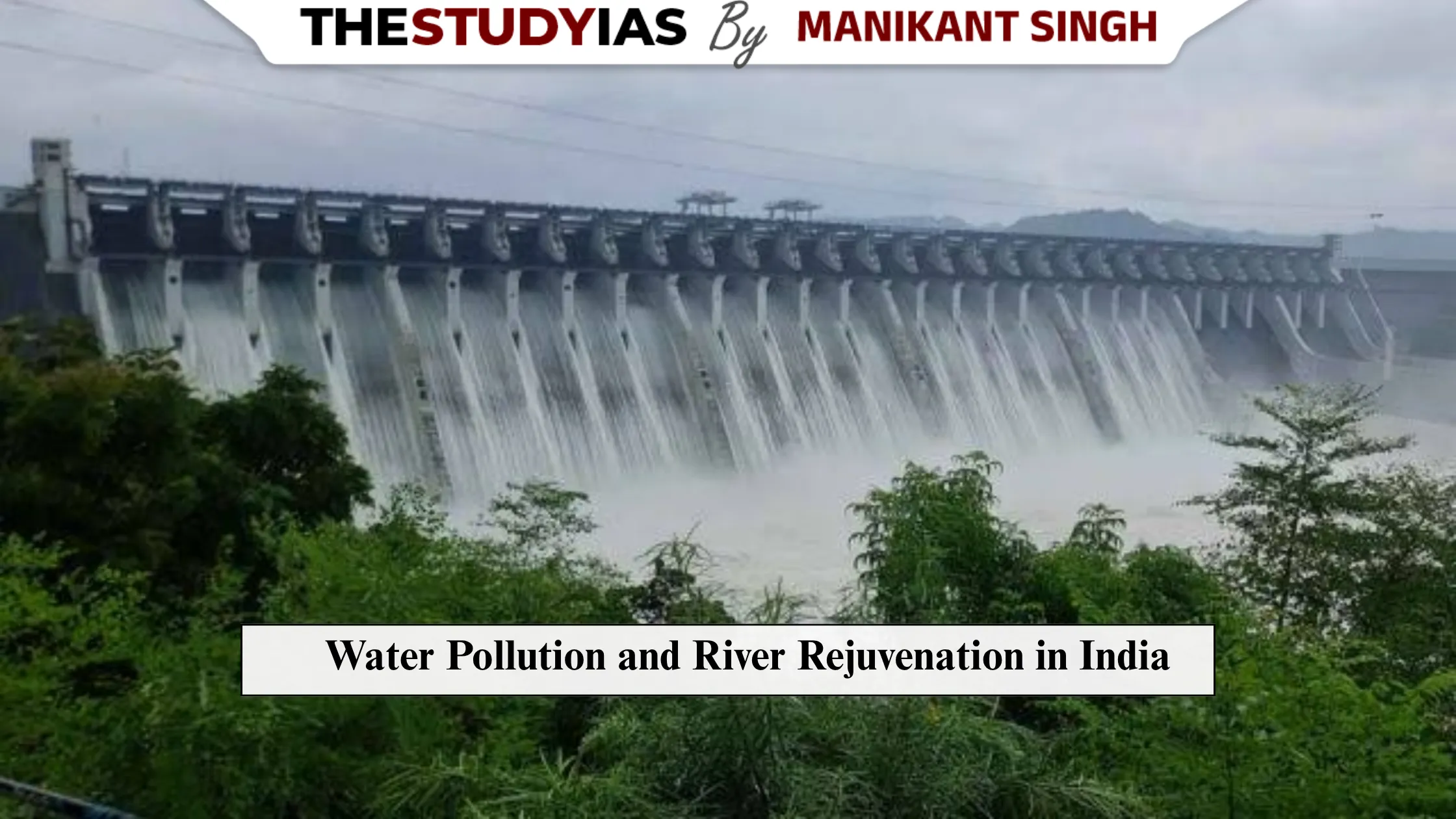
Water Pollution and River Rejuvenation in India
Water is essential for human survival, ecological stability, agricultural productivity and economic development. India's rivers, lakes, wetlands and groundwater systems support millions of people, sustain biodiversity and provide water for drinking, irrigation, industries and other economic activities. However, rapid urbanisation, industrialisation, agricultural intensification and inadequate wastewater management have placed increasing pressure on the country's freshwater resources.
Water pollution refers to the contamination of water bodies through physical, chemical or biological substances that adversely affect water quality and make it harmful or unsuitable for human consumption, aquatic life and other uses. Untreated sewage, industrial effluents, agricultural runoff, plastic waste and religious or domestic activities are among its major sources.
River pollution is particularly concerning because rivers are interconnected ecological systems. Pollution in one stretch can affect downstream communities, wetlands, fisheries, groundwater and aquatic biodiversity. Several Indian rivers, including the Ganga, Yamuna, Sabarmati, Musi and other urban river systems, face pollution-related challenges.
India has introduced various initiatives, including the Namami Gange Programme, National River Conservation Plan (NRCP), National Water Quality Monitoring Programme and river rejuvenation action plans. However, the persistence of polluted river stretches highlights the need for stronger sewage treatment, industrial regulation, ecological restoration and community participation.
For UPSC, this topic is relevant to GS Paper III, particularly Environmental Pollution and Degradation, Conservation, Water Resources and Sustainable Development. It also connects with GS Paper II through environmental governance, Centre-State relations, public health and institutional accountability.
Understanding Water Pollution
Water pollution occurs when harmful substances enter rivers, lakes, groundwater, oceans or other water bodies and alter their natural characteristics. Water pollution can be classified into several categories depending on the nature of contaminants.
Physical Pollution:
It involves changes in the physical characteristics of water, such as colour, temperature, turbidity and suspended solids. Soil erosion, construction activities, mining and waste disposal can increase sedimentation and turbidity.
Chemical Pollution:
It results from the presence of harmful chemicals, heavy metals, pesticides, fertilisers, industrial solvents and other toxic substances. These pollutants may persist in aquatic environments and accumulate in food chains.
Biological Pollution:
It occurs when disease-causing microorganisms, bacteria, viruses and parasites contaminate water. Untreated sewage and animal waste are major sources of biological contamination.
Thermal Pollution:
It occurs when industries and power plants discharge heated water into rivers and lakes. Increased water temperature can reduce dissolved oxygen and disturb aquatic ecosystems.
Radioactive Pollution:
It results from the release of radioactive substances into water bodies through certain industrial, medical, mining or nuclear-related activities.
Major Indicators of Water Pollution
Water quality is assessed through physical, chemical and biological parameters. These indicators help identify pollution levels and determine whether water is suitable for different purposes.
Biochemical Oxygen Demand (BOD):
BOD measures the amount of dissolved oxygen required by microorganisms to decompose biodegradable organic matter in water under specified conditions. High BOD generally indicates greater organic pollution.
Chemical Oxygen Demand (COD):
COD measures the oxygen equivalent required to chemically oxidise organic and certain inorganic substances in water. It helps assess the overall load of oxidisable pollutants.
Dissolved Oxygen (DO):
DO refers to the amount of oxygen dissolved in water. Adequate dissolved oxygen is essential for the survival of fish and other aquatic organisms. Low DO can indicate serious water-quality deterioration.
pH:
It indicates whether water is acidic, neutral or alkaline. Significant changes in pH can adversely affect aquatic organisms and ecosystem functioning.
Faecal Coliform Bacteria:
Their presence indicates possible contamination by human or animal faecal matter and signals potential public-health risks.
Heavy Metals:
Substances such as mercury, lead, cadmium, chromium and arsenic can be toxic even at relatively low concentrations. They may accumulate in aquatic organisms and enter the human food chain.
Nutrients:
Excessive concentrations of nitrogen and phosphorus can cause eutrophication, resulting in excessive algal growth and depletion of dissolved oxygen.
These indicators are important for understanding river health. However, no single parameter provides a complete picture of water quality. A comprehensive assessment requires multiple indicators and location-specific monitoring.
Major Sources of Water Pollution in India
Water pollution in India results from both point and non-point sources. Point sources are identifiable sources of pollution, such as industrial discharge pipes and sewage outlets. Non-point sources are diffuse sources, such as agricultural runoff, urban stormwater and soil erosion.
Domestic Sewage and Untreated Wastewater
Untreated or inadequately treated domestic sewage is one of the major sources of pollution in Indian rivers. Rapid urbanisation has increased the volume of wastewater generated by households, commercial establishments and institutions. In many urban areas, sewerage networks do not cover all settlements, and existing treatment infrastructure may be insufficient or underutilised.
When untreated sewage enters rivers, it introduces organic matter, nutrients, detergents, pathogens and other contaminants. This increases BOD, reduces dissolved oxygen and creates serious risks for public health and aquatic ecosystems. The problem becomes particularly severe in densely populated cities located along riverbanks.
Industrial Effluents
Industries such as textiles, tanneries, paper and pulp, pharmaceuticals, chemicals, sugar mills, distilleries and metal processing units generate wastewater containing different pollutants. Industrial effluents may contain heavy metals, acids, alkalis, dyes, toxic chemicals and organic compounds. If untreated or inadequately treated effluents are discharged into rivers, they can contaminate water and damage aquatic ecosystems.
Industrial clusters around rivers such as the Ganga, Yamuna and other urban river systems require strict monitoring and effective effluent-treatment mechanisms.
Agricultural Runoff
Agricultural activities contribute to water pollution through the excessive or improper use of chemical fertilisers, pesticides and herbicides. During rainfall and irrigation, these chemicals can enter nearby rivers, lakes and groundwater through surface runoff and leaching.
Excessive nitrogen and phosphorus contribute to eutrophication, a process in which nutrient enrichment stimulates excessive algal growth. When algae die and decompose, microorganisms consume dissolved oxygen, potentially causing oxygen depletion and fish mortality.
Solid Waste and Plastic Pollution
Improper disposal of municipal solid waste, plastic materials, religious waste and construction debris contributes to river pollution. Plastic waste can fragment into microplastics, which may enter aquatic food chains. Floating waste can obstruct water flow, damage habitats and reduce the ecological quality of river systems. Dumping of municipal waste along riverbanks also increases the risk of contamination during rainfall and flooding.
Religious and Cultural Activities
Rivers have significant religious and cultural importance in India. Activities such as idol immersion, disposal of पूजा materials, mass bathing and the dumping of ceremonial waste can contribute to pollution. The use of non-biodegradable materials, chemical paints and synthetic decorations can introduce toxic substances into water bodies.
However, religious practices should not be treated as the sole or primary explanation for river pollution. Untreated sewage and industrial effluents remain major structural concerns in many polluted river stretches.
Mining and Construction Activities
Mining, quarrying, sand extraction and construction can increase sediment loads in rivers and alter their natural flow patterns. Mining activities may also release heavy metals, acidic drainage and other contaminants, depending on the minerals and geological conditions involved. Unregulated sand mining can disturb riverbeds, affect groundwater recharge, damage aquatic habitats and increase riverbank erosion.
Thermal Pollution
Power plants and certain industries use water for cooling and may discharge heated water into nearby water bodies. An increase in water temperature reduces the ability of water to retain dissolved oxygen and can disturb the reproductive cycles, metabolism and survival of aquatic organisms.
Urban Stormwater Runoff
Rainwater flowing over roads, residential areas, industrial sites and construction zones can carry oil, grease, chemicals, plastics, sediments and other pollutants into rivers. In cities with inadequate drainage and waste-management systems, stormwater runoff can become an important source of river contamination.
Impacts of Water Pollution in India
Water pollution has serious consequences for public health, agriculture, biodiversity, economic productivity and ecological stability.
Impact on Human Health
Contaminated water can transmit waterborne diseases such as cholera, typhoid, dysentery, hepatitis A and other gastrointestinal infections. Chemical contaminants may create long-term health risks. Exposure to arsenic can cause skin lesions and other health complications, while prolonged exposure to certain heavy metals can affect the nervous system, kidneys and other organs. Children, pregnant women, elderly people and communities dependent on untreated water sources are particularly vulnerable.
Impact on Aquatic Biodiversity
Water pollution affects fish, aquatic plants, amphibians, microorganisms and other organisms. Low dissolved oxygen can cause fish mortality, while toxic chemicals and heavy metals may interfere with reproduction, growth and survival. Pollution also damages aquatic habitats and disrupts food chains. Sensitive species may disappear from polluted stretches, reducing biodiversity and ecosystem resilience.
Eutrophication and Algal Blooms
Excessive nutrients entering rivers and lakes can cause eutrophication. Nutrient enrichment encourages rapid algal growth, sometimes resulting in harmful algal blooms. As algae die and decompose, dissolved oxygen levels may decline, creating hypoxic or anoxic conditions. This can cause fish deaths, unpleasant odours and deterioration of aquatic ecosystems.
Impact on Agriculture and Food Security
Farmers using contaminated river water for irrigation may expose crops and agricultural soils to harmful chemicals, pathogens and heavy metals. Certain contaminants can accumulate in agricultural produce and enter the food chain. Pollution can also affect fisheries and aquaculture, reducing the availability of safe fish and threatening the livelihoods of fishing communities.
Groundwater Contamination
Surface water and groundwater systems are interconnected in many regions. Pollutants from contaminated rivers, sewage leakage, industrial waste and agricultural runoff can infiltrate soil and affect groundwater quality. This is particularly concerning in areas where communities depend heavily on groundwater for drinking and domestic use.
Economic and Livelihood Impacts
Water pollution increases healthcare expenditure, reduces agricultural productivity and affects fisheries, tourism and other water-dependent economic activities. Communities dependent on rivers for fishing, farming, religious activities and tourism may experience declining incomes when water quality deteriorates. Governments also face significant costs associated with wastewater treatment, river restoration and environmental remediation.
Impact on Cultural and Religious Values
Rivers hold deep cultural, historical and religious significance in India. Pollution reduces their suitability for bathing, religious activities and other traditional uses. The degradation of rivers such as the Ganga and Yamuna therefore represents not only an ecological challenge but also a threat to India's cultural heritage.
Status of River Pollution in India
The Central Pollution Control Board (CPCB), in collaboration with State Pollution Control Boards and Pollution Control Committees, monitors river-water quality under the National Water Quality Monitoring Network.
The CPCB identifies Polluted River Stretches (PRSs) using Biochemical Oxygen Demand (BOD) as a key criterion. These assessments help governments prepare action plans for restoring polluted stretches.
According to the CPCB's 2025 report on Polluted River Stretches for Restoration of Water Quality, 623 rivers were assessed, and 296 polluted stretches were identified across 271 rivers in 32 States and Union Territories.
Government reporting indicates that the number of identified polluted river stretches declined from 351 in 2018 to 296 in 2025. The assessment also reported that 149 previously identified stretches had been delisted, while 71 stretches showed improvement in water quality compared with the 2018 assessment.
This indicates progress in several locations, but it does not mean that India's rivers are uniformly clean. Some stretches continue to experience severe pollution, while new polluted stretches have also emerged.
The findings highlight the need for continuous monitoring, sewage-treatment infrastructure, industrial compliance and basin-level restoration.
River Rejuvenation: Meaning and Importance
River rejuvenation refers to the ecological restoration and sustainable management of rivers to improve their water quality, natural flow, biodiversity and ecological functions.
It is broader than simply cleaning visible waste or constructing sewage-treatment plants. A rejuvenated river should have adequate environmental flows, healthy aquatic habitats, functioning floodplains, reduced pollution loads and sustainable interactions with surrounding communities.
The major objectives of river rejuvenation include:
Improving Water Quality: Preventing untreated sewage and industrial effluents from entering rivers and reducing chemical and biological contamination.
Restoring Ecological Flows: Maintaining sufficient water flow to support aquatic life, sediment movement and natural river processes.
Protecting Biodiversity: Conserving aquatic species, wetlands, riverine forests and habitats of threatened organisms.
Restoring Floodplains and Wetlands: Protecting natural flood-storage areas and improving the ecological connectivity between rivers and surrounding landscapes.
Ensuring Sustainable Water Use: Promoting efficient water use, treated wastewater reuse and groundwater recharge.
Strengthening Community Participation: Involving local communities, municipalities, farmers and civil society organisations in river conservation.
Major Government Initiatives for River Rejuvenation in India
India has introduced several programmes and institutional mechanisms to address river pollution and restore freshwater ecosystems.
National River Conservation Plan (NRCP)
The National River Conservation Plan (NRCP) was initiated in 1995 to address pollution in rivers other than the Ganga, which is covered under the separate Namami Gange framework.
The programme supports pollution-abatement interventions such as:
Interception and diversion of wastewater flowing into rivers.
Construction and rehabilitation of Sewage Treatment Plants (STPs).
Low-cost sanitation facilities.
Riverfront development and improvement of crematoria, where included in approved projects.
Public awareness and capacity-building activities.
NRCP aims to improve river-water quality by reducing the discharge of untreated municipal wastewater and supporting pollution-control infrastructure.
Namami Gange Programme
The Namami Gange Programme was launched in June 2014 as a flagship initiative for the conservation and rejuvenation of the River Ganga and its tributaries.
It is implemented through the National Mission for Clean Ganga (NMCG) under the Ministry of Jal Shakti. The programme adopts a comprehensive approach that includes sewage treatment, industrial pollution abatement, river-surface cleaning, biodiversity conservation, afforestation, rural sanitation, public participation and riverfront development.
Its major interventions include:
Sewage Treatment Infrastructure: Construction, rehabilitation and operation of STPs, along with sewer-network development, to reduce untreated wastewater entering the Ganga.
Industrial Pollution Control: Monitoring grossly polluting industries and ensuring compliance with prescribed effluent standards.
River-Surface Cleaning: Removal of floating waste and other visible pollutants from selected river stretches.
Biodiversity Conservation: Protection of aquatic species such as the Gangetic river dolphin, gharial and turtles, along with conservation of riverine habitats.
Afforestation: Plantation and restoration activities along the Ganga basin to improve ecological conditions and reduce soil erosion.
Public Participation: Awareness campaigns, community involvement and initiatives such as Ganga Praharis to encourage local stewardship.
Recent Progress: According to the Ministry of Jal Shakti's October 2026 update, 527 projects had been sanctioned under Namami Gange at a total cost of ₹43,266 crore, of which 368 had been completed. Under sewerage infrastructure, 219 projects had been sanctioned with a planned treatment capacity of 6,603 million litres per day (MLD). Of these, 147 projects had been completed, creating 4,339 MLD of sewage-treatment capacity.
These figures reflect infrastructure sanctioned and completed; they should not be confused with the actual volume of sewage treated every day or proof of uniform improvement in river-water quality.
Yamuna Action Plan (YAP)
The Yamuna Action Plan was introduced to reduce pollution in the River Yamuna through sewage-treatment infrastructure and other pollution-abatement measures. It has involved cooperation between the Government of India and state governments, particularly in the Yamuna basin.
Major interventions include sewage interception and diversion, construction and upgradation of STPs, rehabilitation of sewerage systems and efforts to control pollution from industrial and municipal sources. Despite these interventions, the Yamuna continues to face serious pollution challenges, particularly in stretches passing through the National Capital Territory of Delhi.
This demonstrates that constructing treatment infrastructure alone is insufficient without adequate sewer connections, proper operation and maintenance, industrial compliance and effective monitoring.
National Water Quality Monitoring Programme (NWMP)
The National Water Quality Monitoring Programme, implemented by CPCB with State Pollution Control Boards and Pollution Control Committees, monitors the quality of rivers and other water bodies. It provides scientific data on parameters such as pH, dissolved oxygen, BOD, chemical oxygen demand and coliform bacteria.
The monitoring network supports the identification of polluted river stretches and helps authorities prepare restoration plans.
Atal Mission for Rejuvenation and Urban Transformation (AMRUT 2.0)
AMRUT 2.0 focuses on improving urban water security through universal water-supply coverage, sewerage and septage management, and the rejuvenation of water bodies. Its interventions can reduce pollution entering urban rivers by improving wastewater collection and treatment and restoring local water bodies.
Swachh Bharat Mission-Urban 2.0
The mission focuses on making cities garbage-free through improved solid-waste management, waste segregation, processing and scientific disposal. By reducing the dumping and burning of waste near water bodies, it can contribute to the protection of urban rivers and lakes.
National Plan for Conservation of Aquatic Ecosystems (NPCA)
The National Plan for Conservation of Aquatic Ecosystems supports the conservation and management of lakes and wetlands. Its interventions include pollution abatement, ecological restoration, catchment-area treatment and biodiversity conservation. Wetlands are important for river rejuvenation because they regulate water flows, support biodiversity, recharge groundwater and help filter pollutants.
River Cities Alliance
The River Cities Alliance (RCA) is a platform that brings together cities and institutions to promote sustainable urban river management. It encourages cities to integrate river-sensitive planning into urban development, drainage management, floodplain protection and wastewater management. The initiative recognises that rivers should be treated as living ecological systems rather than merely as channels for drainage or urban development.
Legal and Institutional Framework for Water Pollution Control
India has established several laws and institutions to prevent water pollution and promote the conservation of rivers and other water bodies.
Water (Prevention and Control of Pollution) Act, 1974
The Water (Prevention and Control of Pollution) Act, 1974 is the principal legislation for the prevention and control of water pollution in India. Its main objectives include preventing and controlling water pollution, maintaining or restoring the wholesomeness of water and establishing regulatory authorities.
The Act provides for the establishment of:
Central Pollution Control Board (CPCB): Responsible for coordinating the activities of State Pollution Control Boards, advising the Central Government and promoting water-pollution control.
State Pollution Control Boards (SPCBs): Responsible for implementing pollution-control measures, monitoring water quality and regulating industrial discharge at the state level. The Act also provides for consent mechanisms governing the establishment and operation of industries that may discharge sewage or trade effluents.
Water (Prevention and Control of Pollution) Amendment Act, 2024: The amendment introduced changes relating to the decriminalisation and rationalisation of certain offences, substituted imprisonment provisions with monetary penalties for specified contraventions and introduced provisions for central guidelines on consent-related matters.
An important Prelims detail is that the 2024 amendment initially applied to Himachal Pradesh, Rajasthan and Union Territories, with provision for other states to adopt it through resolutions under Article 252 of the Constitution. It should not be assumed that every provision automatically applies uniformly across all states.
Environment (Protection) Act, 1986
The Environment (Protection) Act, 1986 is an umbrella legislation that empowers the Central Government to take measures to protect and improve environmental quality. It provides powers to prescribe environmental standards, regulate industrial activities and take action against environmental pollution. Several rules and notifications relating to hazardous waste, environmental protection and pollution control operate under this Act.
Wetlands (Conservation and Management) Rules, 2017
The Wetlands (Conservation and Management) Rules, 2017 provide a regulatory framework for the conservation and management of notified wetlands. They restrict certain activities, including dumping of solid waste, discharge of untreated waste and other activities that may damage notified wetlands, subject to the provisions of the Rules. Wetland protection is essential for river rejuvenation because wetlands are connected to river systems through surface-water flows, groundwater and ecological processes.
National Green Tribunal Act, 2010
The National Green Tribunal Act, 2010 established the National Green Tribunal (NGT) for effective and expeditious disposal of environmental disputes. The NGT has jurisdiction over matters involving environmental protection, conservation of forests and natural resources, and enforcement of legal rights relating to the environment, subject to the statutory framework. It has played an important role in addressing issues related to river pollution, sewage discharge, waste management and environmental compliance.
Constitutional Provisions
Environmental protection is supported by several constitutional provisions.
Article 21: The Supreme Court has interpreted the right to life to include the right to a clean and healthy environment, including access to pollution-free water.
Article 48A: Directs the State to protect and improve the environment and safeguard forests and wildlife.
Article 51A(g): Makes it a Fundamental Duty of citizens to protect and improve the natural environment, including rivers and lakes.
Article 252: Enables Parliament to legislate on a matter in the State List when two or more states pass resolutions requesting such legislation. The Water Act, 1974 was enacted through this constitutional mechanism.
Seventh Schedule: Water is primarily a State subject under Entry 17 of the State List, subject to Entry 56 of the Union List concerning the regulation and development of inter-State rivers and river valleys in the public interest.
Major Challenges in Water Pollution Control and River Rejuvenation
Despite several laws and government programmes, river rejuvenation in India faces significant implementation challenges.
Inadequate Sewage Treatment Capacity and Coverage
Many cities generate large quantities of wastewater, but their sewerage networks and treatment facilities are insufficient. In some areas, sewage-treatment plants exist but remain underutilised because of incomplete sewer connections, poor maintenance, electricity shortages or operational difficulties. Consequently, untreated or partially treated sewage continues to enter rivers.
Industrial Non-Compliance
Industrial pollution remains a major concern in several river basins. Some industries fail to comply with prescribed effluent standards or operate inadequate treatment facilities. Limited inspection capacity and weak enforcement can allow pollution to continue. Small-scale industrial units may also face financial and technological constraints in adopting effective effluent-treatment systems.
Poor Solid-Waste Management
Dumping of municipal waste, plastics and construction debris along riverbanks increases pollution and obstructs natural drainage. Inadequate segregation, collection and scientific processing of waste can result in the contamination of rivers during rainfall and floods.
Agricultural Runoff
Excessive use of chemical fertilisers and pesticides contributes to nutrient enrichment and chemical contamination. Unlike industrial discharge, agricultural runoff is a diffuse source of pollution and is more difficult to regulate through conventional inspection and consent mechanisms.
Encroachment and Degradation of Floodplains
Floodplains are ecologically important areas that allow rivers to expand during high-flow periods, recharge groundwater and support biodiversity. Urbanisation, construction, sand mining and other activities can reduce the natural capacity of floodplains and disturb river ecosystems. Encroachment also increases the risk of urban flooding and weakens the ecological resilience of river systems.
Alteration of Natural River Flows
Dams, barrages, excessive water extraction, hydropower projects and irrigation withdrawals can alter natural river flows. Reduced environmental flows may limit the river's ability to dilute pollutants and maintain aquatic habitats. River rejuvenation therefore requires attention to both water quality and water quantity.
Weak Institutional Coordination
River basins often extend across multiple states, districts and urban local bodies. Different agencies are responsible for water supply, sewage treatment, industrial regulation, irrigation, drainage and environmental protection. Lack of coordination, overlapping responsibilities and weak accountability can delay restoration projects and reduce their effectiveness.
Climate Change and Extreme Weather
Climate change can affect river systems through changing rainfall patterns, prolonged droughts, intense precipitation and rising temperatures. Reduced river flows may increase pollutant concentrations, while extreme rainfall can wash accumulated pollutants and waste into rivers. Higher temperatures can also reduce dissolved oxygen and affect aquatic ecosystems.
Limited Community Participation
River rejuvenation requires long-term cooperation from local communities, farmers, industries, municipalities and civil society. When communities are not adequately involved in planning and monitoring, public awareness and ownership of conservation programmes may remain limited.
Way Forward: Strengthening River Rejuvenation in India
India needs to shift from a project-based approach focused mainly on infrastructure creation towards basin-level, ecosystem-based river management.
Strengthen Sewage Collection and Treatment: The priority should be to connect households and commercial establishments to sewerage networks, ensure the effective operation of existing STPs and expand treatment capacity according to actual wastewater generation.
Promote Treated Wastewater Reuse: Treated wastewater should be reused for industrial cooling, construction, gardening, agriculture and other suitable non-potable purposes. This can reduce freshwater demand and limit the discharge of treated effluents into rivers.
Improve Industrial Pollution Control: Industries should be required to install and operate appropriate Effluent Treatment Plants (ETPs) and Common Effluent Treatment Plants (CETPs). Regular inspections, online monitoring and strict action against non-compliance are essential.
Restore Floodplains and Wetlands: Floodplain demarcation, wetland conservation, riparian vegetation restoration and control of encroachment should become integral components of river rejuvenation.
Maintain Environmental Flows: Adequate environmental flows should be maintained to support aquatic biodiversity, sediment transport, groundwater interaction and the natural self-purification capacity of rivers.
Adopt Integrated River Basin Management: River restoration should consider the entire basin, including tributaries, drainage channels, groundwater systems, forests, wetlands and agricultural landscapes. This requires coordination between states and different government departments.
Control Agricultural Runoff: Balanced fertiliser use, organic farming practices, integrated nutrient management, vegetative buffer strips and soil conservation can reduce agricultural pollution.
Strengthen Monitoring and Transparency: CPCB and SPCBs should expand water-quality monitoring and publish reliable, accessible data. Technology such as remote sensing, geographic information systems and real-time monitoring can support early identification of pollution sources.
Promote Community Participation: Gram Panchayats, urban local bodies, farmers, fisherfolk, religious institutions and civil society organisations should be involved in river conservation. Local communities can help monitor pollution, restore riverbanks and prevent waste dumping.
Adopt Nature-Based Solutions: Constructed wetlands, restoration of natural drainage channels, riparian buffer zones and ecological treatment systems can complement conventional sewage-treatment infrastructure.
Conclusion
Water pollution and river degradation pose serious challenges to India's public health, ecological security, agricultural sustainability and economic development. Although programmes such as Namami Gange, NRCP and various urban water-management initiatives have improved pollution-control infrastructure, the persistence of polluted river stretches highlights the need for stronger implementation and continuous monitoring.
River rejuvenation cannot be achieved through sewage-treatment plants or riverfront beautification alone. It requires control of pollution at its source, restoration of natural river flows, protection of floodplains and wetlands, sustainable water use and meaningful community participation.
India must adopt a river-basin approach to water governance, ensuring that rivers are treated as living ecosystems rather than merely as sources of water or channels for waste disposal. Protecting rivers is essential for safeguarding biodiversity, human health and the water security of future generations.
Important Facts for UPSC Prelims
Frequently Asked Questions
1. What are the major causes of water pollution in India?
The major causes include untreated domestic sewage, industrial effluents, agricultural runoff, plastic and solid-waste dumping, mining activities, urban stormwater runoff and thermal pollution. Their relative importance varies across river basins and regions.
2. What is river rejuvenation?
River rejuvenation refers to the ecological restoration and sustainable management of rivers. It involves improving water quality, maintaining environmental flows, restoring floodplains and wetlands, conserving aquatic biodiversity and controlling pollution at its source.
3. What is the role of the Water Act, 1974?
The Water (Prevention and Control of Pollution) Act, 1974 provides the legal framework for preventing and controlling water pollution in India. It establishes the CPCB and SPCBs and provides regulatory mechanisms for monitoring and controlling the discharge of sewage and industrial effluents.
4. What is the Namami Gange Programme?
Namami Gange is a flagship programme launched in June 2014 for the conservation and rejuvenation of the River Ganga and its tributaries. It focuses on sewage treatment, industrial pollution control, biodiversity conservation, afforestation, river-surface cleaning and public participation.
5. What is the difference between BOD and COD?
BOD measures the oxygen required by microorganisms to decompose biodegradable organic matter in water under specified conditions. COD measures the oxygen equivalent required to chemically oxidise organic and certain inorganic substances. Both are used to assess water pollution, but they measure different aspects of contamination.
6. What is eutrophication?
Eutrophication is the excessive enrichment of water bodies with nutrients, particularly nitrogen and phosphorus. It can cause rapid algal growth, followed by oxygen depletion during decomposition, which may result in fish deaths and ecological degradation.
Mains Practice Questions
Water pollution in India is a major threat to public health and ecological sustainability. Examine its causes, consequences and the effectiveness of existing policy measures. (250 words)
River rejuvenation requires more than the construction of sewage-treatment plants. Discuss with reference to the Namami Gange Programme. (250 words)
Examine the role of the Water (Prevention and Control of Pollution) Act, 1974 in controlling water pollution in India. What are its major implementation challenges? (150 words)
Discuss the significance of integrated river basin management in addressing water pollution and ensuring sustainable river rejuvenation in India. (250 words)
For more UPSC-oriented articles and preparation resources, explore The Study IAS.
Subscribe to our Youtube Channel for more Valuable Content –TheStudyias
Download the App to Subscribe to our Courses –Thestudyias
The Source’s Authority and Ownership of the Article is Claimed ByTHE STUDY IAS BY MANIKANT SINGH
Comments (0)
Leave a Comment