Air Pollution in India: Sources, Impacts and Policy Response
13 Nov 2026
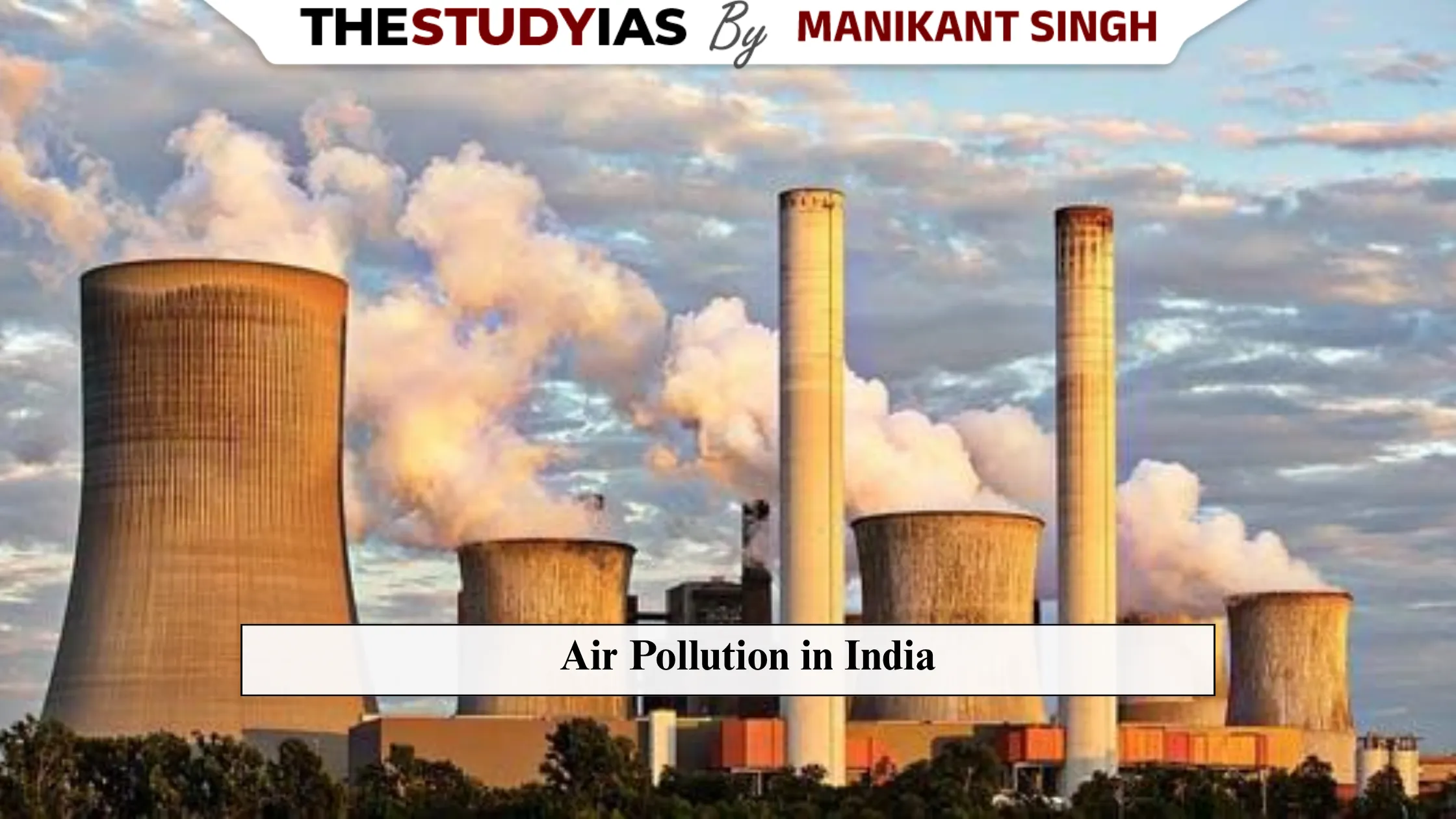
Air Pollution in India: Sources, Impacts and Policy Response
Air pollution has emerged as one of India's most serious environmental and public health challenges. Rapid urbanisation, industrialisation, growing energy demand, increasing vehicular traffic, construction activities and unsustainable waste-management practices have contributed to the deterioration of air quality across several parts of the country. The problem is particularly severe in major urban centres and the Indo-Gangetic Plain, where geographical conditions and seasonal meteorological factors can further intensify pollution.
Air pollution refers to the presence of harmful substances, including gases, particulate matter and biological particles, in the atmosphere at concentrations that adversely affect human health, ecosystems and the environment. It can occur in both outdoor and indoor environments. Pollutants such as particulate matter (PM2.5 and PM10), nitrogen dioxide, sulphur dioxide, carbon monoxide and ground-level ozone are major concerns.
India has introduced several regulatory measures and programmes, including the National Clean Air Programme (NCAP), the National Ambient Air Quality Standards (NAAQS) and the Graded Response Action Plan (GRAP). However, persistent pollution episodes indicate the need for stronger enforcement, scientific monitoring and coordinated action across sectors.
For UPSC, air pollution is relevant to GS Paper III, particularly Environmental Pollution and Degradation, Conservation, Climate Change and Sustainable Development. It also connects with GS Paper II through environmental governance, public health policy, regulatory institutions and Centre-State coordination.
Understanding Air Pollution
Air pollution occurs when harmful substances enter the atmosphere in quantities that can damage human health, living organisms, natural ecosystems and infrastructure.
Air pollutants are broadly classified into two categories.
Primary pollutants are directly released into the atmosphere from sources such as vehicles, industries, power plants, construction activities and burning of fossil fuels. Examples include carbon monoxide (CO), sulphur dioxide (SO2), nitrogen oxides (NOx) and particulate matter.
Secondary pollutants are formed in the atmosphere through chemical reactions involving primary pollutants. Ground-level ozone, secondary particulate matter and certain components of photochemical smog are important examples.
Major Air Pollutants
Particulate Matter (PM2.5 and PM10): These are tiny solid particles and liquid droplets suspended in the atmosphere. PM10 includes particles with a diameter of 10 micrometres or less, while PM2.5 includes particles with a diameter of 2.5 micrometres or less. Fine particles are particularly dangerous because they can penetrate deep into the respiratory system, and some can enter the bloodstream.
Nitrogen Dioxide (NO2): Mainly produced through high-temperature combustion in vehicles, power plants and industrial processes. It contributes to respiratory irritation and the formation of secondary pollutants.
Sulphur Dioxide (SO2): Primarily released through the burning of sulphur-containing fossil fuels, particularly in certain industrial processes and thermal power generation. It contributes to respiratory problems and acid deposition.
Carbon Monoxide (CO): A colourless and odourless gas produced through incomplete combustion of fuels. High concentrations can interfere with the blood's ability to transport oxygen.
Ground-Level Ozone (O3): A secondary pollutant formed through reactions involving nitrogen oxides and volatile organic compounds in the presence of sunlight. It can damage the respiratory system and vegetation.
Ammonia (NH3): Released from agricultural activities, livestock waste and certain industrial processes. It contributes to the formation of secondary particulate matter.
Lead (Pb): A toxic metal that may enter the atmosphere through certain industrial activities and other emission sources. Exposure can affect the nervous system and other organs.
Major Sources of Air Pollution in India
Air pollution in India results from multiple sources. Their relative contribution varies across cities, regions, seasons and meteorological conditions. Therefore, effective pollution control requires location-specific source assessment rather than a single nationwide explanation.
Vehicular Emissions
The growing number of private vehicles, commercial transport vehicles and two-wheelers has increased emissions in urban areas. Vehicles release nitrogen oxides, carbon monoxide, hydrocarbons and particulate matter. Older vehicles, poor maintenance, traffic congestion and inefficient fuel combustion can further increase emissions.
Diesel-powered vehicles are particularly important sources of nitrogen oxides and particulate matter. Road transport also contributes indirectly to pollution through tyre wear, brake wear and the resuspension of road dust.
Industrial Emissions
Industries such as cement, steel, chemicals, refineries, brick kilns and manufacturing units contribute significantly to air pollution. Industrial processes release particulate matter, sulphur dioxide, nitrogen oxides and other harmful substances. The use of high-emission fuels, outdated technology and inadequate pollution-control equipment can increase the environmental burden.
Industrial clusters may experience particularly high pollution levels when several emission sources operate within the same geographical area.
Thermal Power Plants
Coal-based thermal power plants are important sources of air pollution because coal combustion releases particulate matter, sulphur dioxide, nitrogen oxides and other pollutants. The environmental impact depends on coal quality, combustion technology, emission-control systems and the effectiveness of regulatory compliance. Fly ash management is also important because improper storage and handling can contribute to dust pollution.
Construction and Road Dust
Rapid infrastructure development, urban expansion, road construction and demolition activities generate substantial dust. Unpaved roads, uncovered construction materials, poorly maintained road surfaces and open soil areas contribute to particulate matter, particularly PM10. In densely populated cities, resuspended road dust can become an important contributor to ambient particulate pollution.
Agricultural Residue Burning
Crop residue burning, particularly in parts of Punjab, Haryana and Uttar Pradesh, can contribute to severe seasonal pollution episodes in northern India. After harvesting, some farmers burn crop residues to clear fields quickly for the next agricultural cycle. The resulting smoke contains particulate matter, carbon monoxide, nitrogen oxides and other pollutants.
However, it is inaccurate to attribute all winter pollution in Delhi-NCR to stubble burning. Vehicular emissions, industrial activities, construction dust, waste burning and other regional sources also contribute. The relative importance of these sources changes with weather conditions and the time of year.
Household and Indoor Air Pollution
The use of traditional biomass fuels such as firewood, dung cakes, crop residues and coal for cooking and heating can produce high levels of indoor air pollution. Incomplete combustion releases particulate matter, carbon monoxide and other harmful substances. Women, children and elderly people may face greater exposure because of the time spent near household cooking sources.
Poor ventilation further increases indoor pollutant concentrations.
Waste Burning and Landfill Fires
Open burning of municipal solid waste, plastic, leaves and other materials releases particulate matter, toxic gases and harmful chemical compounds. Uncontrolled landfill fires can generate smoke over extended periods and affect surrounding residential areas. Inadequate waste segregation, collection and scientific disposal contribute to this problem.
Natural Sources
Natural sources such as dust storms, forest fires, volcanic emissions and pollen can also affect air quality. In India, dust storms and windblown mineral dust can increase particulate matter concentrations, particularly in arid and semi-arid regions. However, natural and human-made sources often interact, making source attribution complex.
Why Is Air Pollution Particularly Severe in Northern India?
Northern India, particularly the Indo-Gangetic Plain, experiences severe air pollution episodes during certain months of the year.
Several geographical and meteorological factors contribute to this pattern.
Temperature Inversion: During winter, temperature inversion can occur when a layer of warmer air sits above cooler air near the surface. This restricts vertical air movement and traps pollutants close to the ground.
Low Wind Speed: Weak winds reduce the dispersion of pollutants, allowing emissions to accumulate near their sources.
Shallow Mixing Height: The atmospheric boundary layer often becomes shallower during winter, reducing the volume of air available to disperse pollutants.
Regional Pollution Transport: Pollutants can travel across administrative boundaries through wind movement. This means that pollution in a city may originate partly from surrounding districts and neighbouring states.
Seasonal Agricultural Burning: Crop residue burning during the post-harvest period can add to the existing pollution load.
Geographical Conditions: The Indo-Gangetic Plain's geographical and meteorological conditions can contribute to the accumulation of pollutants, particularly during periods of stagnant air.
Thus, air pollution in northern India is not simply a city-level problem. It requires an airshed-based approach involving multiple states and sectors.
Impacts of Air Pollution in India
Air pollution has far-reaching consequences for public health, economic productivity, agriculture, ecosystems and climate systems.
Impact on Human Health
Air pollution is associated with a wide range of health problems, particularly respiratory and cardiovascular diseases. Exposure to particulate matter can aggravate asthma, bronchitis and chronic obstructive pulmonary disease (COPD). Fine particles can penetrate deep into the lungs and contribute to systemic inflammation.
Long-term exposure is also associated with an increased risk of cardiovascular diseases, including heart attacks and strokes. Air pollution can affect children through impaired lung development and increased respiratory infections. Pregnant women and elderly people are also particularly vulnerable.
Certain pollutants, including ground-level ozone and nitrogen dioxide, can worsen existing respiratory conditions and reduce lung function.
Impact on Economic Productivity
Air pollution imposes substantial economic costs through increased healthcare expenditure, reduced labour productivity, absenteeism and premature mortality. Workers exposed to polluted environments may experience reduced physical capacity and increased health risks. Outdoor occupations such as construction, transport and street vending are particularly vulnerable. The economic burden also includes expenses associated with pollution-control infrastructure, medical treatment and environmental restoration.
Impact on Agriculture
Air pollution can negatively affect agricultural productivity. Ground-level ozone damages plant tissues, reduces photosynthesis and interferes with crop growth. This can lower agricultural yields under certain exposure conditions. Particulate matter can reduce sunlight reaching crops and deposit harmful substances on plant surfaces. Acid deposition may also affect soil chemistry and aquatic ecosystems. Therefore, air pollution is not merely an urban problem; it also threatens rural livelihoods and food security.
Impact on Biodiversity and Ecosystems
Air pollution can damage forests, wetlands, grasslands and aquatic ecosystems. Sulphur dioxide and nitrogen oxides contribute to acid deposition, which can alter soil and water chemistry and affect sensitive species. Ground-level ozone can damage vegetation and reduce plant productivity. Pollutants deposited on land and water can enter food chains and affect wildlife.
Impact on Climate Change
Air pollution and climate change are interconnected, although they are not identical problems. Some air pollutants, such as black carbon, contribute to atmospheric warming. Methane is both an air pollutant and a powerful greenhouse gas.
Certain aerosols can influence the Earth's energy balance by reflecting or absorbing sunlight. Their overall climatic effects depend on their composition and atmospheric interactions. Reducing emissions from fossil fuels, transport, industry and waste can therefore provide both air-quality and climate benefits.
Impact on Monuments and Infrastructure
Air pollutants can accelerate the deterioration of buildings, monuments and infrastructure. Sulphur dioxide and nitrogen oxides can contribute to acid deposition, which damages building materials and stone surfaces. Particulate pollution can also deposit dust and harmful substances on monuments, reducing their aesthetic and structural quality.
Air Quality Monitoring and Standards in India
Effective air pollution management requires reliable monitoring, scientific assessment and public access to air-quality information.
National Ambient Air Quality Standards (NAAQS)
The Central Pollution Control Board (CPCB) notified the revised National Ambient Air Quality Standards in 2009. These standards prescribe permissible concentrations for 12 air pollutants, including PM10, PM2.5, sulphur dioxide, nitrogen dioxide, ozone, carbon monoxide, ammonia, lead, benzene, benzo(a)pyrene, arsenic and nickel.
NAAQS provides a regulatory benchmark for assessing ambient air quality and identifying areas requiring pollution-control interventions.
Air Quality Index (AQI)
The Air Quality Index (AQI) was introduced in India in 2015 to communicate air-quality conditions in a simple and understandable manner. It converts information about multiple pollutants into a single index value and categorises air quality into six levels.
AQI helps citizens understand pollution levels and enables authorities to communicate health risks.
National Air Quality Monitoring Programme (NAMP)
The CPCB operates the National Air Quality Monitoring Programme to assess air pollution levels and identify trends in ambient air quality. The programme supports the collection of air-quality data and helps authorities evaluate compliance with prescribed standards. Monitoring is carried out through manual stations and continuous ambient air-quality monitoring stations.
Legal and Institutional Framework for Air Pollution Control in India
India has established a legal and institutional framework to prevent, control and reduce air pollution.
Air (Prevention and Control of Pollution) Act, 1981
The Air (Prevention and Control of Pollution) Act, 1981 is the principal legislation specifically addressing air pollution in India. It was enacted to provide for the prevention, control and abatement of air pollution and to establish regulatory institutions for implementing these objectives. The Act empowers the Central Pollution Control Board and State Pollution Control Boards to perform functions relating to air-quality monitoring, pollution control and enforcement.
The Air (Prevention and Control of Pollution) Amendment Act, 1987 strengthened the enforcement framework and introduced additional provisions relating to compliance and penalties.
Environment (Protection) Act, 1986
The Environment (Protection) Act, 1986 is an umbrella legislation that empowers the Central Government to take measures for protecting and improving environmental quality. It provides the legal basis for prescribing environmental standards and regulating activities that may cause environmental pollution.
Commission for Air Quality Management (CAQM) Act, 2021
The Commission for Air Quality Management in National Capital Region and Adjoining Areas Act, 2021 established a statutory commission to improve coordination and management of air pollution in the National Capital Region and adjoining areas. The CAQM has powers to coordinate actions, issue directions and promote regional strategies for improving air quality.
Its role is particularly important because pollution does not remain confined within state or city boundaries.
National Green Tribunal Act, 2010
The National Green Tribunal Act, 2010 established the National Green Tribunal (NGT) for the effective and expeditious disposal of environmental disputes. The NGT can hear matters relating to environmental protection and enforcement of legal rights connected with environmental issues, subject to its statutory jurisdiction.
Important Institutions
Central Pollution Control Board (CPCB): A statutory body responsible for monitoring air quality, setting standards and coordinating pollution-control activities with State Pollution Control Boards.
State Pollution Control Boards (SPCBs): Implement pollution-control laws at the state level, monitor industrial emissions and enforce applicable environmental standards.
Ministry of Environment, Forest and Climate Change (MoEFCC): Formulates environmental policies and administers major programmes relating to pollution control and environmental protection.
Commission for Air Quality Management (CAQM): Coordinates air-quality management in the NCR and adjoining areas.
Urban Local Bodies (ULBs): Play an important role in controlling road dust, managing solid waste, regulating construction activities and implementing city-level clean-air action plans.
Major Government Initiatives and Policy Response
The Government of India has introduced several programmes and regulatory measures to address air pollution from different sources.
National Clean Air Programme (NCAP), 2019
The National Clean Air Programme (NCAP) was launched in January 2019 as a national-level strategy to improve air quality across the country. It initially covered 102 cities and was subsequently expanded to 130 cities across 24 States and Union Territories.
The programme focuses on reducing particulate pollution through city-specific action plans, improved monitoring, institutional capacity-building and coordination among different levels of government.
Its revised target is to achieve up to a 40% reduction in PM10 concentrations or meet the prescribed national standards by 2025-26, compared with the 2017-18 baseline. The programme addresses major pollution sources such as vehicular emissions, road dust, construction activities, industrial pollution and waste burning.
Progress under NCAP: According to the Ministry of Environment, Forest and Climate Change's September 2026 update, 108 of the 130 covered cities recorded lower annual PM10 concentrations in FY 2025-26 compared with 2017-18. Among these, 72 cities recorded reductions exceeding 20%, while 26 recorded reductions exceeding 40%. Fourteen cities met the prescribed PM10 standard.
These figures indicate progress in several cities, but they should not be interpreted as evidence that air pollution has been eliminated. PM10 performance also does not automatically establish compliance with PM2.5 standards.
National Air Quality Monitoring Programme
The National Air Quality Monitoring Programme, implemented by CPCB, supports the regular monitoring of ambient air quality across India. It helps identify pollution trends, assess compliance with national standards and provide information for policy decisions.
Graded Response Action Plan (GRAP)
The Graded Response Action Plan (GRAP) is an emergency response mechanism for controlling worsening air pollution in Delhi-NCR. It was initially introduced in 2017 and is implemented through coordinated measures under the CAQM framework.
The plan contains four stages based on AQI levels:
Measures become progressively stricter as air quality deteriorates. They may include restrictions on construction activities, control of dust, regulation of certain vehicles and industrial operations, and other emergency interventions.
GRAP is primarily an emergency response mechanism. It cannot substitute for long-term structural measures to reduce pollution at its sources.
Pradhan Mantri Ujjwala Yojana (PMUY)
The Pradhan Mantri Ujjwala Yojana aims to provide LPG connections to eligible women from low-income households. By encouraging access to cleaner cooking fuel, the scheme can help reduce household dependence on traditional biomass fuels and limit indoor air pollution. However, sustained clean cooking adoption also depends on affordability, regular LPG refills and reliable access to fuel.
Faster Adoption and Manufacturing of Electric Vehicles (FAME)
The FAME India Scheme was introduced to promote electric and hybrid vehicles and encourage cleaner mobility. Electric vehicles can reduce tailpipe emissions, particularly in urban areas. Their overall environmental benefits also depend on electricity generation, battery manufacturing and responsible battery recycling.
BS-VI Emission Standards
India implemented Bharat Stage VI (BS-VI) emission standards nationwide from 1 April 2020. These standards prescribe stricter emission limits for motor vehicles and regulate pollutants such as nitrogen oxides and particulate matter. The transition to BS-VI fuel and vehicles has been an important step towards reducing vehicular emissions.
SATAT Initiative
The Sustainable Alternative Towards Affordable Transportation (SATAT) initiative promotes the production and use of Compressed Biogas (CBG) from agricultural residues, municipal solid waste and other organic waste. It can support better waste management and provide an alternative to conventional fossil fuels.
Other Important Measures
Other initiatives contributing to air pollution control include:
Swachh Bharat Mission: Supports scientific solid-waste management and discourages open waste dumping and burning.
National Bio-Energy Programme: Promotes the utilisation of biomass and other renewable energy resources.
PM-eBus Sewa: Supports the deployment of electric buses in cities to encourage cleaner public transport.
City Clean Air Action Plans: Address pollution sources through city-specific interventions under NCAP.
PARIVESH and PRANA portals: Support environmental clearance processes and monitoring of NCAP implementation, respectively.
Major Challenges in Controlling Air Pollution in India
Despite several policy interventions, air pollution remains a persistent problem due to institutional, economic and technological constraints.
Fragmented Governance
Air pollution is influenced by activities across transport, industry, agriculture, energy, housing and waste management. Different ministries, state governments and local bodies are responsible for these sectors. Weak coordination among institutions can result in fragmented policies and ineffective implementation.
Inadequate Monitoring Infrastructure
Although India's air-quality monitoring network has expanded, several regions still lack adequate monitoring infrastructure. Limited monitoring capacity makes it difficult to accurately identify pollution hotspots and assess the contribution of different sources.
Weak Enforcement of Environmental Regulations
The existence of pollution-control laws does not automatically ensure compliance. Shortages of technical staff, inadequate inspections, weak penalties and limited enforcement capacity can reduce the effectiveness of regulatory measures.
Dependence on Fossil Fuels
Coal remains an important source of electricity generation and industrial energy in India. Petroleum-based fuels continue to dominate road transport. The transition towards cleaner energy requires investment, technological development, infrastructure and reliable alternatives.
Agricultural and Waste-Management Constraints
Farmers may burn crop residues because of limited access to affordable machinery, short turnaround time between crops and inadequate residue-management infrastructure. Similarly, open waste burning continues in areas where waste collection, segregation and scientific disposal systems are inadequate.
Regional and Seasonal Nature of Pollution
Air pollution does not follow administrative boundaries. Pollutants can travel across states and districts, making isolated city-level action insufficient. Seasonal weather conditions can also intensify pollution even when emissions remain relatively stable.
Financial and Technological Limitations
Cleaner industrial technologies, electric mobility, emission-control equipment and waste-management infrastructure require substantial investment. Smaller industries and local governments may face difficulties in accessing finance, technology and technical expertise.
Way Forward: Building a Clean Air Strategy for India
India requires a long-term, integrated and science-based strategy that addresses pollution at its source rather than relying primarily on emergency restrictions.
Adopt an airshed-based approach: Air-quality management should be organised around geographical airsheds instead of administrative boundaries. States and cities sharing the same airshed should coordinate emission-reduction strategies, monitoring and enforcement.
Strengthen public transport and clean mobility: Expansion of reliable public transport, electric buses, metro systems, walking and cycling infrastructure can reduce dependence on private vehicles. Vehicle inspection and maintenance systems should also be strengthened.
Accelerate industrial decarbonisation: Industries should adopt cleaner fuels, energy-efficient technologies and effective emission-control equipment. Continuous emission monitoring should be strengthened, and repeated violations should attract appropriate enforcement action.
Promote sustainable agriculture: Farmers should receive affordable access to crop-residue management machinery, biomass collection systems, alternative uses for agricultural residues and suitable financial incentives.
Improve waste management: Scientific waste segregation, recycling, composting, biomethanation and sanitary landfill management can reduce open burning and landfill fires.
Strengthen monitoring and source apportionment: Air-quality monitoring stations should be expanded in underserved areas. Regular source-apportionment studies and emission inventories can help authorities identify the most significant local pollution sources.
Improve public health preparedness: Health advisories, pollution forecasting, school-level awareness, protection of outdoor workers and stronger healthcare preparedness are essential during severe pollution episodes.
Strengthen institutional accountability: City-level clean-air plans should include measurable targets, transparent reporting, independent evaluation and clear responsibility for implementation.
Promote regional cooperation: States should coordinate policies on crop-residue burning, industrial emissions, transport, power generation and waste management to address pollution across shared airsheds.
Conclusion
Air pollution in India is not merely an environmental issue; it is a major challenge affecting public health, economic productivity, agricultural sustainability and ecological security. Although initiatives such as NCAP, GRAP, BS-VI standards and the CAQM framework have strengthened India's policy response, persistent pollution levels reveal gaps in implementation, monitoring and institutional coordination.
The way forward requires a shift from seasonal emergency measures towards sustained emission reduction across transport, industry, agriculture, energy and waste management. A combination of scientific monitoring, clean technology, effective enforcement, regional cooperation and citizen participation is essential.
Clean air must be treated as a public health priority and an essential component of sustainable development. India's development pathway must ensure that economic growth does not come at the cost of the health and well-being of its citizens.
Important Facts for UPSC Prelims
Frequently Asked Questions
What are the major causes of air pollution in India?
The major causes include vehicular emissions, industrial activities, thermal power generation, construction and road dust, agricultural residue burning, household biomass combustion, waste burning and other human activities. Their relative contribution varies across regions and seasons.
What is the difference between PM2.5 and PM10?
PM2.5 consists of fine particles with a diameter of 2.5 micrometres or less, while PM10 consists of particles with a diameter of 10 micrometres or less. PM2.5 can penetrate deeper into the lungs and is associated with serious respiratory and cardiovascular health risks.
What is the National Clean Air Programme (NCAP)?
NCAP is a national-level programme launched in 2019 to improve air quality across identified cities. It focuses on city-specific clean-air action plans, monitoring infrastructure, institutional capacity-building and reduction of particulate pollution.
What is the role of the Commission for Air Quality Management (CAQM)?
CAQM is a statutory body established under the CAQM Act, 2021. It coordinates air-quality management in the National Capital Region and adjoining areas, issues directions and supports regional pollution-control measures.
What is the Graded Response Action Plan (GRAP)?
GRAP is an emergency response framework used to control worsening air pollution in Delhi-NCR. It prescribes progressively stricter measures based on AQI levels, including restrictions on construction, vehicles and certain industrial activities.
Why is air pollution severe in Delhi-NCR during winter?
Winter pollution is intensified by temperature inversion, low wind speeds, shallow mixing height and the accumulation of emissions from vehicles, industries, dust, waste burning and seasonal agricultural residue burning. Regional transport of pollutants also contributes to the problem.
Mains Practice Questions
Air pollution in India is a multidimensional environmental and public health challenge. Examine its major sources and suggest an integrated policy response. (250 words)
Discuss the objectives and implementation challenges of the National Clean Air Programme (NCAP). (150 words)
Explain the importance of airshed-based governance in controlling air pollution in the Indo-Gangetic Plain. (250 words)
Critically examine the role of the Commission for Air Quality Management and the Graded Response Action Plan in controlling air pollution in Delhi-NCR. (150 words)
For more UPSC-oriented articles and preparation resources, explore The Study IAS.
Subscribe to our Youtube Channel for more Valuable Content –TheStudyias
Download the App to Subscribe to our Courses –Thestudyias
The Source’s Authority and Ownership of the Article is Claimed ByTHE STUDY IAS BY MANIKANT SINGH
Comments (0)
Leave a Comment