Agriculture for UPSC GS Paper 3: Complete Topic Guide
12 Nov 2026
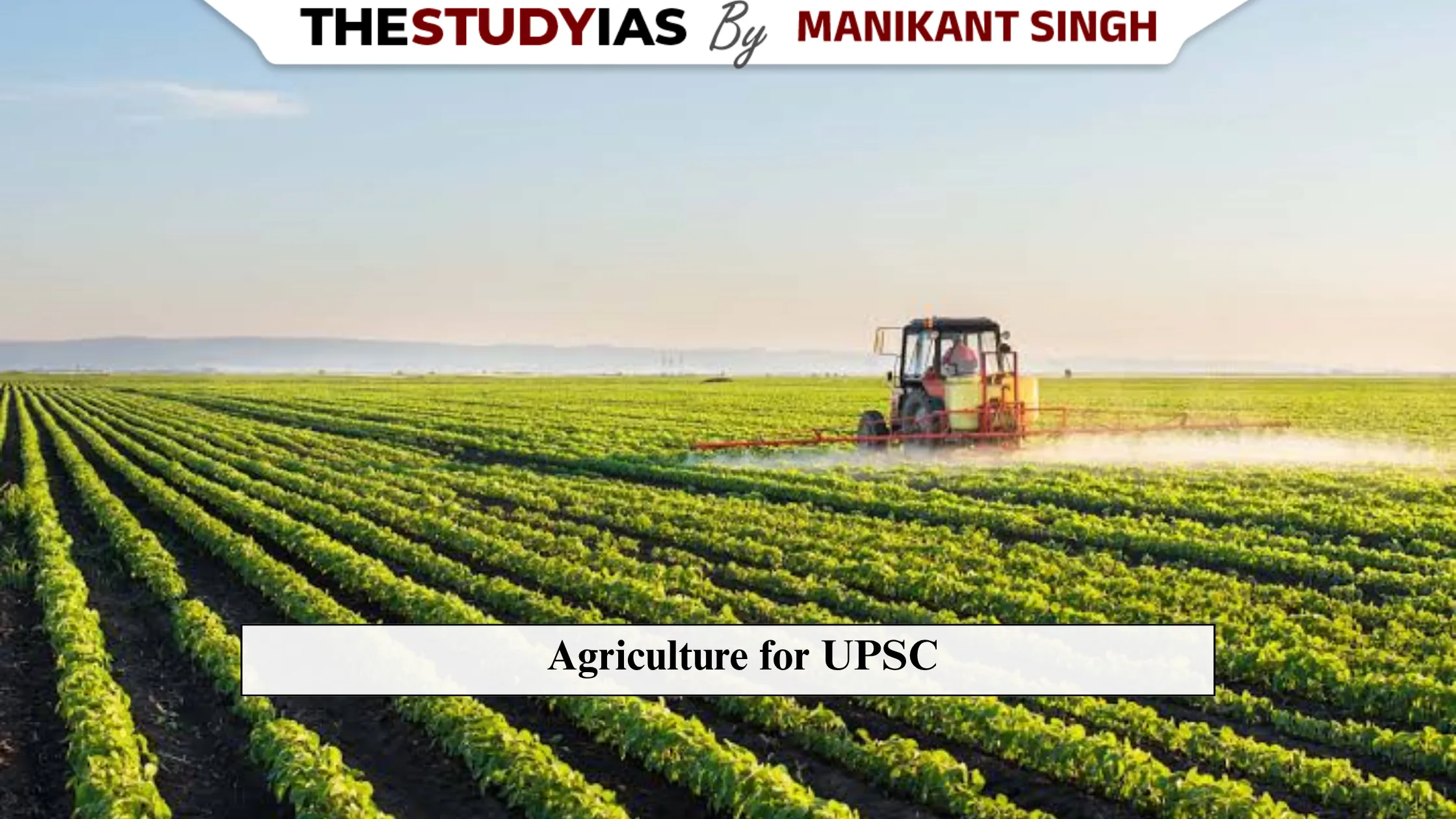
Agriculture for UPSC GS Paper 3: Complete Topic Guide
Agriculture is a fundamental pillar of the Indian economy, supporting food security, rural livelihoods, industrial development and inclusive growth. Despite the expansion of the services and manufacturing sectors, agriculture and allied activities continue to employ a substantial proportion of India's workforce.
However, Indian agriculture faces several structural challenges, including fragmented landholdings, low farm productivity, inadequate irrigation, price volatility, climate change, limited access to institutional credit and weaknesses in agricultural marketing. The focus of agricultural policy has gradually expanded from increasing foodgrain production to ensuring farmers' income security, sustainable agriculture, agricultural diversification, value addition and rural prosperity.
For UPSC Civil Services Examination, agriculture is an important component of GS Paper III: Indian Economy, particularly under the themes of agricultural cropping patterns, irrigation, agricultural marketing, subsidies, food processing, technology, land reforms and the economics of animal rearing.
Importance of Agriculture in the Indian Economy
Agriculture contributes to India's economic development through employment, food security, industrial linkages and foreign trade.
According to the Economic Survey 2025-26, agriculture and allied activities contribute nearly one-fifth of India's national income at current prices and account for approximately 46.1% of the country's workforce. This highlights the importance of improving agricultural productivity and rural incomes for achieving inclusive growth. Contribution to GDP and National Income
Agriculture contributes to the country's Gross Value Added (GVA) through crop production, livestock, forestry and fishing. Its performance also influences rural consumption, demand for industrial goods and overall economic growth.
Employment Generation
Agriculture provides direct employment to cultivators and agricultural labourers. Allied activities such as dairy farming, poultry, fisheries, horticulture and food processing create additional employment opportunities, particularly in rural areas.
Food and Nutritional Security
Agriculture ensures the availability of essential food commodities such as cereals, pulses, vegetables, fruits, milk, eggs and fish. A productive agricultural sector is essential for controlling food inflation and improving nutritional security.
Raw Materials for Industries
Agriculture supplies raw materials to several industries, including textiles, sugar, jute, food processing, edible oils, leather and beverages. Therefore, agricultural development also supports industrial growth.
Foreign Exchange Earnings
India exports agricultural commodities such as rice, spices, tea, coffee, marine products, cotton and processed food. Agricultural exports contribute to foreign exchange earnings and strengthen India's position in international markets.
Poverty Reduction and Inclusive Growth
A large proportion of rural households depend directly or indirectly on agriculture. Improvements in agricultural productivity, market access and farmers' incomes can help reduce rural poverty and regional inequalities.
Cropping Patterns in India
A cropping pattern refers to the proportion of land under different crops, their arrangement and their distribution across seasons and geographical regions. India's cropping patterns are influenced by climate, rainfall, soil characteristics, irrigation facilities, market demand, technology and government policies.
Major Cropping Seasons in India
India has three major agricultural seasons: Kharif, Rabi and Zaid.
Kharif Crops: These crops are generally sown with the onset of the southwest monsoon. They require relatively warm conditions and, depending on the crop, adequate rainfall. Rice, maize, cotton and soybean are important Kharif crops.
Rabi Crops: These crops are generally cultivated during the winter season. They require relatively cooler conditions during growth and warmer, dry conditions during maturation. Wheat, gram, mustard and barley are major Rabi crops.
Zaid Crops: These are short-duration crops cultivated between the Rabi and Kharif seasons, often with irrigation. Watermelon, cucumber and other summer vegetables are common examples.
Major Crops of India
Foodgrain Crops
Rice and wheat are India's major cereal crops. Rice is widely cultivated in regions with relatively high rainfall and irrigation facilities, while wheat is primarily a Rabi crop grown in northern and central India.
Millets such as jowar, bajra and ragi are important for nutritional security and climate-resilient agriculture because many varieties can grow under relatively dry conditions.
Pulses
India cultivates pulses such as gram, tur, urad, moong and lentil. Pulses are important sources of plant-based protein and contribute to soil fertility through biological nitrogen fixation.
Oilseeds
Major oilseed crops include mustard, soybean, groundnut, sunflower, sesame and rapeseed. Increasing domestic oilseed production is important for reducing India's dependence on edible oil imports.
Commercial Crops
Cotton, sugarcane, jute, tea, coffee and rubber are important commercial crops. These crops support agricultural processing, manufacturing, exports and rural employment.
Factors Affecting Cropping Patterns
The cropping pattern of a region is influenced by several interconnected factors:
Climate: Temperature, rainfall, humidity and length of the growing season determine crop suitability.
Soil: Soil fertility, texture, drainage and moisture-retention capacity influence crop selection.
Irrigation: Availability of surface water and groundwater allows farmers to cultivate water-intensive crops and multiple crops.
Market Demand: Prices, procurement policies, processing industries and export opportunities influence farmers' decisions.
Technology: Improved seeds, fertilisers, mechanisation and agricultural research affect crop productivity.
Government Policies: MSP, subsidies, crop insurance and procurement arrangements influence cropping choices.
Crop Diversification
Crop diversification refers to shifting from the cultivation of a limited number of crops towards a wider variety of crops, including pulses, oilseeds, horticultural crops, millets and commercial crops. It reduces excessive dependence on a few crops and can improve farmers' income and resilience.
Its major benefits include:
Reduces the risk of crop failure and price fluctuations.
Improves soil health through crop rotation and varied cropping systems.
Reduces excessive dependence on water-intensive crops.
Promotes nutritional security through diversified food production.
Creates opportunities for horticulture, food processing and exports.
However, diversification requires assured markets, suitable storage facilities, processing infrastructure, quality seeds and access to institutional credit.
Irrigation in Indian Agriculture
Irrigation refers to the artificial application of water to agricultural land to support crop growth when rainfall is insufficient or irregular.
India's agriculture continues to depend significantly on monsoon rainfall. Irrigation is therefore essential for stabilising agricultural production, increasing cropping intensity and reducing vulnerability to droughts.
Major Sources of Irrigation
Canal Irrigation: Water is supplied to agricultural fields through an interconnected network of canals. It is particularly important in parts of northern and northwestern India.
Well and Tube-well Irrigation: Groundwater is extracted through wells and tube wells. It is an important source of irrigation in states such as Uttar Pradesh, Punjab, Haryana and Gujarat.
Tank Irrigation: Rainwater is stored in natural or artificial tanks and reservoirs for agricultural use. It is particularly important in parts of southern India.
Micro-Irrigation: Drip and sprinkler irrigation systems deliver water more efficiently and help reduce water wastage.
Major Irrigation Methods
Drip Irrigation: Water is supplied directly near the root zone of plants through a network of pipes and emitters. It is useful for orchards, vegetables and several water-sensitive crops.
Sprinkler Irrigation: Water is distributed through sprinklers in a manner similar to rainfall. It is useful in areas with uneven land surfaces and for crops requiring controlled water application.
Challenges in Irrigation
Indian agriculture faces several irrigation-related problems:
Unequal distribution of irrigation facilities across states and regions.
Overexploitation of groundwater in water-stressed regions.
Inefficient water-use practices and inadequate maintenance of irrigation infrastructure.
High initial costs of micro-irrigation systems for small farmers.
Inter-state water disputes and competing demands from agriculture, industry and households.
Declining groundwater levels and increasing water stress due to climate change.
Government Initiatives for Irrigation
Pradhan Mantri Krishi Sinchayee Yojana (PMKSY) aims to expand irrigation coverage and improve water-use efficiency through the principle of Har Khet Ko Pani and Per Drop More Crop.
Per Drop More Crop promotes micro-irrigation technologies such as drip and sprinkler systems.
Atal Bhujal Yojana focuses on community-led groundwater management and sustainable groundwater use in selected water-stressed areas.
A sustainable irrigation strategy should combine water conservation, groundwater regulation, micro-irrigation, watershed development and crop diversification.
Agricultural Productivity and Major Challenges
Agricultural productivity refers to the amount of agricultural output produced per unit of input, such as land, labour, water or capital. Improving productivity is essential for increasing farmers' incomes, ensuring food security and reducing pressure on agricultural land.
Major Challenges Affecting Indian Agriculture
Small and Fragmented Landholdings
The division of agricultural land across generations has resulted in fragmented holdings. Small farms often face difficulties in adopting mechanisation, accessing institutional credit and achieving economies of scale.
Low Agricultural Productivity
Productivity remains uneven across crops and regions due to limited irrigation, inadequate investment, poor-quality inputs, insufficient mechanisation and gaps in agricultural extension services.
Monsoon Dependence
A considerable portion of Indian agriculture remains vulnerable to rainfall variability. Delayed monsoons, droughts, floods and unseasonal rainfall can affect crop yields and farmers' incomes.
Soil Degradation
Excessive chemical fertiliser use, soil erosion, waterlogging, salinity and declining organic matter affect soil fertility and long-term agricultural sustainability.
Rising Input Costs
Increasing costs of seeds, fertilisers, pesticides, diesel, electricity and agricultural machinery reduce farmers' profit margins.
Price Volatility
Farmers often face fluctuations in market prices due to changes in production, demand, storage capacity, imports and exports. Perishable commodities are particularly vulnerable to distress sales.
Inadequate Storage and Post-Harvest Infrastructure
Insufficient warehouses, cold chains, refrigerated transport and processing facilities lead to post-harvest losses and reduce farmers' bargaining power.
Limited Access to Institutional Credit
Small and marginal farmers may face difficulties in accessing affordable institutional credit because of inadequate documentation, lack of collateral and limited banking access.
Climate Change
Rising temperatures, changing rainfall patterns, extreme weather events and water stress affect crop productivity, livestock health and agricultural livelihoods.
Land Reforms in India
Land reforms refer to institutional and legal measures undertaken to improve the ownership, distribution, utilisation and management of agricultural land. After Independence, land reforms were introduced to remove exploitative agrarian structures, improve the rights of cultivators and promote social justice.
Major Components of Land Reforms
Abolition of Intermediaries
The abolition of zamindari and other intermediary systems aimed to establish a direct relationship between the state and cultivators and reduce exploitation by landlords.
Tenancy Reforms
Tenancy reforms sought to regulate rent, provide security of tenure and confer ownership rights on eligible tenants.
Ceiling on Landholdings
Land ceiling laws aimed to impose limits on the amount of agricultural land that an individual or family could own. Surplus land was intended to be redistributed among landless and marginal farmers.
Consolidation of Landholdings
Consolidation involves combining scattered land parcels belonging to a farmer into a more compact holding. It facilitates mechanisation and efficient agricultural operations.
Cooperative Farming
Cooperative farming encourages farmers to pool resources and undertake selected agricultural activities collectively while retaining their individual land ownership.
Challenges in Land Reforms
Differences in implementation across states.
Legal loopholes and benami ownership arrangements.
Incomplete land records and outdated documentation.
Fragmentation of landholdings.
Difficulties in identifying and distributing surplus land.
Inadequate land rights for women and tenant cultivators.
Way Forward
India needs updated land records, transparent land administration, secure tenancy arrangements, recognition of women's land rights and efficient land leasing frameworks. The Digital India Land Records Modernization Programme (DILRMP) is an important initiative for improving the digitisation and modernisation of land records.
Agricultural Marketing in India
Agricultural marketing refers to the activities involved in moving agricultural produce from farmers to consumers. It includes grading, storage, transportation, processing, pricing, selling and distribution. An efficient agricultural marketing system enables farmers to obtain remunerative prices and reduces unnecessary intermediaries.
Agricultural Marketing System in India
Agricultural Produce Market Committee (APMC) Mandis
APMC markets were established by state governments to regulate agricultural trade and protect farmers from unfair trading practices. However, the system has faced challenges such as restricted market access, multiple market charges, limited competition and the influence of intermediaries in some regions.
Minimum Support Price (MSP)
MSP is the price announced by the Government of India for specified agricultural crops to protect farmers against sharp declines in market prices. The Commission for Agricultural Costs and Prices (CACP) recommends MSPs for 22 mandated crops, while the Fair and Remunerative Price (FRP) is announced for sugarcane. The MSP framework is intended to provide price support, encourage production and protect farmers' interests. However, MSP announcement does not mean that the government directly procures every crop from every farmer at that price.
Agricultural Marketing Reforms
Agricultural marketing reforms aim to improve market access, promote competition, strengthen supply chains and reduce post-harvest losses.
National Agriculture Market (e-NAM)
The National Agriculture Market (e-NAM) is an online trading platform launched in April 2016 to connect existing APMC mandis through a common electronic market.
Its major objectives include:
Promoting transparent price discovery.
Improving market access for farmers.
Facilitating online trading.
Reducing information asymmetry.
Encouraging integration of agricultural markets.
However, the effectiveness of e-NAM depends on quality assaying, logistics, payment systems, market infrastructure and participation by buyers and farmers.
Farmer Producer Organisations (FPOs)
Farmer Producer Organisations are collective institutions that enable farmers to aggregate their produce and resources. FPOs can help small and marginal farmers achieve economies of scale, reduce input costs, improve bargaining power, access institutional credit and connect with organised markets. They are particularly important for improving farmers' participation in value chains.
Minimum Support Price and Agricultural Subsidies
Government support to agriculture plays an important role in stabilising farmers' incomes, ensuring food security and promoting agricultural investment.
Minimum Support Price (MSP)
The Government announces MSPs for 22 mandated crops on the recommendations of the CACP. Sugarcane has a separate Fair and Remunerative Price mechanism.
The 22 mandated crops comprise:
Cereals: Paddy, wheat, maize, jowar, bajra, ragi and barley.
Pulses: Gram, tur, moong, urad and lentil.
Oilseeds: Groundnut, rapeseed and mustard, soybean, sunflower, sesamum, safflower and nigerseed.
Commercial crops: Cotton, jute and copra.
Importance of MSP
MSP can provide a price-support signal, reduce farmers' exposure to sharp market-price declines, encourage production and support government procurement for food security programmes.
Challenges Associated with MSP
Procurement is concentrated in a limited number of crops and regions.
Small farmers may not have effective access to procurement centres.
Excessive focus on rice and wheat can discourage crop diversification.
Procurement and storage involve substantial fiscal and logistical costs.
Assured procurement can contribute to unsustainable water and soil practices in certain regions.
Agricultural Subsidies
Agricultural subsidies are financial or economic benefits provided by the government to support farmers and reduce the cost of agricultural production.
Major categories include:
Fertiliser Subsidy: Helps make chemical fertilisers affordable for farmers.
Food Subsidy: Supports the public distribution system and the procurement and distribution of foodgrains.
Power Subsidy: Reduces the cost of electricity used for agricultural operations and irrigation in several states.
Irrigation Subsidy: Supports the expansion and efficient use of irrigation facilities.
Credit Subsidy: Reduces the cost of institutional agricultural borrowing through interest-support mechanisms.
Seed and Input Subsidies: Support access to quality seeds and other agricultural inputs.
Issues Associated with Agricultural Subsidies
Fiscal burden on government finances.
Inefficient allocation and leakage in some subsidy programmes.
Excessive fertiliser use and soil degradation.
Overexploitation of groundwater due to underpriced electricity and irrigation.
Unequal distribution of benefits across farm sizes and regions.
Way Forward
India should gradually shift towards more efficient and targeted support mechanisms. Soil health-based fertiliser use, direct benefit transfers where appropriate, improved irrigation efficiency and investment in agricultural infrastructure can strengthen the effectiveness of public expenditure.
Agricultural Credit and Institutional Support
Agricultural credit is essential for purchasing seeds, fertilisers, machinery, irrigation equipment and other agricultural inputs. It also helps farmers meet short-term production expenses and long-term investment requirements.
Sources of Agricultural Credit
Institutional Sources: Commercial banks, regional rural banks, cooperative banks and other formal financial institutions.
Non-Institutional Sources: Moneylenders, traders, landlords and informal lenders.
Institutional credit is important because it can provide more transparent terms and relatively affordable borrowing compared with many informal sources.
Kisan Credit Card (KCC)
The Kisan Credit Card Scheme was introduced in 1998 to provide timely and flexible credit to farmers for agricultural and allied activities. It aims to simplify access to short-term credit for cultivation, post-harvest expenses and certain allied-sector requirements.
Role of NABARD
The National Bank for Agriculture and Rural Development (NABARD) was established in 1982 as an apex development financial institution for agriculture and rural development.
Its major functions include:
Providing refinance support to eligible financial institutions.
Supporting rural infrastructure development.
Promoting cooperative banks and regional rural banks.
Supporting self-help groups and financial inclusion.
Facilitating agricultural and rural development initiatives.
Technology in Indian Agriculture
Agricultural technology can improve productivity, reduce production costs, strengthen resource efficiency and help farmers respond to climate-related risks.
Major Technological Developments
Precision Agriculture
Precision agriculture uses data, sensors, GPS, remote sensing and digital tools to apply agricultural inputs according to the specific requirements of crops and fields. It can improve fertiliser use, water management and productivity.
Artificial Intelligence and Machine Learning
AI-based tools can support crop monitoring, pest identification, yield forecasting, weather-based advisories and agricultural risk assessment.
Drones in Agriculture
Agricultural drones can be used for crop monitoring, spraying fertilisers and pesticides, mapping fields and assessing crop damage.
Remote Sensing and GIS
Satellite imagery and Geographic Information Systems help monitor crop health, soil conditions, land use, droughts and agricultural production.
Biotechnology
Biotechnology includes tissue culture, marker-assisted selection, genetic improvement and other scientific methods that can support the development of improved crop varieties.
Digital Agriculture
Digital platforms can connect farmers with information on weather, prices, inputs, credit, insurance and government schemes.
Digital Agriculture Mission
The Digital Agriculture Mission, approved in 2024, aims to develop digital public infrastructure for agriculture, including AgriStack and related data systems. Its broad objective is to improve access to reliable agricultural information and support technology-driven decision-making.
Challenges in Agricultural Technology Adoption
High initial costs of advanced equipment.
Limited digital literacy in certain rural areas.
Small and fragmented landholdings.
Inadequate rural connectivity and infrastructure.
Limited access to technical support and training.
Data privacy, consent and governance concerns.
Technology adoption must be affordable, locally suitable and accessible to small and marginal farmers.
Agricultural Diversification and Allied Activities
Agricultural diversification involves expanding agricultural activities beyond traditional foodgrain cultivation. Allied sectors can improve income stability, reduce dependence on crop production and generate employment throughout the year.
Horticulture
Horticulture includes fruits, vegetables, flowers, spices, plantation crops and medicinal plants. It can provide higher returns per unit of land in suitable conditions and support exports, food processing and rural employment.
Animal Husbandry
Animal husbandry includes dairy farming, poultry, sheep rearing, goat rearing and piggery. It provides supplementary income, supports nutritional security and creates employment opportunities for rural households.
Fisheries
Fisheries include inland fisheries, aquaculture and marine fisheries. The sector contributes to food security, exports, rural employment and the development of coastal and inland communities.
Sericulture
Sericulture refers to the cultivation of silkworms for silk production. It supports employment in rural and semi-urban areas, particularly among small producers and women.
Apiculture
Apiculture, or beekeeping, contributes to honey production and agricultural productivity through pollination services.
Importance of Allied Activities
Allied activities can:
Diversify farmers' income sources.
Reduce dependence on seasonal crop production.
Create additional rural employment.
Improve nutritional security.
Promote agricultural exports and processing.
Strengthen resilience against crop-related risks.
Food Processing and Agricultural Development
Food processing involves transforming agricultural produce into value-added products through operations such as cleaning, grading, preservation, packaging and manufacturing. It connects agriculture with industry and improves the value realisation of agricultural products.
Importance of Food Processing
Value Addition: Processing increases the market value of raw agricultural produce and creates additional income opportunities.
Reduction in Post-Harvest Losses: Cold chains, storage, preservation and processing facilities help reduce wastage of perishable commodities.
Employment Generation: Food processing creates jobs in manufacturing, packaging, logistics, quality control and marketing.
Export Promotion: Processed food products can expand India's export opportunities and improve its position in international value chains.
Market Diversification: Processing gives farmers access to multiple markets and reduces dependence on selling unprocessed produce.
Major Government Initiatives
Pradhan Mantri Kisan SAMPADA Yojana aims to create modern infrastructure for food processing, including cold chains, food-processing clusters and agro-processing facilities.
Production Linked Incentive Scheme for Food Processing Industry (PLISFPI) seeks to strengthen domestic manufacturing, promote Indian food brands and improve competitiveness.
Operation Greens was introduced to address supply-chain challenges and improve value realisation for selected agricultural and horticultural commodities.
Agriculture Infrastructure Fund (AIF) supports financing for post-harvest management infrastructure and community farming assets.
Sustainable Agriculture in India
Sustainable agriculture refers to agricultural practices that maintain productivity while conserving natural resources, protecting the environment and ensuring long-term economic viability. It aims to balance economic profitability, environmental protection and social well-being.
Major Sustainable Agricultural Practices
Organic Farming
Organic farming relies on natural inputs and ecological processes while restricting or avoiding synthetic chemical fertilisers and pesticides under applicable organic standards.
Natural Farming
Natural farming seeks to reduce dependence on externally purchased chemical inputs and promote locally available biological and natural resources.
Agroforestry
Agroforestry involves integrating trees with crops and/or livestock on agricultural land. It can improve biodiversity, provide additional income and contribute to carbon sequestration.
Crop Rotation
Crop rotation involves cultivating different crops sequentially on the same land. It can improve soil fertility, break pest cycles and reduce nutrient depletion.
Conservation Agriculture
Conservation agriculture is based on minimum soil disturbance, permanent soil cover and crop diversification.
Integrated Pest Management (IPM)
IPM combines biological, cultural, mechanical and chemical methods to control pests while reducing unnecessary pesticide use.
Government Initiatives for Sustainable Agriculture
Paramparagat Krishi Vikas Yojana (PKVY) promotes organic farming through cluster-based approaches and support for farmers.
National Mission on Natural Farming (NMNF) promotes natural farming practices and aims to reduce dependence on external chemical inputs.
Soil Health Card Scheme provides farmers with information on soil nutrient status and recommendations for appropriate nutrient management.
National Mission for Sustainable Agriculture (NMSA) promotes sustainable agricultural practices, climate-resilient farming and improved resource management.
Climate Change and Indian Agriculture
Agriculture is highly sensitive to changes in temperature, rainfall, soil moisture and extreme weather events. Climate change affects agricultural productivity and the stability of rural livelihoods.
Major Impacts of Climate Change on Agriculture
Rising Temperatures: Higher temperatures can reduce crop yields, affect grain quality and increase heat stress in livestock.
Irregular Monsoon: Variations in rainfall timing and intensity can disrupt sowing, irrigation planning and harvesting.
Droughts and Floods: Extreme weather events can cause crop losses, soil erosion and damage to agricultural infrastructure.
Pest and Disease Outbreaks: Changing climatic conditions can alter the distribution and intensity of agricultural pests and diseases.
Groundwater Stress: Higher temperatures and changing rainfall patterns can increase irrigation requirements and pressure on groundwater resources.
Climate-Resilient Agriculture
Climate-resilient agriculture involves adopting practices and technologies that help farming systems withstand climate-related shocks.
Important measures include:
Developing drought-tolerant, flood-tolerant and heat-resistant crop varieties.
Promoting crop diversification and mixed farming.
Improving irrigation efficiency.
Strengthening weather forecasting and agricultural advisories.
Expanding crop insurance coverage and risk-management mechanisms.
Promoting agroforestry and soil conservation.
The National Innovations in Climate Resilient Agriculture (NICRA) programme of ICAR focuses on developing and demonstrating climate-resilient agricultural technologies.
Major Government Schemes Related to Agriculture
The Government of India implements several schemes to improve farmers' incomes, agricultural productivity, infrastructure and risk management.
Important Schemes: Key Details
Pradhan Mantri Kisan Samman Nidhi (PM-KISAN)
Launched in 2019, PM-KISAN provides eligible landholding farmer families with income support of ₹6,000 per year, transferred in three equal instalments of ₹2,000 through Direct Benefit Transfer, subject to scheme conditions and exclusions.
Pradhan Mantri Fasal Bima Yojana (PMFBY)
Launched in 2016, PMFBY provides insurance coverage against specified crop losses arising from notified risks. It seeks to stabilise farmers' incomes and encourage the adoption of modern agricultural practices.
PM Dhan-Dhaanya Krishi Yojana
Announced in the Union Budget 2025–26, this programme focuses on improving agricultural productivity, irrigation, storage, crop diversification and credit access in 100 districts with relatively low agricultural productivity.
Agriculture Infrastructure Fund
Launched in 2020, the Agriculture Infrastructure Fund supports financing for post-harvest management infrastructure and community farming assets through an interest-subvention and credit-guarantee framework, subject to scheme conditions.
Major Issues and Challenges in Indian Agriculture: A Critical Assessment
Despite improvements in foodgrain production and agricultural infrastructure, several structural issues continue to affect the sector.
Low and Uncertain Farmers' Income: Farmers face uncertainty due to fluctuating market prices, rising input costs, climate risks and unequal access to markets.
Regional Imbalances: Irrigation, infrastructure, technology adoption and institutional credit are unevenly distributed across states.
Excessive Dependence on Rice and Wheat: Concentration on a limited number of crops can create ecological pressure and discourage the production of pulses, oilseeds and millets.
Inadequate Agricultural Research and Extension: Limited access to quality advisory services and locally suitable technologies restricts productivity improvements.
Post-Harvest Losses: Gaps in cold chains, warehouses, transportation and processing reduce the value farmers receive from their produce.
Groundwater Depletion: Unsustainable irrigation practices and the cultivation of water-intensive crops in water-stressed regions contribute to groundwater depletion.
Climate Vulnerability: Small and marginal farmers often have limited financial resources to recover from droughts, floods and other climate-related shocks.
Gender Inequality: Women contribute significantly to agricultural activities but frequently face limited ownership of land, access to credit, technology and decision-making opportunities.
Way Forward: Transforming Indian Agriculture
India needs a comprehensive agricultural strategy that shifts the focus from production alone towards productivity, profitability, sustainability and farmer welfare.
Promoting Crop Diversification
Policy support should encourage pulses, oilseeds, millets, horticulture and other regionally suitable crops. Market linkages, processing facilities and appropriate price-support mechanisms are necessary to make diversification economically viable.
Strengthening Agricultural Infrastructure
Investment in warehouses, cold chains, rural roads, irrigation systems, grading facilities and food-processing units can reduce post-harvest losses and improve farmers' market access.
Improving Access to Institutional Credit
Small and marginal farmers, tenant cultivators and women farmers should receive better access to affordable and timely institutional credit.
Reforming Agricultural Marketing
Market reforms should promote competition, transparent price discovery, efficient logistics, farmer collectives and stronger integration between producers and consumers.
Expanding Agricultural Research and Extension
ICAR institutions, agricultural universities, Krishi Vigyan Kendras and state agriculture departments should strengthen research, field demonstrations and farmer training.
Promoting Sustainable Resource Management
Water conservation, soil health management, balanced fertiliser use, agroforestry and climate-resilient crops should become integral to agricultural policy.
Strengthening FPOs and Cooperatives
Farmer Producer Organisations and cooperatives can improve economies of scale, access to finance, input procurement, processing and bargaining power.
Improving Women's Participation
Recognition of women as farmers, better access to land rights, credit, technology, training and agricultural institutions can make agricultural development more inclusive.
Promoting Allied Activities
Dairy, fisheries, poultry, beekeeping and horticulture should receive greater support to diversify rural incomes and generate year-round employment.
Building Climate Resilience
Weather forecasting, crop insurance, resilient seed varieties, irrigation efficiency and local adaptation plans should be strengthened to reduce agricultural vulnerability.
Agriculture and UPSC GS Paper III Syllabus Linkage
Agriculture is directly connected with several themes mentioned in the UPSC GS Paper III syllabus.
Important Prelims Facts
CACP: Recommends MSPs for 22 mandated crops and FRP for sugarcane is determined separately by the government.
PM-KISAN: Provides ₹6,000 annually to eligible farmer families in three instalments.
PMFBY: Launched in 2016 to provide crop insurance coverage against specified risks.
NABARD: Established in 1982 as an apex development financial institution for agriculture and rural development.
e-NAM: Launched in April 2016 to integrate agricultural markets through electronic trading.
PMKSY: Promotes irrigation expansion and water-use efficiency.
Soil Health Card Scheme: Launched in 2015 to provide information on soil nutrient status.
PM-KUSUM: Promotes solar energy in the agricultural sector.
ICAR: Indian Council of Agricultural Research is the apex body coordinating agricultural research and education in India.
Green Revolution: Primarily associated with the increased production of wheat and rice through high-yielding varieties, irrigation, fertilisers and improved agricultural practices.
Practice MCQs
Q1. Consider the following statements regarding Minimum Support Price (MSP):
MSP is announced by the Government of India.
The Commission for Agricultural Costs and Prices recommends MSP for mandated crops.
MSP is announced for all agricultural commodities produced in India.
Which of the statements given above is/are correct?
(a) 1 and 2 only
(b) 2 and 3 only
(c) 1 and 3 only
(d) 1, 2 and 3
Answer: (a) 1 and 2 only
Explanation: MSP is announced for 22 mandated crops on the recommendations of CACP. It is not announced for every agricultural commodity.
Q2. With reference to e-NAM, consider the following statements:
It was launched in April 2016.
It seeks to integrate existing agricultural mandis through an electronic trading platform.
It replaces all state APMC laws with a single central law.
Which of the statements given above is/are correct?
(a) 1 only
(b) 1 and 2 only
(c) 2 and 3 only
(d) 1, 2 and 3
Answer: (b) 1 and 2 only
Explanation: e-NAM is an electronic agricultural trading platform. It does not replace state APMC laws with a single central law.
Q3. Which of the following are potential benefits of crop diversification?
Reduced dependence on a limited number of crops.
Improved resilience against certain climate and market risks.
Guaranteed elimination of agricultural price fluctuations.
Select the correct answer:
(a) 1 only
(b) 1 and 2 only
(c) 2 and 3 only
(d) 1, 2 and 3
Answer: (b) 1 and 2 only
Explanation: Crop diversification can reduce dependence on a few crops and improve resilience, but it cannot guarantee the elimination of price fluctuations.
Q4. Consider the following statements about NABARD:
It was established in 1982.
It provides refinance support to eligible rural financial institutions.
It is India's central bank.
Which of the statements given above is/are correct?
(a) 1 and 2 only
(b) 2 and 3 only
(c) 1 and 3 only
(d) 1, 2 and 3
Answer: (a) 1 and 2 only
Explanation: NABARD is an apex development financial institution for agriculture and rural development. The Reserve Bank of India is India's central bank.
UPSC Mains Practice Questions
Indian agriculture has moved from food security concerns towards the broader objective of farmers' income security. Discuss the major challenges in achieving this transition.
Examine the role of crop diversification in improving agricultural sustainability and farmers' incomes in India.
Discuss the significance of agricultural marketing reforms in improving farmers' access to remunerative prices.
What are the major challenges associated with irrigation in India? Suggest measures to improve water-use efficiency.
Evaluate the role of technology in transforming Indian agriculture, with special reference to precision farming, artificial intelligence and digital agriculture.Agricultural subsidies are essential for supporting farmers, but they can also create economic and environmental distortions. Critically examine.
Discuss the importance of allied agricultural activities in diversifying rural incomes and generating employment.
Climate change poses a serious challenge to Indian agriculture. Examine the need for climate-resilient agricultural practices.
Frequently Asked Questions
Why is agriculture important for UPSC GS Paper III?
Agriculture is a major component of GS Paper III because it connects with the Indian economy, food security, cropping patterns, irrigation, agricultural marketing, subsidies, technology, food processing, land reforms and animal husbandry.
What are the three major cropping seasons in India?
The three major cropping seasons are Kharif, Rabi and Zaid. Kharif crops are generally sown with the monsoon, Rabi crops are cultivated during winter, and Zaid crops are grown between the Rabi and Kharif seasons.
What is the difference between MSP and procurement price?
MSP is the government-announced price for specified crops. Procurement price refers to the price at which government agencies actually purchase agricultural produce. MSP announcement does not automatically guarantee government procurement from every farmer.
What is crop diversification?
Crop diversification involves shifting from a limited number of crops towards a wider range of crops, including pulses, oilseeds, millets and horticultural crops, to improve income opportunities and agricultural resilience.
What is the role of NABARD in Indian agriculture?
NABARD supports agriculture and rural development through refinance, rural infrastructure financing, institutional development, financial inclusion and support for rural livelihoods.
What are the major challenges facing Indian agriculture?
Major challenges include fragmented landholdings, low productivity, monsoon dependence, price volatility, inadequate irrigation, limited institutional credit, soil degradation, post-harvest losses and climate change.
How can technology improve Indian agriculture?
Technology can improve agriculture through precision farming, artificial intelligence, drones, satellite-based monitoring, improved seeds, digital market access, weather forecasting and efficient resource management.
Conclusion
Indian agriculture is undergoing a gradual transformation from a production-oriented system towards a more diversified, technology-driven and market-linked sector. However, increasing agricultural output alone cannot ensure the prosperity of farmers. The real challenge is to improve productivity, profitability, sustainability and resilience while ensuring that small and marginal farmers benefit from agricultural development.
A comprehensive strategy based on crop diversification, efficient irrigation, institutional credit, agricultural marketing reforms, technology, food processing and climate-resilient practices can strengthen the agricultural sector.
For India, the long-term objective should be to move from food security to nutritional security, from production growth to income growth, and from resource-intensive farming to sustainable agriculture.
For more UPSC-oriented articles and preparation resources, explore The Study IAS.
Subscribe to our Youtube Channel for more Valuable Content –TheStudyias
Download the App to Subscribe to our Courses –Thestudyias
The Source’s Authority and Ownership of the Article is Claimed ByTHE STUDY IAS BY MANIKANT SINGH
Comments (0)
Leave a Comment