UNESCO World Heritage Sites in India
17 Feb 2026
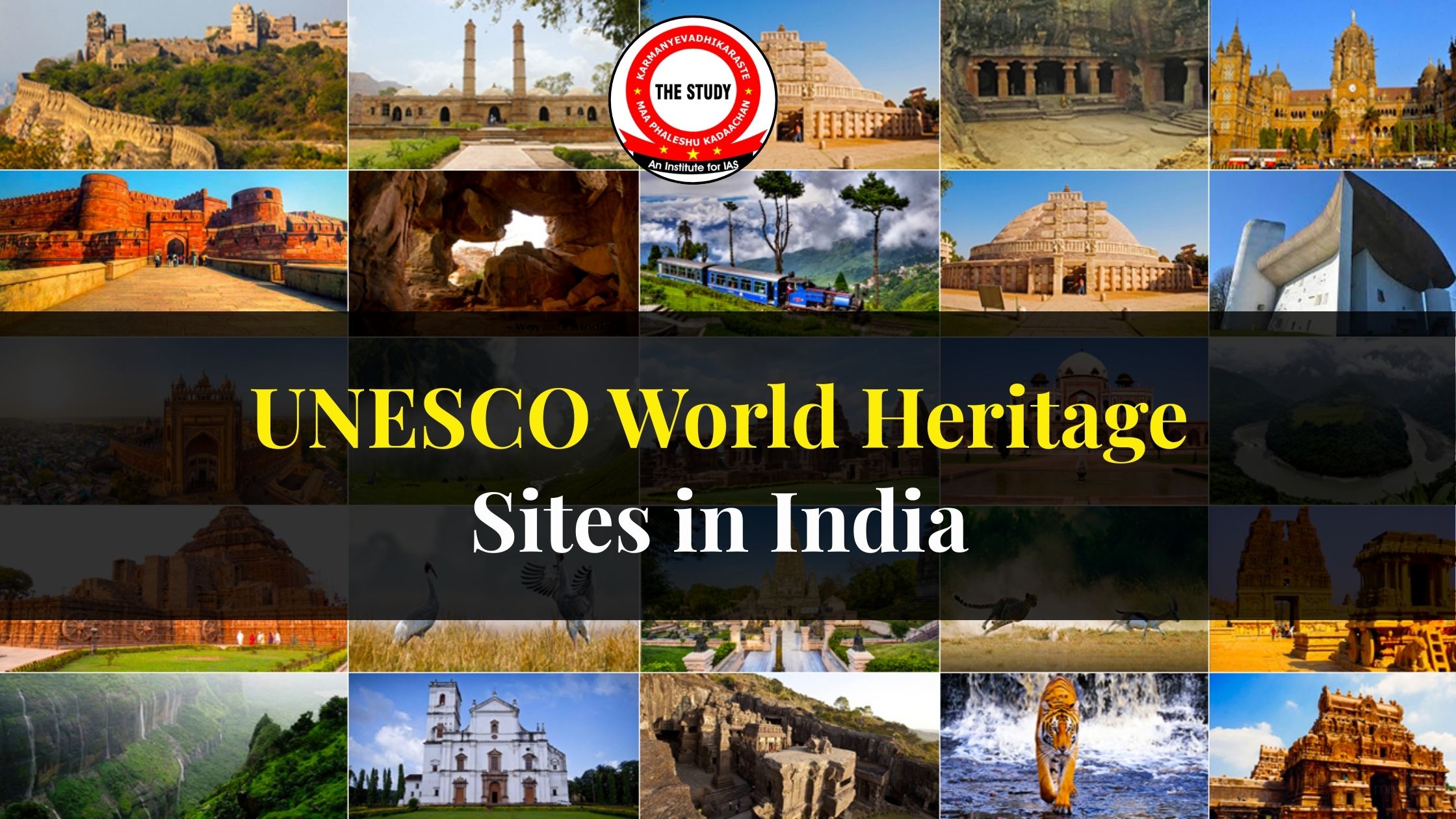
UNESCO World Heritage Sites in India
India, one of the oldest continuous civilisations of the world, has a rich cultural and natural heritage that spans millennia. From prehistoric rock shelters to majestic medieval forts, from ancient temple cities to biodiverse forests, India’s heritage reflects its long and layered history. The UNESCO World Heritage List identifies places of outstanding universal value that are significant for all humanity. As of 2026, India has 44 official UNESCO World Heritage Sites inscribed on the UNESCO World Heritage List. This includes cultural, natural, and mixed heritage sites recognised for their outstanding universal value.
This article explores these heritage sites through the lens of history, why they are significant, how they developed, and what they reveal about the evolution of Indian society, art, architecture, religion, and ecological diversity.
1. Understanding UNESCO and Its World Heritage Programme
The United Nations Educational, Scientific and Cultural Organisation (UNESCO) was established in 1945 with the aim of promoting international peace through collaboration in education, science, culture, and communication. In 1972, the UNESCO World Heritage Convention was adopted to identify and protect sites of cultural and natural importance across the world. Signatories to the convention commit to conserving these sites for present and future generations.
Sites are inscribed on the World Heritage List only if they meet at least one of the ten criteria defined by UNESCO, ranging from representing a masterpiece of human creative genius to containing superlative natural phenomena, or being outstanding examples of major stages in Earth’s history.
India ratified the World Heritage Convention in 1977 and became eligible to nominate sites for inclusion in the list. Since then, a broad variety of Indian sites have been recognised for their universal value.
2. The First Indian Sites on the World Heritage List
The year 1983 marked a major milestone in India’s heritage conservation history. During this year, several iconic cultural sites were inscribed on the UNESCO World Heritage List, establishing India on the global cultural map. These included:
✦ Agra Fort – A 16th-century Mughal fortress in Uttar Pradesh representing imperial power and architectural synthesis.
✦ Taj Mahal – The white marble mausoleum built by Emperor Shah Jahan, universally recognised as a masterpiece of Mughal architecture and a symbol of love.
✦ Ajanta Caves – Rock-cut Buddhist caves in Maharashtra with exquisite mural paintings dated between the 2nd century BCE and 480 CE.
✦ Ellora Caves – A monumental complex of Hindu, Buddhist, and Jain rock-cut temples representing religious harmony and artistic mastery.
These initial inscriptions underscored India’s ancient traditions, its ability to express spiritual ideals in stone, and its architectural ingenuity.
3. Historic Themes in India’s World Heritage Sites
When viewed historically, India’s World Heritage Sites tell stories of different periods and civilizational shifts, from the prehistoric to the medieval, and into the colonial era. These sites can broadly be grouped into key historical themes:
3.1 Prehistoric and Early Historic Legacy
Bhimbetka Rock Shelters
Among India’s most ancient heritage sites are the Bhimbetka rock shelters in Madhya Pradesh. These shelters contain some of the earliest known evidence of human life on the Indian subcontinent. Archaeological investigations reveal that these caves were occupied over 100,000 years ago and contain rock paintings dating back to prehistoric times. These paintings portray hunting scenes, animals, and human activities — offering invaluable insights into prehistoric society and cognition.
The Bhimbetka rock art predates recorded history and stands as a testament to the cultural lives of ancient hunter-gatherers who inhabited the Indian subcontinent long before the advent of agrarian civilisations.
Dholavira – A Harappan City
Another remarkable heritage site in India is Dholavira, located in Gujarat. Part of the Indus Valley Civilisation (IVC), Dholavira was an advanced urban settlement dating back over 4,500 years. The site reveals sophisticated city planning, including a fortified citadel, reservoirs, and water management systems — all achieved without modern tools. It reflects a high degree of civil engineering and social organisation in the Bronze Age.
Dholavira’s inscription on the World Heritage List highlights India’s connection to one of the world’s earliest urban cultures and helps fill gaps in understanding the evolution of ancient city life.
3.2 Classical and Medieval Religious Expressions
India’s cultural diversity is profoundly reflected in its temples, monasteries, churches, and mosques that have been recognised as World Heritage Sites. These sites not only represent religious devotion but also the evolution of art, architecture, and philosophical thought.
Ajanta Caves
The Ajanta Caves in Maharashtra are among the finest examples of early Buddhist art and architecture. Carved into a steep rock face, these cave sanctuaries were built in two phases — the first around the 2nd century BCE and the second in the 5th century CE. The caves are adorned with detailed paintings depicting Jataka tales (stories about the life of the Buddha), expressive figures, and elaborate ornamentation that reflect the aesthetics of ancient Indian art.
Ellora Caves
Situated not far from Ajanta, the Ellora Caves hold 34 rock-cut monuments that span three major Indian religions — Buddhism, Hinduism, and Jainism — from roughly the 6th to the 10th century CE. This demonstrates not only the craftsmanship of ancient Indian artisans but also the spiritual plurality that prevailed in the region over several centuries. The iconic Kailasa Temple (Cave 16) is a single monolithic structure carved from the top down, illustrating extraordinary technical and artistic achievement.
Group of Monuments at Pattadakal
Located in Karnataka, the monuments at Pattadakal represent an early medieval synthesis of northern and southern Indian architectural styles. Constructed in the 7th and 8th centuries, this ensemble consists of Hindu and Jain temples that reflect the artistic aspirations of the Chalukya dynasty and the cultural exchanges across regions.
3.3 Imperial Era – Royal Capitals and Fortresses
India’s medieval and early modern period was marked by the rise of powerful regional empires and kingdoms. Their architectural legacies are preserved as heritage sites that reflect the political, cultural, and artistic grandeur of their times.
Fatehpur Sikri
Commissioned by Mughal Emperor Akbar in the 16th century, Fatehpur Sikri was a planned imperial city that served as the capital of the Mughal Empire for a brief period. Its buildings blend Islamic, Persian, and Indian architectural elements and reflect Akbar’s vision of a composite cultural aesthetic.
Agra Fort and Taj Mahal
The Agra Fort is a monumental red sandstone citadel that was the centre of Mughal power in northern India for centuries. Nearby stands the Taj Mahal, built by Shah Jahan as a mausoleum for his wife Mumtaz Mahal. Together, these sites epitomise the zenith of Mughal architectural achievement — from fortress planning to sublime marble craftsmanship.
The Taj Mahal, in particular, transcends time as a symbol of love and artistic excellence, blending Persian influence with indigenous Indian motifs.
Hill Forts of Rajasthan
In 2025, a major addition to India’s World Heritage List was the Maratha Military Landscapes, a cluster of historic forts including Raigad, Shivneri, Lohagad, Panhala, and others, representing military architecture from the 17th to 19th centuries. These forts showcase strategic defensive planning and the martial heritage of the Maratha empire.
3.4 Colonial and Modern Heritage
India’s contact with European powers and its transformation under colonial rule produced new architectural forms and urban landscapes that also qualify as heritage:
Churches and Convents of Goa
Old Goa’s Church and Convent complex reflect Portuguese colonial influence that began in the early 16th century. Structures like the Sé Cathedral, Basilica of Bom Jesus, and St. Francis of Assisi Church demonstrate Baroque, Manueline, and Indo-European architectural elements introduced by the Portuguese.
Mountain Railways of India
Reflecting colonial engineering ingenuity, India’s mountain railways — including the Darjeeling Himalayan Railway and others — were inscribed on the World Heritage List for their historic importance in linking remote hill areas with plains, showcasing human adaptation to topographical challenges.
3.5 Natural and Mixed Heritage
India’s World Heritage Sites also include remarkable natural landscapes that harbour biodiversity and ecological significance.
Kaziranga and Keoladeo National Parks
These parks are among India’s most biodiverse regions. Kaziranga National Park, in Assam, protects the largest population of one-horned rhinoceros, while Keoladeo National Park in Rajasthan is a renowned bird sanctuary with rich avifaunal diversity.
Mixed and Other Natural Sites
The Nanda Devi and Valley of Flowers National Parks in the Himalayas and the Western Ghats are outstanding examples of mountain ecosystems and biodiversity richness. Additionally, Khangchendzonga National Park represents a mixed site with both cultural and natural values.
4. The Historical Importance of Preserving World Heritage Sites
The protection and promotion of World Heritage Sites serve multiple purposes that extend beyond tourism and national pride:
- ✦ Cultural Continuity: Sites like Ajanta, Ellora, and Dholavira connect present generations with ancient artistic traditions, philosophical ideas, and ways of life that might otherwise be forgotten.
- ✦ Educational Value: World Heritage Sites are living history books, enabling learners to engage with historical developments first-hand.
- ✦ Global Recognition: Inclusion on the UNESCO list places Indian heritage in a global context, promoting cross-cultural awareness and cooperation.
- ✦ Conservation Incentives: World Heritage status often brings international assistance and stricter national conservation measures to protect endangered sites.
5. Emerging Trends and Future Prospects
India continues to expand its representation on the World Heritage list. New sites are periodically added based on nominations prepared by archaeological historians, conservation experts, and state authorities. Sites in the tentative list often include archaeological sites, ancient urban centres, and landscapes significant to tribal cultures.
Moreover, increasing public awareness, digitisation of heritage records, and participatory conservation by local stakeholders provide momentum for protecting India’s legacy for the next century.
UNESCO World Heritage Sites in India
India is home to a remarkable number of UNESCO World Heritage Sites, reflecting its rich cultural heritage, architectural brilliance, and exceptional biodiversity. These sites are classified into Cultural, Natural, and Mixed categories, showcasing India’s historical depth, religious diversity, scientific achievements, and ecological importance.
UNESCO Cultural World Heritage Sites in India
India’s cultural heritage sites represent ancient civilizations, powerful empires, religious traditions, and architectural excellence.
Key Cultural Sites include:
- Agra Fort (1983), Uttar Pradesh – Mughal palace fort of major historical importance
- Ajanta Caves (1983), Maharashtra – Ancient Buddhist cave paintings and rock-cut architecture
- Ellora Caves (1983), Maharashtra – Rock-cut monuments of Buddhist, Hindu, and Jain faiths
- Taj Mahal (1983), Uttar Pradesh – Iconic Mughal architectural masterpiece
- Sun Temple, Konark (1984), Odisha – 13th-century temple dedicated to Surya
- Group of Monuments at Mahabalipuram (1984), Tamil Nadu – Pallava-era sculptural heritage
- Churches and Convents of Goa (1986), Goa – Portuguese colonial Christian architecture
- Fatehpur Sikri (1986), Uttar Pradesh – 16th-century Mughal capital
- Group of Monuments at Hampi (1986), Karnataka – Vijayanagara Empire capital remains
- Khajuraho Group of Monuments (1986), Madhya Pradesh – 10th–11th century temple art
- Elephanta Caves (1987), Maharashtra – 6th-century Shiva cave temples
- Great Living Chola Temples (1987, 2004), Tamil Nadu – Chola dynasty temple complexes
- Group of Monuments at Pattadakal (1987), Karnataka – Chalukya temple architecture
- Buddhist Monuments at Sanchi (1989), Madhya Pradesh – 3rd century BCE Buddhist structures
- Humayun’s Tomb (1993), Delhi – Early Mughal garden tomb
- Qutb Minar and its Monuments (1993), Delhi – 13th-century Indo-Islamic complex
- Mountain Railways of India (1999) – Historic hill railways in West Bengal, Himachal Pradesh & Tamil Nadu
- Rock Shelters of Bhimbetka (2003), Madhya Pradesh – Prehistoric rock art
- Champaner-Pavagadh Archaeological Park (2004), Gujarat – Pre-Mughal Islamic city
- Chhatrapati Shivaji Terminus (2004), Maharashtra – Victorian Gothic railway station
- Red Fort Complex (2007), Delhi – 17th-century Mughal fortress
- Jantar Mantar, Jaipur (2010), Rajasthan – 18th-century astronomical observatory
- Hill Forts of Rajasthan (2014), Rajasthan – Rajput military architecture
- Rani Ki Vav (2014), Gujarat – 11th-century stepwell
- Archaeological Site of Nalanda Mahavihara (2016), Bihar – Ancient Buddhist university
- The Architectural Work of Le Corbusier (2016), Chandigarh – Modern Movement architecture
- Historic City of Ahmedabad (2017), Gujarat – 15th-century urban heritage
- Victorian Gothic & Art Deco Ensemble of Mumbai (2018), Maharashtra – 19th–20th century architecture
- Jaipur City (2019), Rajasthan – 18th-century planned city
- Dholavira: A Harappan City (2021), Gujarat – Major Indus Valley Civilization site
- Kakatiya Rudreshwara (Ramappa) Temple (2021), Telangana – 13th-century temple architecture
- Santiniketan (2023), West Bengal – Cultural-educational centre of Rabindranath Tagore
- Sacred Ensembles of the Hoysala (2023), Karnataka – 12th–13th century Hoysala temples
- Moidams – Mound-Burial System of the Ahom Dynasty (2024), Assam – Royal burial mounds
- Maratha Military Landscapes of India (2025), Maharashtra & Tamil Nadu – Network of historic forts
UNESCO Natural World Heritage Sites in India
India’s natural heritage sites highlight globally significant ecosystems and biodiversity hotspots.
- Kaziranga National Park (1985), Assam – Largest population of one-horned rhinoceros
- Keoladeo National Park (1985), Rajasthan – Important migratory bird wetland
- Manas Wildlife Sanctuary (1985), Assam – Critical tiger habitat in the Eastern Himalayas
- Sundarbans National Park (1987), West Bengal – World’s largest mangrove forest and Bengal tiger habitat
- Nanda Devi and Valley of Flowers National Parks (1988, 2005), Uttarakhand – Alpine meadows and glacial ecosystems
- Western Ghats (2012) – Biodiversity hotspot across Karnataka, Kerala, Tamil Nadu & Maharashtra
- Great Himalayan National Park (2014), Himachal Pradesh – Himalayan ecosystems with glaciers and alpine forests
UNESCO Mixed World Heritage Site in India
India has one Mixed World Heritage Site that holds both cultural and natural significance:
- Khangchendzonga National Park (2016), Sikkim
- Cultural Significance: Sacred to indigenous Sikkimese communities
- Natural Significance: Protects Eastern Himalayan biodiversity from subtropical forests to alpine meadows
Key Takeaways
- India has 44 UNESCO World Heritage Sites (as of 2026), classified into Cultural, Natural, and Mixed categories.
- UNESCO’s World Heritage Programme (1972) aims to identify and protect sites of Outstanding Universal Value for humanity.
- India ratified the World Heritage Convention in 1977, and its first sites were inscribed in 1983 (Agra Fort, Taj Mahal, Ajanta Caves, Ellora Caves).
- India’s heritage sites span multiple historical phases, including:
- Prehistoric period (Bhimbetka Rock Shelters)
- Bronze Age urbanism (Dholavira – Indus Valley Civilisation)
- Classical & medieval religious architecture (Ajanta, Ellora, Pattadakal, Chola Temples)
- Imperial Mughal and regional kingdoms (Agra Fort, Fatehpur Sikri, Hill Forts)
- Colonial and modern heritage (Churches of Goa, Mountain Railways, Le Corbusier’s Chandigarh)
- Biodiversity-rich natural ecosystems (Kaziranga, Western Ghats, Sundarbans)
- Religious pluralism is a defining theme, visible in Buddhist, Hindu, Jain, Islamic, Christian, and indigenous heritage traditions.
- Sites like Ajanta and Ellora demonstrate artistic excellence, while Dholavira shows advanced ancient urban planning.
- Mughal monuments such as the Taj Mahal and Agra Fort represent architectural synthesis of Persian and Indian styles.
- Natural heritage sites protect globally significant biodiversity hotspots, including one-horned rhinoceros habitats, mangrove forests, and Himalayan ecosystems.
- Khangchendzonga National Park is India’s only Mixed World Heritage Site, combining cultural sacredness with ecological importance.
- World Heritage status provides:
- Cultural continuity
- Educational value
- Global recognition
- Conservation support
- India continues to expand its representation on the UNESCO list, reflecting growing commitment to heritage preservation.
Conclusion
India’s UNESCO World Heritage Sites are not merely architectural treasures or picturesque natural landscapes. They are historical witnesses to human creativity, cultural diversity, ecological balance, and social evolution. Whether it is the prehistoric rock art at Bhimbetka, the spiritual sanctuaries at Ajanta and Ellora, the imperial splendour of Fatehpur Sikri and Agra, or the natural wonderlands of Kaziranga and Western Ghats, each site encapsulates a story — a story that belongs to all of humanity.
In understanding these sites through a historical lens, we not only celebrate India’s past but reaffirm our responsibility to protect and cherish these treasures for generations to come.
Frequently Asked Questions (FAQs) – UNESCO World Heritage Sites in India
1. How many UNESCO World Heritage Sites are there in India in 2026?
As of 2026, India has 44 UNESCO World Heritage Sites, including Cultural, Natural, and Mixed heritage properties.
2. What are the categories of UNESCO World Heritage Sites in India?
UNESCO classifies World Heritage Sites into three categories:
- Cultural Sites – Monuments, cities, temples, forts, and architectural landmarks.
- Natural Sites – National parks, wildlife sanctuaries, and biodiversity hotspots.
- Mixed Sites – Places with both cultural and natural significance.
India has cultural and natural sites, along with one mixed site — Khangchendzonga National Park (Sikkim).
3. Which were the first UNESCO World Heritage Sites in India?
India’s first sites were inscribed in 1983:
- Agra Fort
- Taj Mahal
- Ajanta Caves
- Ellora Caves
These inscriptions marked India’s entry into the global heritage map.
4. What is the most famous UNESCO site in India?
The Taj Mahal in Uttar Pradesh is the most internationally recognised UNESCO World Heritage Site in India. It is considered a masterpiece of Mughal architecture and a symbol of love.
5. Which is the oldest UNESCO World Heritage Site in India historically?
In terms of historical age:
- Bhimbetka Rock Shelters contain prehistoric rock art dating back over 100,000 years.
- Dholavira represents the Indus Valley Civilisation from around 2500 BCE.
These sites reflect India’s ancient human and urban history.
6. How many natural World Heritage Sites does India have?
India has 7 Natural World Heritage Sites, including:
- Kaziranga National Park
- Sundarbans National Park
- Western Ghats
- Great Himalayan National Park
These sites protect globally important ecosystems and biodiversity.
7. What is a Mixed World Heritage Site in India?
A Mixed World Heritage Site has both cultural and natural importance.
India’s only mixed site is Khangchendzonga National Park (2016) in Sikkim, known for its sacred cultural traditions and Eastern Himalayan biodiversity.
8. Why are UNESCO World Heritage Sites important?
UNESCO sites are important because they:
- Preserve cultural identity and history
- Protect biodiversity and ecosystems
- Promote global recognition and tourism
- Encourage conservation efforts
- Serve as educational and research resources
9. What criteria does UNESCO use to select World Heritage Sites?
UNESCO uses 10 selection criteria, including:
- Representing a masterpiece of human creative genius
- Showing important cultural exchange
- Bearing unique testimony to a civilisation
- Containing exceptional natural beauty
- Representing major stages of Earth’s history
A site must meet at least one of these criteria to be inscribed.
10. Can new sites from India be added to the UNESCO list?
Yes. India regularly nominates new sites from its Tentative List. After evaluation by international experts, selected sites may be added to the World Heritage List.
Subscribe to our Youtube Channel for more Valuable Content – TheStudyias
Download the App to Subscribe to our Courses – Thestudyias
The Source’s Authority and Ownership of the Article is Claimed By THE STUDY IAS BY MANIKANT SINGH
Comments (0)
Leave a Comment