Reorganization of States in India – History & Impact
9 Feb 2026
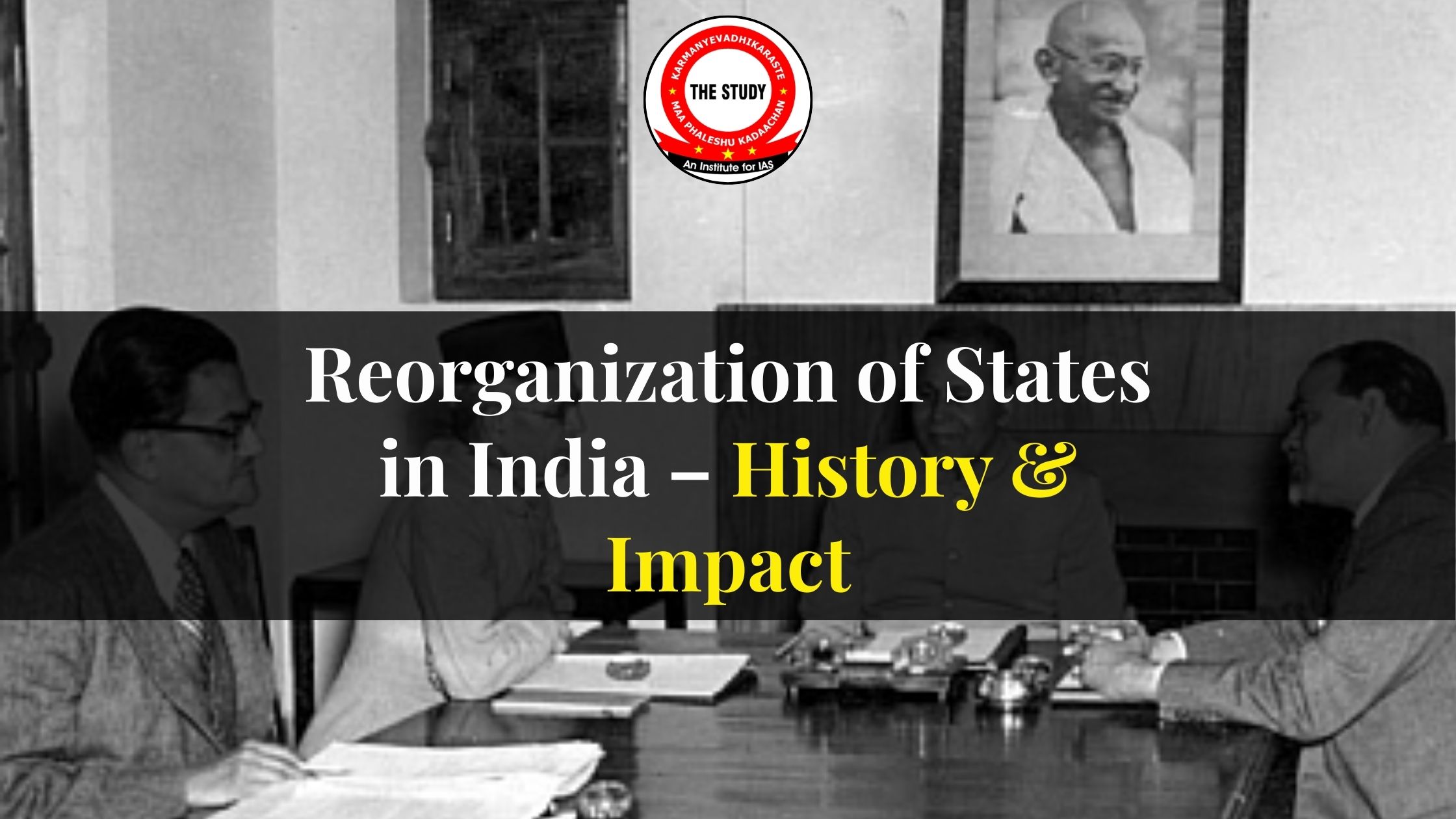
Reorganization of States in India – History & Impact
The reorganization of states in India is one of the most important developments in the country’s post-independence history. It reflects India’s sustained attempt to manage its vast diversity while preserving national unity. As Gyanesh Kudaisya notes in his book Reorganisation of States in India: Text and Context, “state reorganisation in India was not merely an administrative exercise but a negotiated political response to powerful regional and linguistic demands, shaping the federal nature of the Indian Union.” India is a land of multiple languages, cultures, traditions, and regional identities, and organizing the country into states that could govern effectively and represent the aspirations of the people was therefore a major challenge after independence.
At the time of independence in 1947, India inherited an uneven political and administrative structure created by the British. The need to reorganize states arose to ensure administrative efficiency, political stability, cultural recognition, and balanced regional development. Over the years, the reorganization of states has played a crucial role in strengthening Indian federalism and democratic governance.
Historical Background
1. Political Map of India at Independence
When India became independent, it consisted of two main types of political units:
- British Indian Provinces, which were directly governed by the British.
- Princely States, ruled by Indian princes under British paramountcy.
After independence, more than 560 princely states were integrated into the Indian Union through diplomacy and, in some cases, force. This integration was led by Sardar Vallabhbhai Patel and V.P. Menon. However, initially, the boundaries of the newly formed states were not based on linguistic or cultural considerations.
In 1950, the Constitution of India came into force and classified states into Part A, Part B, Part C, and Part D states for administrative convenience. This arrangement was temporary and did not satisfy popular aspirations.
2. Demand for Linguistic States
Soon after independence, demands began to emerge for the creation of states based on linguistic identity. Language was seen as a strong marker of cultural unity and social communication. Many leaders believed that administration would be more effective if people were governed in their own language.
However, national leaders like Jawaharlal Nehru and Sardar Patel were initially cautious. They feared that linguistic states could promote regionalism and threaten national unity. Despite these concerns, mass movements demanding linguistic states gained strength, especially in southern India.
Formation of Andhra State (1953)
The demand for a separate state for Telugu-speaking people became the first major linguistic movement. Potti Sreeramulu undertook a fast unto death demanding a separate Andhra State. His death in 1952 triggered widespread protests.
As a result, the Government of India created Andhra State in 1953, carved out of the Madras State. This was the first state formed on a linguistic basis in independent India. The success of this movement made it clear that linguistic aspirations could no longer be ignored.
State Reorganization Commission (1953)
To address the growing demands for linguistic states across the country, the Government of India appointed the State Reorganization Commission (SRC) in 1953.
Composition
- Chairman: Justice Fazal Ali
- Members: K.M. Panikkar and H.N. Kunzru
Objectives
The Commission was asked to examine:
- The need for reorganizing states
- The basis on which the reorganisation should be carried out
- The impact on national unity, administrative efficiency, and economic development
Recommendations
The SRC submitted its report in 1955. It accepted language as an important basis for state formation, but emphasized that:
- Administrative convenience
- Economic viability
- National unity and security
- must also be considered.
The Commission rejected the idea of complete linguistic reorganization without considering other factors.
States Reorganisation Act, 1956
1. Overview
Based on the recommendations of the State Reorganization Commission, Parliament passed the States Reorganisation Act, 1956, along with the Seventh Constitutional Amendment. These came into effect on 1 November 1956.
This Act completely transformed the political map of India and marked the most significant reorganization of states in Indian history.
2. Major Features
- Abolition of Part A, B, C, and D states
- Creation of 14 states and 6 Union Territories
- Reorganization of states mainly on linguistic lines
- Merger of smaller units into larger, more viable states
Examples:
- Andhra Pradesh was formed by merging Andhra State with the Telugu-speaking areas of Hyderabad.
- Kerala was created by combining Malayalam-speaking regions.
- Mysore State (later Karnataka) was formed by merging Kannada-speaking areas.
- Bombay State and Punjab were reorganized.
3. Constitutional Changes
The Seventh Amendment:
- Amended the First Schedule of the Constitution
- Made changes in representation in Parliament and state legislatures
- Strengthened the federal structure of India
Post-1956 State Reorganization
The process of reorganization did not end in 1956. Over time, new states were created to address regional aspirations and administrative challenges.
1. States Created in 2000
Three new states were created:
- Chhattisgarh from Madhya Pradesh
- Jharkhand from Bihar
- Uttarakhand from Uttar Pradesh
These states were formed to promote better governance and faster development in backward regions.
2. Formation of Telangana (2014)
The state of Telangana was carved out of Andhra Pradesh in 2014 after a prolonged movement. The demand was based on:
- Economic neglect
- Unequal distribution of resources
- Cultural identity
This demonstrated that state reorganization continues to be a dynamic process.
3. Reorganization of Jammu and Kashmir (2019)
In 2019, the state of Jammu and Kashmir was reorganized into:
- Union Territory of Jammu and Kashmir
- Union Territory of Ladakh
This reorganization was based on administrative and security considerations rather than linguistic factors.
Constitutional Basis of State Reorganization
Article 3 of the Constitution
Article 3 empowers Parliament to:
- Create new states
- Alter state boundaries
- Change the names of states
The President must refer such proposals to the concerned state legislature for its opinion, but Parliament is not bound by that opinion. This provision highlights the flexible and dynamic nature of Indian federalism.
Rationale Behind the Reorganization of States
1. Linguistic and Cultural Identity
Language helps people express their thoughts, traditions, and culture. Linguistic states helped preserve regional languages and cultures while ensuring political representation.
2. Administrative Efficiency
Smaller and linguistically homogeneous states are easier to govern. Communication between the government and citizens becomes more effective, improving administration and service delivery.
3. Economic Development
Separate states allow focused planning and better utilization of local resources. Regions that were neglected earlier could design development policies according to their specific needs.
4. Democratic Representation
State reorganization helped accommodate popular demands peacefully within the constitutional framework, strengthening democracy and political participation.
Impact of the Reorganization of States in India
The reorganization of states has had far-reaching consequences on India’s administrative, political, socio-cultural, and economic landscape. While it has strengthened federalism and democratic governance, it has also generated new challenges that continue to shape Indian politics.
1. Administrative Impact
Improved governance and accountability
Reorganization enabled the creation of states with manageable administrative units, allowing governments to function closer to the people. This proximity enhanced responsiveness, transparency, and accountability in governance.
Better implementation of policies
Smaller and more homogenous administrative units made it easier to design and implement policies suited to local needs. State governments could tailor welfare schemes, development programs, and public services according to regional priorities.
Enhanced decentralization of power
The process strengthened decentralization by distributing authority between the Centre and states more effectively. It also encouraged further decentralization to local bodies under the Panchayati Raj and urban governance systems.
2. Political Impact
Strengthening of federalism
State reorganization reinforced India’s federal structure by granting greater autonomy to states and recognizing regional aspirations within the constitutional framework. This helped accommodate diversity without undermining national unity.
Rise of regional political parties
Reorganization led to the emergence and consolidation of regional parties that articulated local interests more effectively. These parties played a crucial role in voicing regional concerns and influencing state-level policymaking.
Increased political awareness and participation
The creation of states based on linguistic and cultural identities enhanced political mobilisation. Citizens felt a stronger sense of belonging, leading to higher participation in electoral and democratic processes.
While regional parties voiced local aspirations, they also became important partners in coalition politics at the national level, thereby shaping central governance and policy decisions.
3. Socio-Cultural Impact
Promotion of regional languages and literature
Linguistic reorganisation encouraged the use of regional languages in administration, education, and media. This contributed to the preservation and growth of regional literature and cultural traditions.
Cultural recognition and pride
The formation of states based on cultural and linguistic identity fostered a sense of pride and recognition among communities. It helped reduce feelings of marginalization and strengthened social cohesion within states.
Improved education in the mother tongue
Education in the mother tongue improved learning outcomes, particularly at the primary level, and made education more accessible to larger sections of the population.
4. Economic Impact
Targeted regional development
State governments could focus on region-specific development strategies based on local resources, geography, and economic potential. This allowed for more balanced and inclusive growth.
Better allocation of financial resources
Reorganization facilitated more efficient budgeting and allocation of resources tailored to regional needs. States could prioritize sectors such as agriculture, industry, health, and infrastructure more effectively.
Growth of region-specific industries and infrastructure
States promoted industries suited to their strengths—such as IT, tourism, agriculture, or mining—leading to employment generation and improved infrastructure development.
Challenges and Criticism
Despite its benefits, state reorganization has also faced criticism and posed several challenges.
1. Growth of Regionalism
Excessive emphasis on regional identity has, at times, weakened national integration. In some cases, regionalism has promoted parochial attitudes and inter-state rivalries, especially over resources, language, and boundaries.
2. Demands for New States
Several regions continue to demand separate statehood, such as Vidarbha and Gorkhaland. While such demands reflect democratic aspirations, frequent demands can strain administrative capacity and complicate governance and resource distribution.
3. Economic Viability
Some newly formed states face financial constraints and depend heavily on central assistance. Limited revenue bases, inadequate infrastructure, and uneven development pose challenges to long-term economic sustainability.
Conclusion
The reorganization of states in India reflects the country’s commitment to democratic values, diversity, and unity. It shows how a flexible Constitution can accommodate regional aspirations while maintaining national integrity.
From linguistic reorganization in the 1950s to recent administrative restructuring, the process has strengthened Indian federalism and governance. Although challenges remain, state reorganization has largely succeeded in promoting political stability, cultural recognition, and development.
For UPSC aspirants, this topic is important for understanding post-independence Indian history, constitutional provisions, federalism, and governance. The reorganization of states continues to shape India’s political and administrative landscape and remains relevant in contemporary debates.
Frequently Asked Questions (FAQs)
1. Why was the reorganization of states in India necessary after independence?
The reorganization of states was necessary to address administrative inefficiency, political instability, cultural recognition, and uneven regional development inherited from British rule. Linguistic and regional aspirations also needed to be accommodated within a democratic and federal framework.
2. What was the political structure of India at the time of independence?
At independence in 1947, India consisted of British Indian Provinces and over 560 Princely States. These princely states were integrated into the Indian Union under the leadership of Sardar Vallabhbhai Patel and V.P. Menon, but initial state boundaries were not based on linguistic or cultural factors.
3. What role did the demand for linguistic states play in reorganization?
Linguistic movements played a crucial role, as language was seen as a marker of cultural identity and administrative convenience. The formation of Andhra State in 1953, following Potti Sreeramulu’s fast, demonstrated the strength of linguistic aspirations and paved the way for nationwide reorganization.
4. What was the State Reorganization Commission (SRC) and why was it formed?
The State Reorganization Commission was set up in 1953 to examine demands for linguistic states and recommend a rational basis for reorganization. Headed by Justice Fazal Ali, the Commission emphasized language while also considering administrative efficiency, economic viability, national unity, and security.
5. What were the key features of the States Reorganisation Act, 1956?
The Act abolished the classification of states into Part A, B, C, and D; reorganized states primarily on linguistic lines; created 14 states and 6 Union Territories; and significantly altered India’s political map, strengthening its federal structure.
6. Has the process of state reorganization continued after 1956?
Yes, state reorganization has continued. New states such as Chhattisgarh, Jharkhand, and Uttarakhand were formed in 2000; Telangana in 2014; and Jammu and Kashmir was reorganized into two Union Territories in 2019, reflecting changing administrative and political needs.
7. What are the major impacts of the reorganization of states in India?
State reorganization improved administrative efficiency, strengthened federalism, encouraged political participation, promoted regional languages and cultures, and enabled targeted economic development. It also led to the rise of regional political parties and greater decentralization of power.
8. What are the main challenges associated with state reorganization?
Key challenges include the growth of regionalism, recurring demands for new states, and concerns about the economic viability of newly formed states. Excessive regional identity can sometimes strain national unity and administrative resources.
Subscribe to our Youtube Channel for more Valuable Content – TheStudyias
Download the App to Subscribe to our Courses – Thestudyias
The Source’s Authority and Ownership of the Article is Claimed By THE STUDY IAS BY MANIKANT SINGH
Comments (0)
Leave a Comment