Keshav Baliram Hedgewar
11 Aug 2026
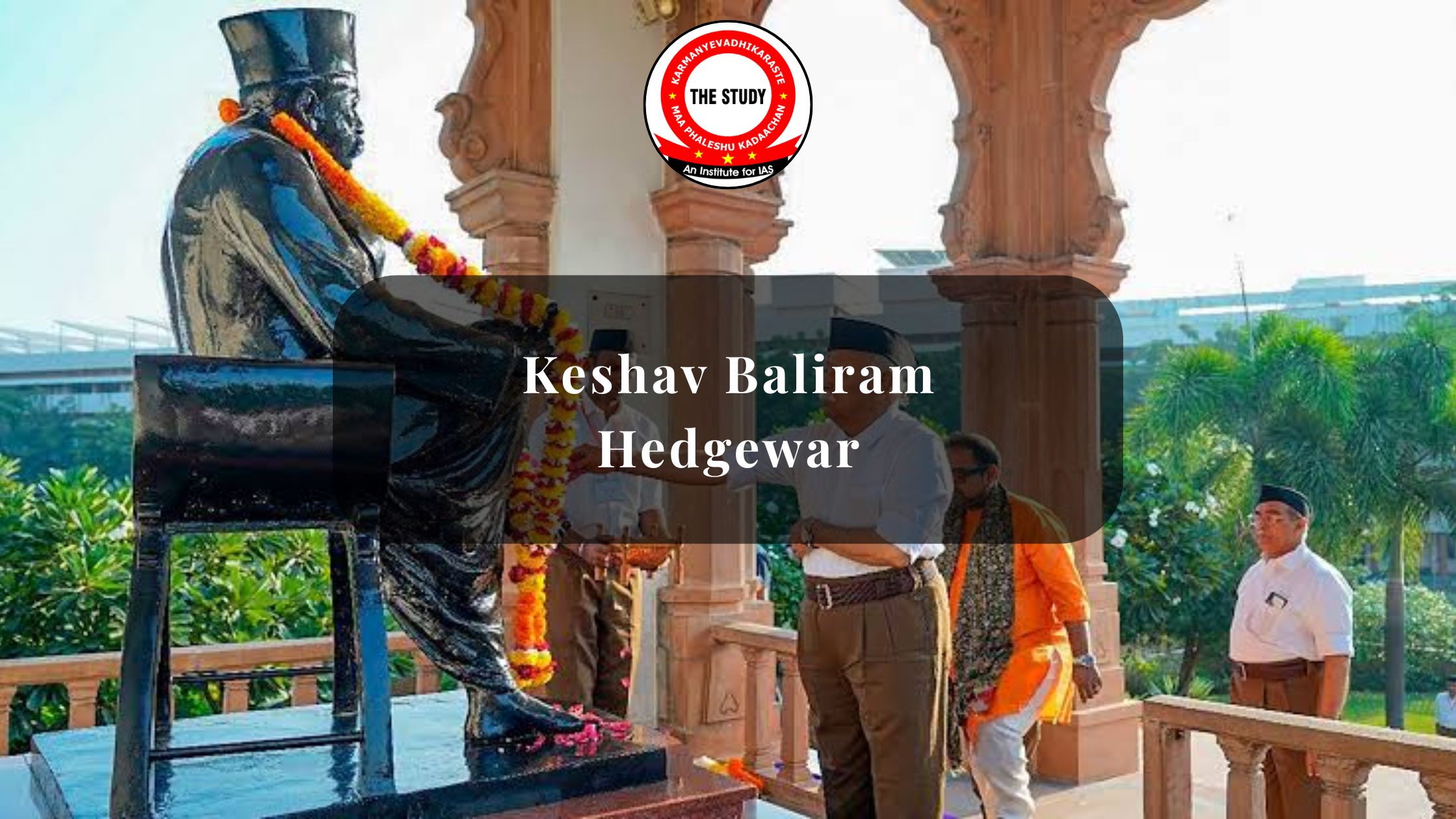
Keshav Baliram Hedgewar: Biography, Early Life, RSS Foundation, Ideology and Legacy
Keshav Baliram Hedgewar, widely known within the organization he founded as Doctorji, was an Indian physician, nationalist activist, and the founder of the Rashtriya Swayamsevak Sangh (RSS). He was born on 1 April 1889 in Nagpur and died on 21 June 1940, aged 51. His most enduring historical contribution was the establishment of the RSS in Nagpur on 27 September 1925, a development that eventually produced a large and influential organizational network in Indian public life.
Hedgewar's life cannot be understood simply by looking at one event or one organization. His political and social journey developed during a period when India was experiencing intense anti-colonial activity, debates over nationalism, social reform, and competing visions of Indian identity. He participated in nationalist politics and revolutionary circles before concentrating his energies on building a long-term volunteer organization. That transition, from direct political activism toward institution building—is central to understanding his historical significance.
Who Was Keshav Baliram Hedgewar?
Quick Biography
Keshav Baliram Hedgewar was born in Nagpur on 1 April 1889. He studied medicine in Calcutta, where he encountered nationalist and revolutionary networks. After returning to central India, he remained involved in nationalist activity and later participated in the broader political movements associated with India's struggle against British rule. In 1925, he founded the RSS in Nagpur and served as its first Sarsanghchalak until his death in 1940.
His professional identity as a doctor explains the honorific "Doctorji," but his historical reputation rests primarily on organization building. Rather than treating political mobilization as a short-term campaign, Hedgewar increasingly emphasized discipline, personal character, social cohesion, and the creation of a dedicated volunteer cadre. The organization he founded was initially small, but its institutional model allowed it to expand beyond its original base in Nagpur during his lifetime.
Why He Is Historically Important
Hedgewar occupies an important and contested place in modern Indian history because he founded an organization that has remained influential for a century. The RSS was established in 1925, and its subsequent development under Hedgewar and his successors has made his ideas relevant to discussions of Indian nationalism, Hindu social organization, political culture, and civil society. The organization's own historical account emphasizes national service, cultural identity, discipline, and social organization as central elements of his vision.
At the same time, historians and commentators interpret Hedgewar differently. Supporters regard him as an important nationalist and institution builder, while critics examine the ideological and political implications of the organization he founded. A balanced biography therefore needs to distinguish between documented events in his life and later interpretations of his legacy.
Early Life and Family of Keshav Baliram Hedgewar
Birth and Childhood
Keshav Baliram Hedgewar was born on 1 April 1889 in Nagpur, then part of the Central Provinces under British rule. According to accounts published by the RSS, his family had roots in the Telugu-speaking region and eventually settled in Nagpur. His childhood unfolded during a period when nationalist sentiment was gradually becoming more prominent in Indian public life.
Accounts of his early years frequently emphasize his rejection of colonial symbols and his developing sense of nationalism. The RSS's historical narrative describes an incident from his childhood in which he rejected sweets distributed at school during celebrations associated with Queen Victoria's Diamond Jubilee. Whether viewed as a formative nationalist episode or as part of later organizational memory, the story illustrates the anti-colonial sentiment that became an important part of Hedgewar's public identity.
Education and Nationalist Influences
Hedgewar's education coincided with the growing influence of the Indian nationalist movement. As a young student, he became interested in nationalist ideas and participated in activities that brought him into conflict with colonial authorities. The RSS's account states that he was involved in student protests and was expelled from school after participating in the raising of the slogan "Vande Mataram." He subsequently continued his education elsewhere before going to Calcutta to study medicine.
Calcutta was particularly important in his intellectual and political development. At the time, Bengal was a major center of anti-colonial politics and revolutionary activity. Hedgewar's exposure to this environment broadened his understanding of political organization and resistance. His medical education therefore took place alongside a much wider political education, giving him experiences that later influenced his approach to organizing young volunteers.
Growing Opposition to British Rule
Hedgewar's opposition to colonial rule developed well before the RSS was founded. Historical accounts describe his involvement in nationalist activities during his youth and his subsequent participation in political and revolutionary circles. This is important because the RSS was not created in an ideological vacuum; its founder had already spent years observing India's nationalist movement and thinking about why political movements succeeded or failed.
One of the central conclusions attributed to Hedgewar was that political freedom required more than periodic demonstrations or political campaigns. He increasingly believed that society itself needed to be organized and strengthened. This conviction eventually became a foundation for the institutional model he developed through the RSS.
Keshav Baliram Hedgewar and the Indian Freedom Movement
Revolutionary Activities in Calcutta
During his years in Calcutta, Hedgewar became associated with revolutionary nationalist circles. The RSS's own historical account identifies his connection with Anushilan Samiti, a revolutionary organization active in Bengal. His medical studies therefore existed alongside involvement in a political environment where armed resistance and secret organization were subjects of active discussion.
This period is significant because it exposed Hedgewar to the importance of disciplined organization. Revolutionary groups relied heavily on secrecy, commitment, personal networks, and training. Although the RSS would eventually develop a very different public organizational structure, some historians and biographical accounts see Hedgewar's early experiences in Bengal as relevant to his later emphasis on disciplined volunteers and organizational continuity.
Association With Nationalist Leaders
After returning to Nagpur, Hedgewar became involved in mainstream nationalist politics as well as other nationalist activities. He was associated with the Indian National Congress during the early 20th century, while also maintaining connections with other strands of nationalist politics. His political environment included influential figures such as Bal Gangadhar Tilak and other leaders who were debating the best methods for achieving national freedom.
The nationalist movement of this period was not a single unified organization with one strategy. It contained constitutionalists, mass-movement leaders, revolutionaries, social reformers, cultural nationalists, and many others. Hedgewar's later decision to establish the RSS reflected his belief that a dedicated organization focused on social organization and character building was necessary alongside conventional political movements.
Participation in the Non-Cooperation Movement
Hedgewar participated in nationalist activity during the period of the Non-Cooperation Movement. His involvement demonstrated that his opposition to British rule was not confined to the revolutionary networks he encountered in Bengal. The broader anti-colonial movement provided him with experience of public mobilization and political activism.
However, Hedgewar eventually became increasingly focused on building a permanent organization rather than making political campaigning the central objective. This distinction is important. His later work did not represent a complete abandonment of nationalism; rather, he sought to pursue his conception of national reconstruction through an organizational and social route.
Jungle Satyagraha and Imprisonment
In 1930, Hedgewar participated in the Jungle Satyagraha, a civil disobedience movement associated with opposition to British restrictions. According to RSS archival material, he was arrested and imprisoned in Akola Jail. His imprisonment also provided an opportunity to interact with other patriotic activists.
The episode is often highlighted in accounts of his life because it demonstrates that Hedgewar's activities extended beyond organizational work within the RSS. His political engagement with the freedom movement remained part of his biography even after the organization had been established.
Foundation of the Rashtriya Swayamsevak Sangh
Why Hedgewar Founded the RSS
The founding of the Rashtriya Swayamsevak Sangh was the defining event of Hedgewar's life. His stated concern was not merely political independence but the organization and strengthening of Hindu society. According to the RSS's own description of his vision, he believed that national regeneration required disciplined, selfless, physically and intellectually trained citizens.
Hedgewar's approach can be compared to building a foundation before constructing a large structure. Political movements could mobilize people during a particular moment, but he wanted an organization that would continue working every day, year after year. The shakha, or local gathering, became the practical mechanism through which that philosophy could be implemented.
RSS Foundation in 1925
The RSS was formally initiated in Nagpur on Vijayadashami, 27 September 1925. The RSS's historical account says that Hedgewar announced the beginning of the organization on that day, with its early activities centered around physical training, intellectual discussion, discipline, and national affairs.
The organization was initially modest in size. Its early meetings were held in Nagpur, including at Hedgewar's residence in the Sukravari area. The scale of the organization at its beginning makes its subsequent expansion particularly notable. Rather than depending on a single political campaign, Hedgewar created a routine-based structure designed to reproduce itself in new locations.
Early Shakhas and Organizational Model
The shakha became the heart of the RSS model. Volunteers gathered regularly for physical activities, drills, games, discussions, and organizational interaction. The objective was not simply physical fitness. The RSS describes these activities as part of a wider effort to cultivate discipline, teamwork, character, and national consciousness.
This organizational structure was significant because it transformed ideology into daily practice. Instead of asking members to participate only during major political events, the shakha created a regular routine. Over time, this helped develop a culture based on volunteer participation and organizational continuity.
Development of the RSS Under Hedgewar
During Hedgewar's lifetime, the RSS expanded beyond Nagpur into other parts of Maharashtra and eventually into additional regions. RSS archival material states that after 1936 he began sending workers to other states, and that the organization had developed a presence in many parts of India by 1940.
This expansion was not instantaneous. It depended on training individuals who could establish new branches and reproduce the organization's methods elsewhere. In this sense, Hedgewar's major organizational innovation was not simply founding an institution but developing a mechanism through which its culture could be transmitted from one locality to another.
Ideology and Organizational Philosophy of Hedgewar
Nation, Society and Cultural Identity
Hedgewar's worldview placed considerable emphasis on the idea of Hindu society as a foundational component of Indian national identity. The RSS describes its founding vision in terms of organizing Hindu society and strengthening national life.
This idea has been interpreted in different ways. Supporters view it as a cultural conception of nationalism centered on civilizational continuity and social unity. Critics, meanwhile, question the implications of defining national identity through a Hindu cultural framework in a religiously diverse country. Understanding both perspectives is important when studying Hedgewar academically rather than simply accepting either praise or criticism.
Character Building and Discipline
One of the strongest themes associated with Hedgewar is character building. He emphasized disciplined individuals who would place organizational and national objectives above personal interests. Physical exercises, group activities, discussions, and regular attendance at shakhas were intended to cultivate habits of teamwork and self-discipline.
This emphasis helps explain why the RSS developed differently from a conventional political party. Its central unit was not an election campaign or legislative group but a recurring local gathering. The organization therefore focused heavily on personal relationships and long-term volunteer development.
Volunteerism and Social Organization
Hedgewar's model relied on volunteers rather than a conventional paid organizational workforce. Volunteers were expected to participate regularly, learn organizational responsibilities, and eventually help establish activities in new areas. The result was a network capable of functioning without depending entirely on a centralized bureaucracy.
The volunteer model also created a strong sense of personal responsibility. Instead of viewing nation-building as something performed only by politicians or government officials, Hedgewar's organizational philosophy encouraged ordinary people to see social service and civic participation as personal duties.
Focus on Long-Term Institution Building
Perhaps the most distinctive feature of Hedgewar's approach was his focus on institution building. He lived only until 1940, yet the organization he established continued after his death. That continuity was not accidental; it reflected a deliberate attempt to create systems, routines, leadership structures, and training methods that could survive the founder.
In historical terms, this is one reason Hedgewar remains important. Many political movements become closely identified with the personality of their founder and struggle after that person's death. Hedgewar attempted to make organizational culture more important than the individual leader.
Leadership Style and Contribution to the RSS
Building an Organizational Culture
Hedgewar's leadership was strongly connected to personal interaction. Early RSS activities were relatively small, allowing him to work directly with volunteers and develop a culture based on regular participation. Rather than treating organizational membership as a formal administrative process, the RSS developed around relationships, routines, and shared activities.
That approach helped establish a sense of belonging among early volunteers. The organization became a community in which people trained together, discussed national affairs, and gradually assumed greater responsibilities.
Expansion Beyond Nagpur
Hedgewar understood that an organization centered only in Nagpur could not achieve the scale he envisioned. Consequently, he encouraged trained workers to travel to other parts of India and establish new shakhas. RSS archival material records this expansion particularly from the mid-1930s onward.
The strategy resembled planting a network of small trees rather than attempting to build one enormous institution in a single location. Each shakha became a local point of organizational activity, while trained workers helped maintain a common structure and culture.
Training and Cadre Development
Training was essential to Hedgewar's organizational strategy. Volunteers were encouraged to develop physical discipline, leadership qualities, organizational skills, and awareness of national affairs. Training camps became an important part of this process.
By investing in people rather than merely collecting members, Hedgewar created a leadership pipeline. Volunteers could gradually take responsibility for organizing activities, mentoring others, and establishing branches in new locations.
Relationship With Contemporary Nationalist Politics
Hedgewar's relationship with the broader nationalist movement was complex. He had participated in Congress-associated activities and anti-British campaigns, but the RSS itself was not created as a conventional political party. Its emphasis was on social organization and cultural nationalism rather than electoral politics.
This distinction has generated considerable historical debate. Some accounts emphasize Hedgewar's personal participation in anti-colonial activities, while others focus on the RSS's organizational role during the independence period. A careful study should avoid treating the founder's individual political actions and the institutional history of the RSS as exactly the same thing.
Final Years and Death of Keshav Baliram Hedgewar
Health and Final Years
Hedgewar's health deteriorated during his final years, but he continued to remain involved in RSS activities. By this stage, the organization had expanded considerably from its modest Nagpur beginnings. His priority was increasingly the consolidation and continuation of the organizational structure he had established.
The final period of his life therefore involved both personal physical difficulties and organizational transition. The question facing the RSS was how its work would continue after the death of its founder.
Last Public Activities
Hedgewar continued addressing volunteers during training activities shortly before his death. RSS archival sources record a major address at a training camp in Nagpur in June 1940, reflecting his continued emphasis on the organization's long-term purpose and development.
His final period is particularly important because it illustrates the extent to which he viewed the RSS as an institution intended to continue beyond his own lifetime. The founder's attention was directed toward organizational continuity rather than creating a personality-centered movement.
Death in 1940
Keshav Baliram Hedgewar died in Nagpur on 21 June 1940, at the age of 51. He had founded the RSS only fifteen years earlier, meaning that most of the organization's early institutional development took place during a relatively short period.
His death marked the end of the organization's founding phase but not the end of its expansion. The RSS leadership passed to Madhav Sadashiv Golwalkar, commonly known as Guruji, who became the second Sarsanghchalak and played a major role in the organization's subsequent growth.
Succession by M. S. Golwalkar
The transition from Hedgewar to Golwalkar was an important test of the institution that Hedgewar had created. The organization continued functioning after its founder's death, suggesting that its structures and volunteer culture had become sufficiently established to survive leadership change.
Golwalkar later expanded and articulated the RSS's organizational and ideological framework in new ways. Nevertheless, Hedgewar remained central to the organization's institutional memory as its founder and first Sarsanghchalak.
Legacy of Keshav Baliram Hedgewar
Influence on the RSS
Hedgewar's most obvious legacy is the continued existence and development of the RSS. Founded in 1925, the organization reached its centenary in 2025, marking a century since its establishment. The RSS itself describes its founding by Hedgewar as the starting point of a long-term cultural and organizational movement.
The organization today operates through a vast network of shakhas and associated institutions. Its influence extends into areas such as education, social service, labor, rural development, and public discourse. The scale of this later network makes understanding Hedgewar's original organizational design useful for understanding the RSS's subsequent history.
Historical Interpretations
Hedgewar's legacy is not interpreted uniformly. The RSS and its supporters present him as a nationalist organizer who sought to strengthen society through discipline, service, unity, and cultural consciousness. Official RSS material emphasizes his patriotism and organizational foresight.
Other scholars and commentators analyze his work through the history of Hindu nationalism and the development of the RSS. Such interpretations may place greater emphasis on ideological questions surrounding Hindu identity, minority relations, and the role of cultural nationalism in modern India. Consequently, an objective study of Hedgewar should recognize that his historical importance and the interpretation of his ideas are related but not identical questions.
Continuing Relevance
Hedgewar remains relevant because debates about nationalism, cultural identity, voluntary organizations, and social cohesion continue in India. His approach raises an enduring question: can long-term social transformation be achieved more effectively through political power or through institution building at the grassroots level?
Whatever one's political perspective, the organizational experiment he began in Nagpur has had lasting consequences. The RSS's survival for a century demonstrates the effectiveness of the organizational mechanisms created during its founding period.
Hedgewar in Modern Indian History
For students of modern Indian history, Hedgewar should be placed within the larger landscape of India's freedom struggle and the development of competing nationalist traditions. He lived during the same broad period as leaders such as Mahatma Gandhi, Bal Gangadhar Tilak, Subhas Chandra Bose, and V. D. Savarkar, although their political philosophies and organizational methods differed significantly.
Studying Hedgewar alongside these figures helps explain that Indian nationalism was never a single, uniform intellectual tradition. It contained multiple approaches to freedom, society, religion, culture, political organization, and national identity. Hedgewar's contribution was particularly distinctive because he concentrated on building a disciplined social organization rather than creating a conventional political movement.
Conclusion
Keshav Baliram Hedgewar occupies a significant and debated place in the history of modern India. Born in Nagpur in 1889, he grew up during an era of expanding anti-colonial nationalism, studied medicine in Calcutta, became involved in nationalist and revolutionary circles, participated in political movements, and eventually chose institution building as the principal vehicle for his vision of national reconstruction. In 1925, he founded the Rashtriya Swayamsevak Sangh, creating an organization centered on disciplined volunteerism, regular shakhas, character development, and the organization of Hindu society.
His life ended in 1940, but the institution he founded continued to expand under his successor, M. S. Golwalkar, and ultimately became a major force in Indian social and political life. Hedgewar's historical legacy therefore extends far beyond his 51 years. To understand him properly, it is useful to look simultaneously at his nationalist activities, his organizational philosophy, the RSS's own account of his life, and the broader scholarly debate about Hindu nationalism and Indian identity. That balanced approach provides a clearer picture of why Keshav Baliram Hedgewar remains an important figure in modern Indian history.
Frequently Asked Questions About Keshav Baliram Hedgewar
1. Who was Keshav Baliram Hedgewar?
Keshav Baliram Hedgewar was an Indian physician, nationalist activist, and the founder of the Rashtriya Swayamsevak Sangh (RSS). He was born in Nagpur on 1 April 1889 and served as the organization's first Sarsanghchalak from its foundation in 1925 until his death in 1940.
2. When did Keshav Baliram Hedgewar establish the RSS?
Hedgewar established the RSS in Nagpur on 27 September 1925, the day of Vijayadashami. The organization's early activities included physical training, discussions on national affairs, and the development of disciplined volunteers.
3. Where did Keshav Baliram Hedgewar study medicine?
Hedgewar studied medicine in Calcutta, which was an important center of nationalist and revolutionary activity during the early twentieth century. His time there exposed him to political networks that influenced his later thinking about organization and nationalism.
4. Did Keshav Baliram Hedgewar participate in India's freedom movement?
Yes. Hedgewar participated in nationalist activities and was associated with different strands of the anti-colonial movement. RSS archival accounts state that he participated in the Jungle Satyagraha in 1930 and was imprisoned at Akola. His political involvement preceded and continued alongside the early development of the RSS.
5. When did Keshav Baliram Hedgewar die?
Keshav Baliram Hedgewar died in Nagpur on 21 June 1940, at the age of 51. He was succeeded as the head of the RSS by M. S. Golwalkar, who subsequently led the organization through a much longer period of expansion.
Subscribe to our Youtube Channel for more Valuable Content – TheStudyias
Download the App to Subscribe to our Courses – Thestudyias
The Source’s Authority and Ownership of the Article is Claimed By THE STUDY IAS BY MANIKANT SINGH
Comments (0)
Leave a Comment