Climate Change and India's Food Security
13 Nov 2026
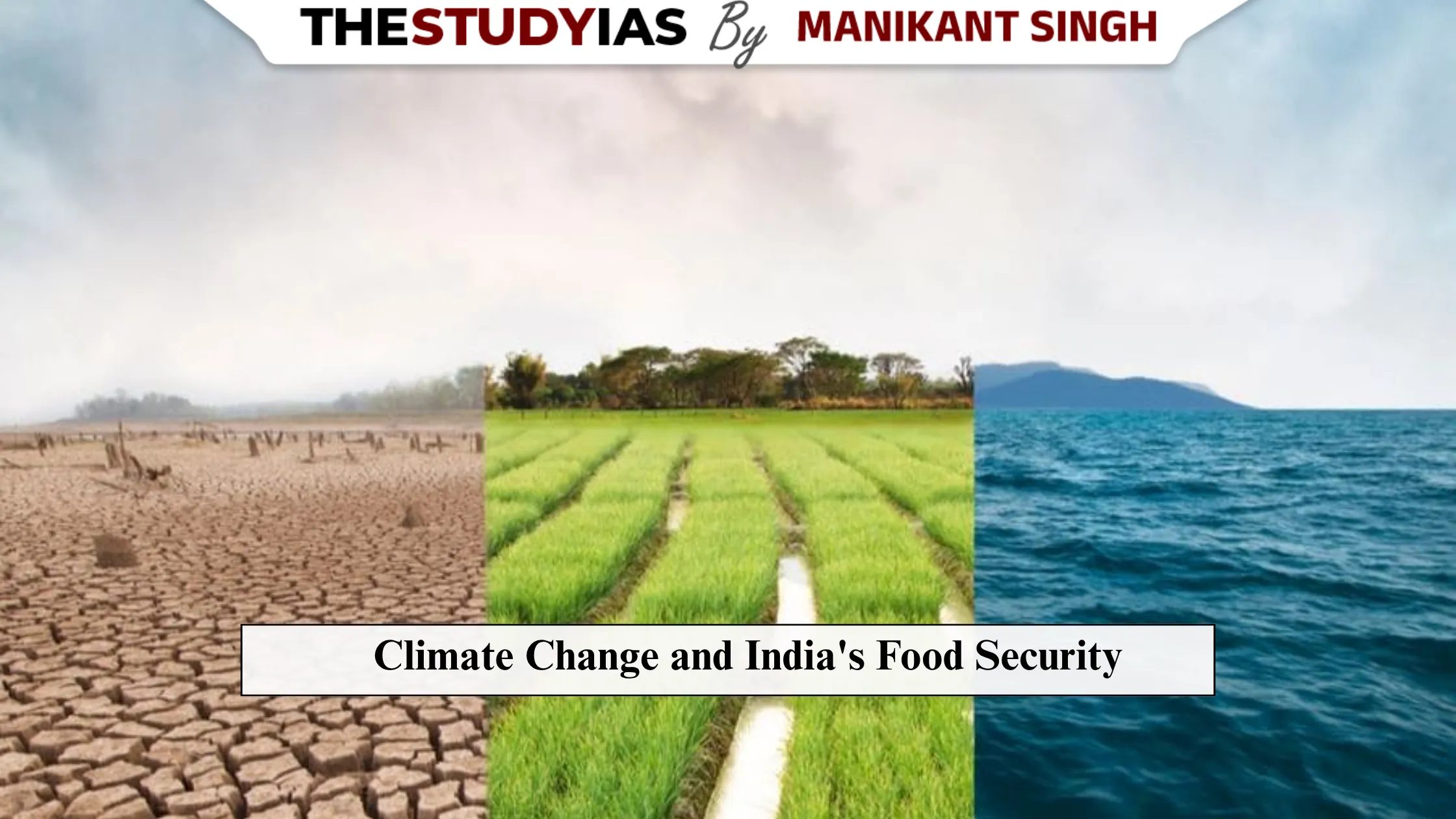
Climate Change and India's Food Security
Climate change has emerged as a major threat to India's food security because agricultural production depends heavily on temperature, rainfall, soil conditions and the availability of water. Rising temperatures, irregular monsoon patterns, droughts, floods, heatwaves and changing pest patterns are increasingly affecting crop productivity, livestock, fisheries and food supply chains. These impacts are particularly significant for India, where agriculture supports rural livelihoods, contributes to the national economy and remains central to the country's nutritional security.
Food security is not limited to producing sufficient quantities of food grains. It also requires that people have consistent access to affordable, safe and nutritious food. Climate change threatens this objective by reducing agricultural productivity, disrupting supply chains, increasing food prices and affecting the nutritional quality of crops.
Therefore, ensuring food security requires a combination of climate-resilient agriculture, sustainable resource management, stronger food distribution systems and effective adaptation policies. For UPSC aspirants, this topic is particularly relevant to GS Paper III under Agriculture, Food Security, Environmental Pollution and Degradation, Climate Change and Disaster Management. It also connects with GS Paper II through government welfare schemes, food distribution and policy implementation.
Understanding Food Security in India
Food security exists when all people, at all times, have physical, social and economic access to sufficient, safe and nutritious food that meets their dietary needs and food preferences for an active and healthy life. The concept goes beyond agricultural production because food must also be affordable, accessible, nutritionally adequate and consistently available.
The Food and Agriculture Organization (FAO) identifies four interconnected dimensions of food security: availability, access, utilisation and stability. Climate change can affect all four dimensions, making it a direct threat to the overall food system rather than only to agricultural output.
Food Availability
Food availability refers to the physical presence of sufficient quantities of food through domestic production, imports, food stocks and distribution. Climate change affects availability by reducing crop yields, damaging livestock, affecting fisheries and disrupting agricultural production. For example, extreme heat during critical stages of wheat cultivation can reduce grain formation, while prolonged droughts can affect rice and pulses. Floods can destroy standing crops and stored food grains, reducing the amount of food entering markets.
Food Access
Food access refers to the ability of individuals and households to obtain food through their purchasing power, income, markets and public distribution systems. Climate-related crop losses can reduce farmers' incomes and agricultural employment. At the same time, shortages and supply disruptions can increase food prices. Low-income households, landless labourers and vulnerable urban populations may consequently find it difficult to afford adequate food even when food is physically available in markets.
Food Utilisation
Food utilisation concerns the body's ability to consume and absorb nutrients from food. It depends on dietary diversity, food safety, sanitation, healthcare and access to clean drinking water. Climate change can affect nutrition through reduced availability of diverse foods, contamination of food and water, heat-related health problems and changes in the nutritional composition of certain crops. Food security therefore requires attention to both the quantity and quality of food.
Food Stability
Stability means that food availability, access and utilisation remain consistent over time. A household may have adequate food today but become food-insecure if drought, floods, crop failure or sudden price increases repeatedly interrupt its access to food. Climate change increases the likelihood of recurring climate shocks, making it more difficult for farmers, markets and governments to maintain stable food supplies.
How Climate Change Threatens India's Food Security
India's food system is exposed to climate risks because agricultural production depends on seasonal rainfall, temperature conditions, irrigation availability and ecological stability. The effects are not uniform across the country. Different crops, regions and farming systems face different levels of exposure.
Rising Temperatures and Crop Productivity
Rising temperatures can negatively affect crop growth, flowering, pollination, grain formation and the duration of growing seasons. Crops have specific temperature requirements, and prolonged exposure to temperatures beyond their tolerance limits can reduce productivity.
Wheat is particularly vulnerable to terminal heat stress, which occurs when temperatures rise during the later stages of crop development. Higher temperatures can shorten the grain-filling period, resulting in lower grain weight and reduced yields. Rice productivity can also be affected by heat stress during flowering, while high temperatures can reduce the productivity of several pulses and horticultural crops.
The impact is particularly important for India because wheat and rice are major components of the country's foodgrain production and public food distribution system. A decline in their productivity can affect procurement, buffer stocks, market prices and the availability of food grains for vulnerable households.
Changing Monsoon Patterns and Rainfall Variability
The Indian agricultural system is closely linked to the southwest monsoon. Changes in the timing, intensity and distribution of rainfall can create serious challenges for agricultural planning.
Delayed monsoon onset can affect sowing operations, while prolonged dry spells during the growing season can reduce soil moisture and damage crops. On the other hand, intense rainfall within a short period can cause waterlogging, soil erosion, crop destruction and damage to rural infrastructure.
Uneven rainfall distribution can also create regional differences in agricultural production. Some areas may experience drought conditions while others face floods during the same agricultural season. This uncertainty makes crop planning, irrigation management and agricultural investment more difficult.
Droughts and Water Stress
Increasing temperatures raise evaporation and crop water requirements. When rainfall is insufficient and groundwater resources are already under pressure, agricultural production becomes increasingly vulnerable.
Droughts can reduce crop yields, damage livestock, decrease fodder availability and affect rural employment. Farmers may also be forced to increase groundwater extraction to protect their crops, further worsening water stress in regions where groundwater levels are already declining.
Water scarcity can have long-term consequences for food security because agricultural productivity depends not only on the availability of water in a particular season but also on the sustainable management of water resources.
Floods and Extreme Rainfall Events
Extreme rainfall can damage standing crops, wash away fertile topsoil, destroy irrigation infrastructure and disrupt transportation networks. Floods may also contaminate stored food grains and drinking water sources.
In low-lying agricultural regions, prolonged waterlogging can damage crops and delay the next sowing season. Flood-related infrastructure damage can interrupt the movement of agricultural produce from farms to markets, increasing post-harvest losses.
The impact is particularly severe for small and marginal farmers who may lack sufficient savings, insurance coverage or access to institutional credit to recover from repeated crop losses.
Impact on Soil Health and Land Productivity
Climate change affects soil health through higher temperatures, changes in soil moisture, erosion, salinisation and land degradation. Intense rainfall can remove fertile topsoil, while prolonged droughts can reduce soil moisture and biological activity.
In coastal regions, sea-level rise and saltwater intrusion may increase soil salinity, making agricultural land less productive. Changes in soil conditions can also affect nutrient availability and the effectiveness of fertilisers. Declining soil health reduces the long-term productive capacity of agricultural land and can increase farmers' dependence on external inputs.
Pests, Diseases and Crop Losses
Changes in temperature, humidity and rainfall can alter the geographical distribution and life cycles of agricultural pests and diseases. Warmer conditions may allow certain pests to survive through longer periods or spread into regions where they were previously less prevalent.
Crop diseases, insect attacks and invasive species can reduce agricultural output and increase the cost of crop protection. Farmers may respond through greater pesticide use, which can create additional environmental and health concerns if not properly managed.
Impact on Livestock and Fisheries
Climate change affects food security beyond crop production. Higher temperatures can cause heat stress in cattle, buffaloes, poultry and other livestock. Heat stress may reduce milk production, reproductive performance and animal health. Changes in rainfall and temperature can also affect fodder availability and increase the risk of certain animal diseases.
Fisheries and aquaculture face risks from warming water temperatures, ocean acidification, changes in aquatic ecosystems and extreme weather events. These changes can affect fish populations, fishing incomes and the availability of affordable protein for coastal and inland communities.
Impact on Food Prices, Nutrition and Rural Livelihoods
The effects of climate change extend beyond farms and influence the entire food economy. When extreme weather reduces agricultural production, the resulting supply shortages can increase market prices. If several major producing regions experience simultaneous crop losses, the pressure on food markets can become more severe.
Higher food prices affect low-income households disproportionately because they spend a larger share of their income on food. Even when food remains available in markets, households may be forced to reduce consumption, shift towards cheaper and less nutritious diets or cut expenditure on healthcare and education.
Climate change can also affect nutritional security. Reduced availability of fruits, vegetables, pulses and other nutrient-rich foods can limit dietary diversity. Changes in temperature and atmospheric carbon dioxide concentrations may influence the nutritional composition of certain crops, although the magnitude varies by crop and growing conditions.
The impact on rural livelihoods is equally important. Farmers may experience repeated crop losses, increased input costs, reduced productivity and indebtedness. Agricultural labourers may lose employment when extreme weather damages crops or interrupts farming activities. These pressures can increase distress migration and deepen rural poverty.
Climate Change and India's Foodgrain Production: Evidence and Vulnerability
India has made substantial progress in agricultural production and foodgrain availability. However, increasing climate variability creates risks for maintaining this progress.
The Indian Council of Agricultural Research (ICAR), through its National Innovations in Climate Resilient Agriculture (NICRA) project, assessed climate vulnerability across 651 predominantly agricultural districts. According to information provided by the Ministry of Agriculture and Farmers Welfare in March 2026, 310 districts were identified as vulnerable. Of these, 109 were classified as very highly vulnerable and 201 as highly vulnerable.
ICAR modelling studies have also highlighted the possible impact of climate change on major crops if adaptation measures are not adopted. Government-reported projections indicate the following potential changes:
These are model-based projections under specified assumptions, not observed or inevitable future losses. Actual outcomes will depend on the level of warming, crop varieties, farming practices, water availability and the adoption of adaptation measures.
The findings highlight the importance of climate-resilient agriculture, particularly in regions where farming depends heavily on rainfall and farmers have limited financial resources to manage climate-related risks.
Climate Change and the Public Distribution System (PDS)
Climate change can also affect India's food security architecture, particularly the Public Distribution System (PDS). The PDS relies on procurement, storage, transportation and distribution of food grains to eligible households.
A climate-related decline in wheat and rice production can affect government procurement and the ability to maintain adequate buffer stocks. Extreme rainfall, floods and heat can also damage storage infrastructure, increase post-harvest losses and disrupt foodgrain transportation.
If procurement costs rise or food availability becomes more uncertain, the government may face additional pressure on food subsidies and food management expenditure. This makes climate resilience important not only for farmers but also for the institutions responsible for ensuring affordable food access.
Strengthening decentralised procurement, improving storage facilities, diversifying the food basket and reducing post-harvest losses can help make India's food security system more resilient to climate shocks.
Government Initiatives to Address Climate Change and Food Security
The Government of India has introduced several programmes to improve agricultural productivity, conserve natural resources and strengthen farmers' capacity to respond to climate variability. These initiatives are important because climate-resilient agriculture is essential for protecting food production and rural livelihoods.
National Action Plan on Climate Change (NAPCC), 2008
The National Action Plan on Climate Change, launched in 2008, provides the overarching framework for India's climate action. It originally included eight national missions covering solar energy, energy efficiency, sustainable habitat, water conservation, Himalayan ecosystems, green India, sustainable agriculture and strategic climate knowledge.
The National Mission for Sustainable Agriculture (NMSA) is particularly relevant to food security. It promotes sustainable agricultural practices, efficient water use, soil health management and climate-resilient farming systems.
National Innovations in Climate Resilient Agriculture (NICRA)
The NICRA project, implemented by the Indian Council of Agricultural Research (ICAR), focuses on understanding the impact of climate change on agriculture and developing technologies to improve resilience.
It covers crops, livestock, horticulture and fisheries. Its activities include vulnerability assessments, development of climate-resilient crop varieties, improved farming practices and demonstrations of adaptation technologies.
NICRA also supports the preparation of District Agriculture Contingency Plans to help farmers respond to delayed monsoons, droughts, floods and other weather-related disruptions. Climate-resilient technologies are demonstrated through Krishi Vigyan Kendras in vulnerable districts, while capacity-building programmes help farmers adopt suitable practices.
Pradhan Mantri Krishi Sinchayee Yojana (PMKSY)
Launched in 2015, PMKSY aims to improve irrigation coverage and water-use efficiency through the principles of Har Khet Ko Pani and Per Drop More Crop.
Micro-irrigation techniques such as drip and sprinkler irrigation can reduce water wastage and improve agricultural productivity, particularly in water-stressed regions. Efficient irrigation is an important adaptation measure because climate change can increase the uncertainty of rainfall and water availability.
Soil Health Card Scheme
The Soil Health Card Scheme promotes balanced fertiliser use by providing farmers with information about the nutrient status of their soil and recommendations for appropriate fertiliser application.
Improving soil health can strengthen agricultural productivity, reduce excessive input use and improve the capacity of soils to retain nutrients and moisture. Healthy soils are also important for sustainable food production under changing climatic conditions.
Pradhan Mantri Fasal Bima Yojana (PMFBY)
Launched in 2016, PMFBY provides crop insurance against specified risks, including natural calamities and adverse weather conditions. It aims to reduce the financial vulnerability of farmers by providing insurance protection against crop losses.
In a changing climate, crop insurance can help farmers recover from extreme weather events and reduce the risk of falling into long-term debt. However, timely claim settlement, accurate loss assessment and wider coverage remain important for improving its effectiveness.
National Mission for Sustainable Agriculture (NMSA)
NMSA promotes sustainable farming practices through measures such as rainfed area development, on-farm water management and soil health improvement. It seeks to improve agricultural productivity while conserving natural resources. Its relevance to food security lies in strengthening the long-term resilience of agricultural systems, particularly in rainfed and ecologically vulnerable regions.
National Food Security Act (NFSA), 2013
The National Food Security Act, 2013 provides a legal framework for subsidised foodgrain entitlements to eligible households. It covers up to 75% of the rural population and 50% of the urban population under its coverage framework.
Although NFSA is not a climate adaptation programme, it acts as an important social protection mechanism when climate-related crop losses, food shortages and price increases affect vulnerable households. A reliable public food distribution system can reduce the immediate impact of climate shocks on household food access.
Promotion of Millets and Nutri-Cereals
Millets such as jowar, bajra and ragi are important components of climate-resilient agriculture because many varieties can grow under relatively dry conditions and require less water than some major cereal crops.
Promoting millets can support crop diversification, improve nutritional security and reduce excessive dependence on water-intensive cropping systems. Their integration into local food systems, public procurement and nutrition programmes can strengthen both agricultural resilience and dietary diversity.
Mission LiFE (Lifestyle for Environment)
Mission LiFE promotes sustainable lifestyles through responsible consumption, waste reduction, water conservation and environmentally conscious choices. Reducing food waste is particularly important for food security. Food lost during harvesting, storage, transportation and consumption represents a waste of land, water, energy and other agricultural resources. Sustainable consumption can therefore complement broader climate and food security policies.
Strategies to Strengthen India's Climate-Resilient Food System
Protecting food security requires moving beyond short-term responses to crop losses and building resilience across the entire food system. This means improving production systems, strengthening markets, protecting natural resources and ensuring that vulnerable households can access nutritious food even during climate emergencies.
Climate-Resilient Crop Varieties and Agricultural Research
Agricultural research should focus on developing and distributing crop varieties that can tolerate heat stress, drought, floods, salinity and emerging pests. Crop breeding programmes need to account for region-specific climatic conditions rather than relying on a uniform approach.
Strengthening ICAR institutions, agricultural universities and Krishi Vigyan Kendras can help translate scientific research into practical solutions for farmers. Greater investment in seed systems and extension services is also necessary to ensure that improved varieties reach small and marginal farmers.
Crop Diversification and Sustainable Farming
Excessive dependence on a limited number of crops can increase vulnerability to climate-related production shocks. Crop diversification towards millets, pulses, oilseeds, horticultural crops and regionally suitable varieties can improve resilience and nutritional diversity.
Agroforestry, mixed cropping, crop rotation and conservation agriculture can support soil health, reduce erosion and improve the long-term sustainability of farming systems. Diversification should be guided by local agro-climatic conditions, market demand and the availability of water.
Efficient Water Management
Climate-resilient agriculture requires a shift from water-intensive practices towards efficient and sustainable water management. Drip irrigation, sprinkler systems, rainwater harvesting, watershed development and groundwater recharge can help conserve water resources. In areas facing severe groundwater stress, cropping patterns should be aligned with local water availability. Promoting water-intensive crops in water-scarce regions can create long-term ecological and economic problems.
Strengthening Storage and Supply Chains
Climate change can increase post-harvest losses by damaging crops, storage facilities, transportation infrastructure and food distribution networks. Investment in scientific warehouses, cold-chain facilities, refrigerated transport and decentralised storage can reduce these losses.
Improving rural roads, market connectivity and digital supply-chain systems can help agricultural produce reach consumers more efficiently. This is particularly important during floods, droughts and other extreme weather events.
Strengthening Foodgrain Procurement and Buffer Stocks
The government needs to strengthen foodgrain procurement and storage systems to manage climate-related fluctuations in agricultural production. Buffer stocks can provide an important safeguard against supply shortages and help stabilise food availability.
However, procurement policies should also encourage crop diversification and sustainable agricultural practices. Greater attention to pulses, millets and regionally appropriate crops can help improve nutritional security and reduce pressure on water-intensive production systems.
Climate Information and Early Warning Systems
Farmers need timely and location-specific weather information to make decisions about sowing, irrigation, harvesting and crop protection. Improved weather forecasting, mobile-based agricultural advisories and village-level climate information services can reduce uncertainty.
Early warning systems should be linked with local institutions, agricultural extension workers and disaster management authorities so that farmers can take preventive action before extreme weather events occur.
Expanding Institutional Credit and Crop Insurance
Small and marginal farmers often lack the financial capacity to invest in climate-resilient technologies or recover from repeated crop losses. Affordable institutional credit, effective crop insurance and timely compensation can improve their adaptive capacity.
Insurance systems should be supported by reliable weather data, transparent loss assessment and efficient claim settlement. Financial support should also encourage investments in water conservation, improved seeds and sustainable agricultural practices.
Promoting Nutrition-Sensitive Agriculture
Food security policies must focus on dietary diversity rather than only increasing cereal production. Greater production and consumption of pulses, millets, fruits, vegetables, dairy and other nutrient-rich foods can strengthen nutritional security. Integrating climate-resilient agriculture with programmes such as the Public Distribution System, Integrated Child Development Services and PM POSHAN can help vulnerable households access more diverse and nutritious diets.
Strengthening Local Governance and Community Participation
Climate risks differ across regions, and adaptation strategies must reflect local agricultural conditions. Panchayati Raj Institutions, farmer producer organisations, self-help groups and community-based organisations can play an important role in local planning. Traditional knowledge relating to seed conservation, water harvesting, mixed cropping and local food systems should be combined with scientific research. This can improve the suitability and acceptance of adaptation measures.
Challenges in Protecting India's Food Security from Climate Change
Despite policy initiatives, several structural challenges limit India's ability to build a climate-resilient food system.
Small and fragmented landholdings restrict farmers' ability to invest in irrigation infrastructure, modern technologies and climate-resilient agricultural practices. Small farmers also have limited financial resources to absorb repeated crop losses.
Dependence on the monsoon remains a major source of vulnerability, particularly in rainfed regions. Unequal irrigation access and groundwater depletion further increase agricultural exposure to climate variability.
Limited access to climate information and technology affects farmers' ability to respond to changing weather conditions. Forecasts may not always be sufficiently localised or translated into actionable agricultural advice.
Weak post-harvest infrastructure increases food losses during storage and transportation. Inadequate cold-chain facilities, warehouses and rural connectivity can turn local production shocks into wider supply disruptions.
Imbalanced cropping patterns also create sustainability concerns. Excessive dependence on rice and wheat procurement in certain regions can encourage water-intensive cultivation and reduce incentives for crop diversification.
Coordination gaps between agriculture, water resources, environment, food distribution and disaster management institutions can weaken the implementation of climate-resilience policies. Food security requires an integrated approach rather than isolated departmental interventions.
Finally, adaptation itself requires financial resources. Small farmers, vulnerable states and local institutions may not have adequate access to affordable credit, insurance, technology and climate finance.
Way Forward: Integrating Climate Resilience with Food Security
India needs to adopt a food-system approach that integrates agricultural production, nutrition, water management, storage, distribution and social protection. Climate resilience should become a core consideration in agricultural planning, procurement policies and rural development programmes.
First, agricultural research must prioritise heat-tolerant, drought-resistant, flood-tolerant and salinity-resistant crop varieties. These varieties should be made accessible to farmers through strong seed distribution networks and agricultural extension services.
Second, India must encourage agro-climatically suitable crop diversification. Promoting millets, pulses, oilseeds and other regionally appropriate crops can reduce pressure on water resources while improving nutritional diversity. Procurement and price-support policies should be aligned with these objectives.
Third, water security should be treated as a foundation of food security. Watershed development, groundwater recharge, micro-irrigation, rainwater harvesting and the restoration of traditional water bodies should be expanded according to local conditions.
Fourth, the food supply chain must become more resilient. Scientific storage, cold-chain infrastructure, better transportation and decentralised procurement can reduce post-harvest losses and improve the stability of food supplies.
Fifth, climate information services should be strengthened. Farmers need timely weather forecasts, crop-specific advisories and early warnings that are accessible in local languages. District Agriculture Contingency Plans should be regularly updated and effectively implemented.
Finally, food security policies must protect vulnerable households. A robust PDS, effective nutrition programmes, crop insurance and social protection can prevent temporary climate shocks from turning into long-term hunger and malnutrition.
Conclusion
Climate change poses a serious challenge to India's food security because it affects agricultural productivity, food prices, rural livelihoods, nutritional quality and the stability of food supply chains. Its impact extends beyond the farm sector and influences the ability of households to obtain sufficient, affordable and nutritious food.
India's response must therefore go beyond increasing foodgrain production. It requires a transition towards climate-resilient agriculture, sustainable water management, crop diversification, improved storage infrastructure and stronger social protection systems. Initiatives such as NICRA, NMSA, PMFBY and NFSA provide important foundations, but their effectiveness depends on implementation, institutional coordination and local participation.
The central policy challenge is to ensure that climate change does not reverse India's progress in food security. A resilient food system must be productive, nutritionally diverse, environmentally sustainable and capable of protecting vulnerable communities from climate-related shocks.
Important Facts for UPSC Prelims
Frequently Asked Questions (FAQs)
1. How does climate change affect food security in India?
Climate change affects food security in India by reducing crop productivity, increasing the frequency of droughts and floods, disrupting agricultural supply chains and raising food prices. It also affects livestock, fisheries and the nutritional quality of food, threatening the availability and affordability of nutritious diets.
2. What are the four dimensions of food security?
The four dimensions of food security are availability, access, utilisation and stability. Availability refers to the physical supply of food, access concerns affordability and physical access, utilisation relates to nutritional and biological use, and stability ensures that these dimensions remain consistent over time.
3. What is the NICRA project?
The National Innovations in Climate Resilient Agriculture (NICRA) is an ICAR-led project that studies climate change impacts on agriculture and develops technologies to improve resilience. It covers crops, livestock, horticulture and fisheries and promotes location-specific adaptation measures.
4. How does climate change affect wheat and rice production in India?
Higher temperatures can reduce wheat productivity through terminal heat stress, while irregular rainfall, droughts and floods can affect rice production. Changes in temperature and water availability can also influence crop growth, flowering and grain formation, creating risks for foodgrain production.
5. How can millets contribute to climate-resilient food security?
Millets such as bajra, jowar and ragi can support climate-resilient food systems because many varieties are relatively drought-tolerant and require less water than some major cereal crops. They also contribute to dietary diversity and nutritional security.
6. What is the relationship between climate change and the Public Distribution System?
Climate-related crop losses can affect government procurement, buffer stocks, foodgrain availability and storage. A resilient PDS can protect vulnerable households from food shortages and price increases caused by climate-related disruptions.
7. What is the role of the National Food Security Act in climate resilience?
The National Food Security Act, 2013, provides a statutory framework for subsidised foodgrain entitlements to eligible households. It acts as a social protection mechanism by supporting food access when climate-related crop losses and price increases affect vulnerable populations.
UPSC Mains Practice Questions
Climate change threatens all four dimensions of food security in India. Examine the statement with suitable examples.
Discuss the impact of rising temperatures and changing monsoon patterns on India's agricultural productivity and foodgrain production.
Examine the role of climate-resilient agriculture in ensuring long-term food and nutritional security in India.
How can India's Public Distribution System and foodgrain procurement framework be strengthened to respond to climate-related agricultural shocks?
Evaluate the role of ICAR's NICRA project and other government initiatives in reducing the vulnerability of Indian agriculture to climate change.
For more UPSC-oriented articles and preparation resources, explore The Study IAS.
Subscribe to our Youtube Channel for more Valuable Content –TheStudyias
Download the App to Subscribe to our Courses –Thestudyias
The Source’s Authority and Ownership of the Article is Claimed ByTHE STUDY IAS BY MANIKANT SINGH
Comments (0)
Leave a Comment