V.V. Giri
7 Aug 2026
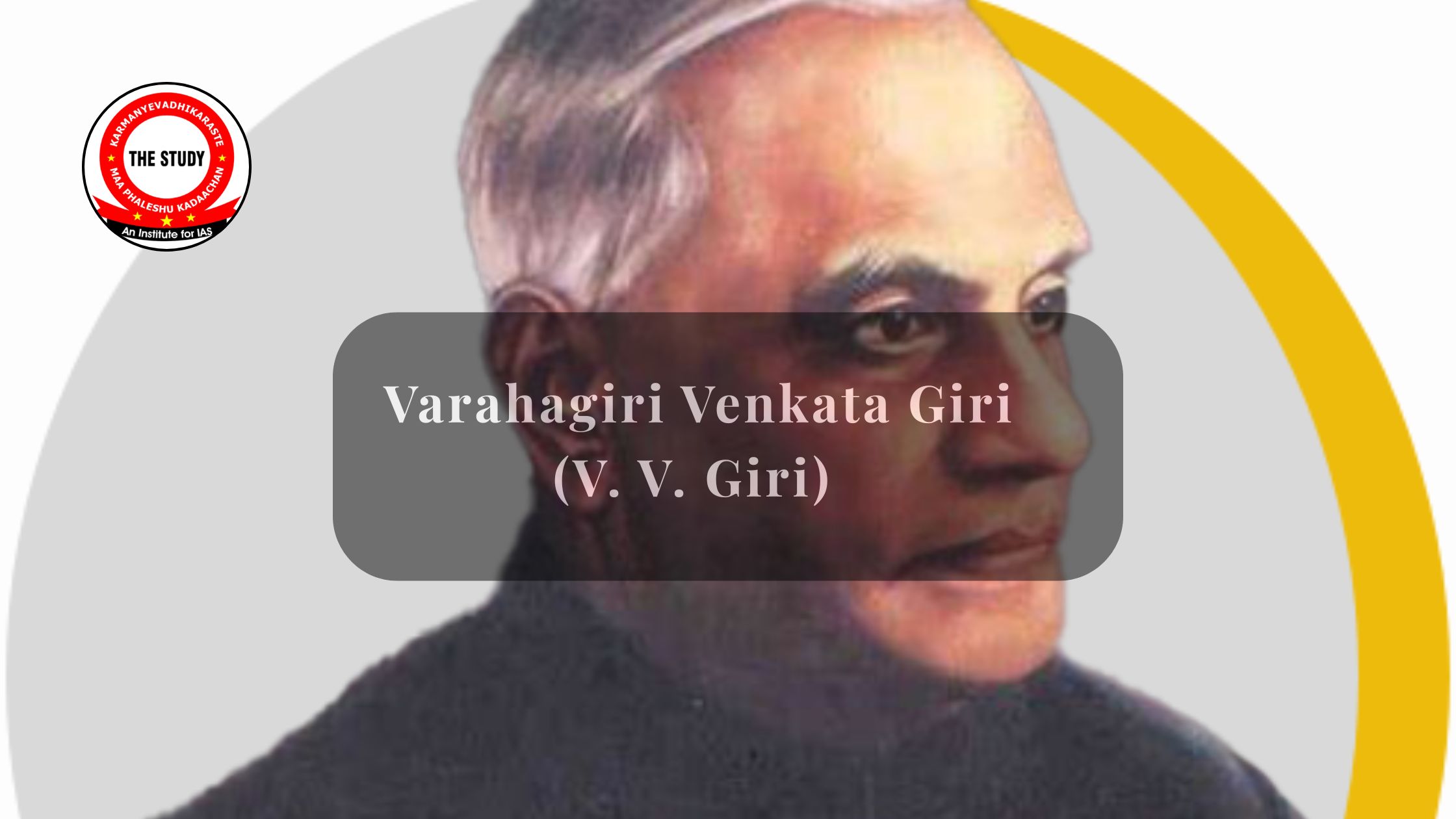
Varahagiri Venkata Giri (V. V. Giri): Life, Career & Contributions
Introduction
Varahagiri Venkata Giri, popularly known as V. V. Giri, was an eminent freedom fighter, trade union leader, statesman, and the 4th President of India. He served as the President of India from 24 August 1969 to 24 August 1974. Known for his unwavering commitment to the welfare of workers and the labor movement, V. V. Giri played a significant role in shaping India's labor policies and democratic institutions.
He was awarded India's highest civilian honor, the Bharat Ratna, in 1975 for his outstanding contribution to public life.
Early Life and Education
- Full Name: Varahagiri Venkata Giri
- Born:10 August 1894
- Birthplace: Berhampur, Ganjam district, Odisha (then part of the Madras Presidency)
- Father: V. V. Jogayya Pantulu, a lawyer and nationalist leader.
V. V. Giri completed his early education in India and later went to University College Dublin, Ireland, where he studied law. During his stay in Ireland, he was influenced by the Irish nationalist movement, which strengthened his commitment to India's struggle for independence.
Role in the Indian Freedom Movement
After returning to India, V. V. Giri joined the freedom movement led by Mahatma Gandhi.
His contributions included:
- Participation in the Non-Cooperation Movement (1920–22).
- Active involvement in labor organizations.
- Mobilizing workers to support the national movement.
- Imprisonment by the British for participating in the freedom struggle.
He believed that the welfare of workers was closely linked to India's political and economic independence.
Contribution to the Trade Union Movement
V. V. Giri is remembered as one of India's foremost labor leaders.
His major contributions include:
- Organizing industrial workers.
- Advocating fair wages and better working conditions.
- Promoting collective bargaining.
- Supporting peaceful settlement of industrial disputes.
- Strengthening the trade union movement in India.
His ideas significantly influenced the development of labor laws after Independence.
Political Career
After India gained Independence in 1947, V. V. Giri held several important constitutional and administrative positions.
High Commissioner to Ceylon
He served as India's High Commissioner to Ceylon (now Sri Lanka) from 1947 to 1951, helping strengthen diplomatic relations between the two countries.
Union Labour Minister
V. V. Giri later served as the Union Minister for Labour, where he introduced measures aimed at improving industrial relations and protecting workers' rights.
Governor
He was appointed Governor of several states, including:
- Uttar Pradesh
- Kerala
- Mysore (present-day Karnataka)
His tenure as Governor was marked by administrative efficiency and constitutional responsibility.
Vice President of India
V. V. Giri served as the 3rd Vice President of India from 1967 to 1969.
As Vice President, he also functioned as the Chairman of the Rajya Sabha, conducting parliamentary proceedings with impartiality.
Acting President of India
Following the death of Zakir Husain on 3 May 1969, V. V. Giri became the Acting President of India.
To contest the presidential election as an independent candidate, he resigned from the post of Acting President.
President of India (1969–1974)
V. V. Giri was elected as the 4th President of India in 1969 after a closely contested election.
Important Features of His Presidency
- Served from 24 August 1969 to 24 August 1974.
- Worked during a period of significant political and economic changes.
- Upheld constitutional values.
- Encouraged democratic institutions.
- Maintained the dignity of the office of the President.
His election is notable because he won as an independent candidate with support from various political groups.
Books Written by V. V. Giri
V. V. Giri authored several books on labor relations and industrial management, including:
- Industrial Relations
- Labour Problems in Indian Industry
- Jobs for Our Millions
These works reflect his deep understanding of labor welfare and economic development.
Awards and Honours
In recognition of his exceptional public service, V. V. Giri received the:
- Bharat Ratna (1975) – India's highest civilian award.
Death
- Died:24 June 1980
- Place: Chennai, Tamil Nadu
His contributions continue to be remembered in the fields of labor rights, public administration, and constitutional governance.
Historical Significance
V. V. Giri occupies a unique place in Indian history because he successfully combined the roles of freedom fighter, labor leader, constitutional authority, and President of India. His efforts to improve workers' rights laid the foundation for many labor welfare measures adopted in independent India.
His presidency also demonstrated the strength of India's democratic institutions during a politically dynamic period.
Importance for UPPSC and Other Competitive Exams
Questions related to V. V. Giri are frequently asked in:
- UPPSC
- UPSC
- State PCS examinations
- SSC
- Banking examinations
- Teaching eligibility tests
Candidates should remember:
- 4th President of India
- 3rd Vice President of India
- Trade union leader
- Bharat Ratna awardee
- Acting President after Dr. Zakir Husain's death
Quick Facts for UPPSC Prelims
- Full Name: Varahagiri Venkata Giri (V. V. Giri)
- Born: 10 August 1894
- Birthplace: Berhampur, Odisha
- President of India: 4th President (1969–1974)
- Vice President: 3rd Vice President of India (1967–1969)
- Acting President: 1969
- Bharat Ratna: Awarded in 1975
- Died: 24 June 1980
Previous Year Exam-Oriented Points
- V. V. Giri was the 4th President of India.
- He served as the 3rd Vice President of India before becoming President.
- He became Acting President after the death of Dr. Zakir Husain.
- He was a prominent trade union leader and advocate of labor welfare.
- He received the Bharat Ratna in 1975.
Frequently Asked Questions (FAQs)
1. Who was V. V. Giri?
V. V. Giri was a freedom fighter, labor leader, and statesman who served as the 4th President of India from 1969 to 1974.
2. Why is V. V. Giri famous?
He is known for his contributions to India's labor movement, his role in the freedom struggle, and his tenure as the President of India.
3. When did V. V. Giri receive the Bharat Ratna?
He was awarded the Bharat Ratna in 1975.
4. Which positions did V. V. Giri hold before becoming President?
He served as India's High Commissioner to Ceylon, Union Labour Minister, Governor of several states, 3rd Vice President of India, and Acting President.
5. Why is V. V. Giri important for UPPSC?
He is an important topic in Indian Polity, Modern Indian History, and General Knowledge because of his contributions as a freedom fighter, labor reformer, Vice President, and the 4th President of India.
Subscribe to our Youtube Channel for more Valuable Content – TheStudyias
Download the App to Subscribe to our Courses – Thestudyias
The Source’s Authority and Ownership of the Article is Claimed By THE STUDY IAS BY MANIKANT SINGH