UPSC Interview Preparation: DAF, Questions and Mock Interviews
23 Oct 2026
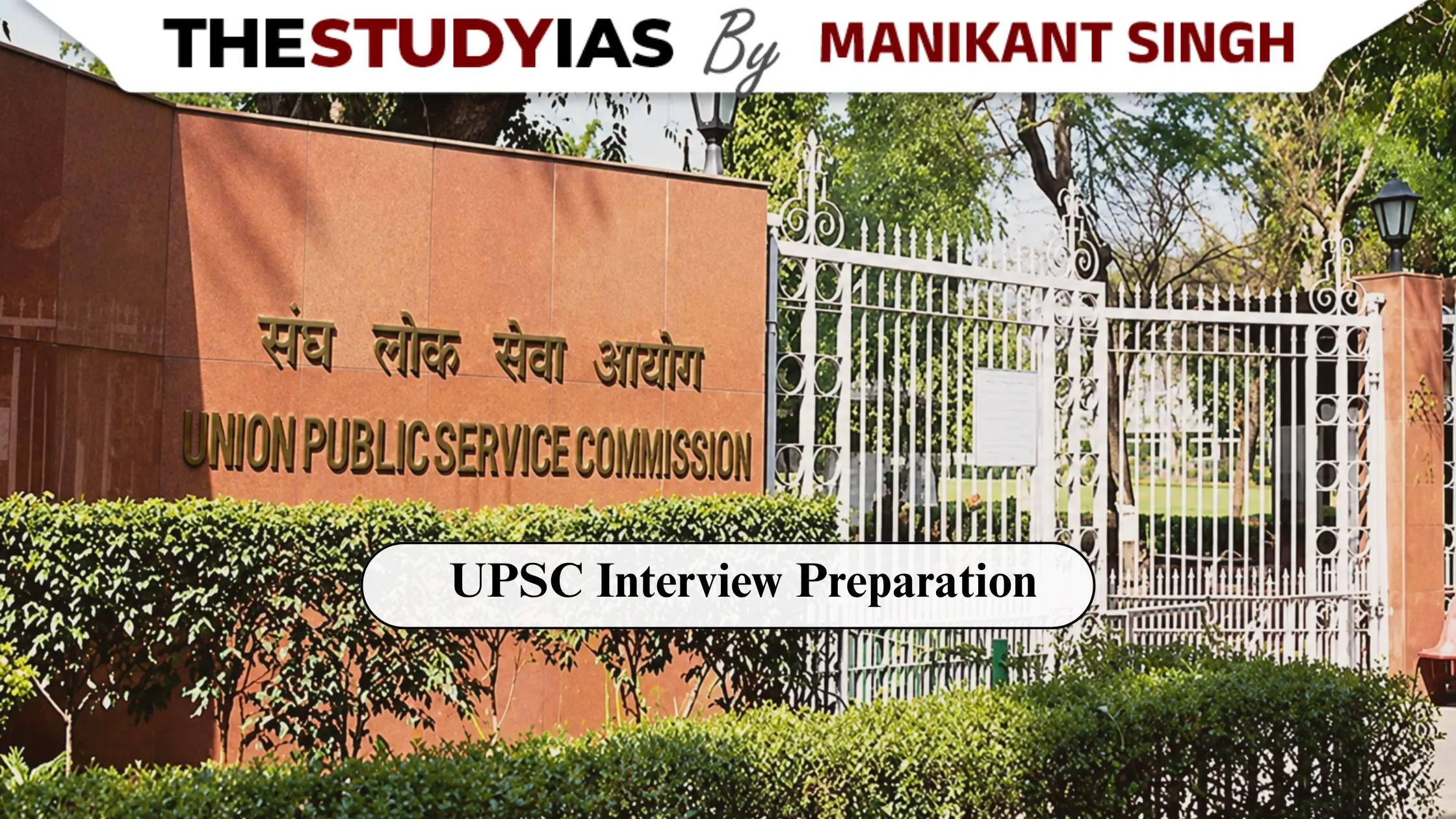
UPSC Interview Preparation: DAF, Questions and Mock Interviews
The UPSC Civil Services Personality Test is the final stage of the Civil Services Examination. After clearing the Preliminary and Main examinations, candidates face an interview designed to assess their personality, judgement, communication skills, and suitability for a career in public service. Unlike a conventional academic interview, the UPSC interview does not focus only on factual knowledge. It also examines how candidates think, respond to unfamiliar situations, and approach issues involving administration, society, and governance.
A structured UPSC interview preparation strategy can help candidates understand the purpose of the Personality Test, prepare their Detailed Application Form (DAF), practise common interview questions, and develop confidence through mock interviews. The objective is not to memorise ideal answers but to present one's views honestly, logically, and with maturity. This guide explains how to prepare for the UPSC interview, analyse the DAF, handle different categories of questions, and use mock interviews effectively.
Understanding the UPSC Personality Test
The UPSC Personality Test is conducted after the Main examination for candidates shortlisted for the final stage. Under the existing Civil Services Examination scheme, the interview carries 275 marks, while the written Main examination carries 1,750 marks. The final merit list is prepared using the marks obtained in the Main examination and the Personality Test, subject to the applicable examination rules.
The Personality Test assesses qualities relevant to public service, including intellectual alertness, critical powers of assimilation, clear and logical expression, balance of judgement, variety and depth of interest, social cohesion, leadership, and intellectual and moral integrity. Candidates should understand that the interview is not simply a test of how much information they can recall. The board may explore how they interpret a problem, acknowledge uncertainty, respond to different perspectives, and reach a reasoned conclusion. There is no single fixed answer to every opinion-based question.
How to Prepare Your DAF for the UPSC Interview
The Detailed Application Form is one of the most important starting points for interview preparation. It contains information supplied by the candidate, including educational qualifications, place of residence, hobbies, employment details where applicable, and other relevant personal particulars.
The interview board may use this information to frame questions that explore a candidate's background, interests, experiences, and understanding of the surrounding world. Therefore, candidates should review every detail they have entered in the DAF and be prepared to explain it accurately.
Educational Background and Graduation Subject
Candidates should revise the fundamental concepts of their graduation subject, especially topics that may connect with public policy, administration, technology, the economy, or social development. The objective is not to prepare the entire university syllabus again but to demonstrate a clear understanding of the subject studied.
For example, a mathematics graduate may be asked about the practical applications of mathematical reasoning, the role of data in policymaking, or the importance of quantitative analysis in public administration. Such questions may test the ability to connect academic knowledge with real-world situations.
Home State, District and Place of Residence
Questions about a candidate's hometown, district, and state can cover geography, history, economy, culture, agriculture, infrastructure, public services, and local administrative challenges. Candidates should understand the important characteristics of their region and identify its major developmental opportunities and concerns. They should also be able to discuss practical measures for addressing local problems, such as water scarcity, unemployment, inadequate healthcare, or educational inequality, wherever relevant.
Avoid preparing only a list of facts about the district. A stronger approach is to understand how local conditions influence people's lives and what administrative measures could improve them.
Hobbies and Personal Interests
Hobbies mentioned in the DAF may lead to questions about the activity itself, its wider significance, and the candidate's personal experience. Someone who mentions reading, travelling, gardening, sports, music, or photography should understand the basic background and current developments associated with that interest. Candidates should mention hobbies truthfully. It is better to explain a genuine interest in simple language than to claim expertise in an activity that they have pursued only occasionally.
Work Experience and Other Achievements
Candidates with professional experience may be asked about their responsibilities, important challenges, ethical dilemmas, and reasons for choosing civil services. They should reflect on what they learned from their work and how those experiences could contribute to public administration. Similarly, candidates who mention awards, extracurricular activities, or leadership roles should be ready to explain their contribution, the challenges they faced, and the lessons they learned.
Important Types of Questions Asked in the UPSC Interview
UPSC interview questions generally emerge from the candidate's background, current developments, and broader issues concerning public administration and society. Their exact nature varies according to the candidate and the board.
Personal and DAF-Based Questions
These questions explore a candidate's educational background, hometown, career choices, interests, achievements, and motivation for joining the civil services. A candidate may be asked why they want to become a civil servant, why they selected a particular optional subject, or how their academic background could help in administration. Answers should be personal, specific, and consistent with the information provided in the DAF.
Current Affairs and Contemporary Issues
Candidates should remain informed about important national and international developments. However, current affairs preparation for the interview differs from preparing factual notes for Prelims. The board may ask candidates to explain the implications of a government policy, discuss competing arguments surrounding a public issue, or suggest measures to address a social or economic challenge.
For example, a question about artificial intelligence in governance may require discussion of efficiency, transparency, privacy, accountability, and the digital divide. A balanced response should recognise both opportunities and risks rather than presenting a one-sided argument.
Situational and Administrative Questions
Situational questions assess judgement, ethical reasoning, prioritisation, and the ability to respond to competing demands. A candidate may be asked how they would handle a conflict between political pressure and administrative rules, respond to a public emergency, or address complaints about corruption in a government office.
There may not be one universally correct response. Candidates should identify the problem, consider relevant laws and procedures, assess the interests of affected people, and propose a lawful, fair, and practical course of action.
Opinion-Based Questions
Opinion-based questions explore a candidate's ability to think independently and support an argument with clear reasoning. These may concern education, governance, gender equality, economic development, social justice, or democratic institutions. Candidates should avoid assuming that the board expects a particular ideological position. A sound answer acknowledges relevant facts, considers alternative perspectives, and explains the reasoning behind the conclusion.
How to Answer UPSC Interview Questions Effectively
A good interview answer is clear, relevant, and proportionate to the question. Candidates do not need to deliver a long speech every time they are asked a question. They should first identify what the board wants to know and then respond directly. For factual questions, accuracy should take priority over elaboration. For analytical questions, candidates can briefly explain the context, identify the main issues, and present a balanced conclusion. For situational questions, they should consider the applicable rules, public interest, fairness, and practical implementation.
Candidates should also learn to handle questions they cannot answer. Guessing confidently or inventing facts can weaken credibility. If they do not know the answer, they can acknowledge the limitation politely. If they know part of the answer, they can state what they understand without pretending to know more. Body language and communication matter as well. Maintain a natural posture, listen carefully, speak at a measured pace, and avoid interrupting the board. Confidence should come from preparation and clarity, not from trying to appear perfect.
UPSC Mock Interview Preparation: How to Practise Effectively
Mock interviews can help candidates become familiar with the interview environment, identify weaknesses in their answers, and improve communication under pressure. However, their usefulness depends on the quality of the feedback and the candidate's response to it. Candidates should ideally take mock interviews after completing the initial DAF analysis and developing a basic understanding of important current issues. Taking too many mock interviews without revising the feedback may result in repeated mistakes and unnecessary anxiety.
After each mock interview, review the questions that caused difficulty. Identify whether the problem involved insufficient knowledge, unclear expression, unsupported opinions, excessive explanation, or difficulty handling follow-up questions. Use this assessment to plan targeted improvement. Feedback from different panels may sometimes conflict. One panel may prefer a shorter answer, while another may encourage additional explanation. Candidates should focus on the underlying principles of clarity, accuracy, balance, and authenticity rather than copying every suggested answer.
How Many Mock Interviews Should You Take?
There is no universally ideal number of mock interviews. Some candidates benefit from a small number of detailed sessions, while others may need additional practice to become comfortable speaking under formal interview conditions. The quality of preparation matters more than the number of sessions. One carefully analysed mock interview can reveal areas for improvement that several unreviewed sessions may fail to address.
Mock interviews should also not become a source of comparison with other candidates. Their purpose is to improve personal performance, not to predict the final result or reproduce a particular panel's preferences.
Current Affairs Preparation for the UPSC Interview
Current affairs preparation should focus on understanding important issues rather than memorising every news item. Candidates should follow reliable newspapers and official sources and organise their preparation around major areas such as governance, the economy, international relations, science and technology, environment, and social development.
For significant issues, understand the background, the government's position where relevant, the potential benefits, the major criticisms, and the implementation challenges. Candidates should also consider possible administrative solutions and the interests of different stakeholders. For example, when preparing a topic related to urban flooding, a candidate should understand its geographical and infrastructural causes, the role of urban planning, drainage systems, local governments, early-warning mechanisms, and public participation. This allows a more analytical discussion than memorising isolated news reports.
A Practical UPSC Interview Preparation Plan
A structured plan can help candidates cover the major areas without making preparation unnecessarily complicated. In the initial phase, review the DAF thoroughly and prepare personal, educational, professional, and hometown-related topics. Alongside this, revise important current affairs and develop an understanding of major national and international issues. In the next phase, practise answering questions aloud. Focus on clarity, logical structure, and the ability to explain different perspectives.
Discussing relevant issues with mentors or peers can help reveal gaps in reasoning, provided the discussion remains constructive. During the final phase, participate in selected mock interviews, analyse feedback, and revise weak areas. Maintain a balanced routine and allow sufficient time for rest. The aim is to enter the interview with a clear understanding of one's background, an informed perspective on public issues, and the confidence to respond naturally.
Frequently Asked Questions (FAQs)
How should I start preparing for the UPSC interview?
Begin by reviewing your DAF carefully. Prepare your educational background, hometown, hobbies, work experience, and reasons for choosing civil services. Then revise important current affairs and practise answering personal, analytical, and situational questions aloud.
Is the UPSC interview based entirely on current affairs?
No. Current affairs are an important component, but the interview can also cover the candidate's DAF, educational background, interests, general awareness, judgement, and suitability for public service. Preparation should cover these areas rather than focusing exclusively on news.
Are mock interviews necessary for UPSC preparation?
Mock interviews are not a formal requirement, but they can help candidates practise communication, identify weaknesses, and become familiar with interview conditions. Their value depends on the quality of the feedback and how effectively candidates use it.
What should I do if I do not know an answer in the UPSC interview?
Acknowledge politely that you do not know the answer rather than guessing or inventing facts. If you understand part of the topic, explain only what you know with reasonable confidence. Honesty and sound judgement are more appropriate than bluffing.
How important is the DAF in the UPSC Personality Test?
The DAF is an important source of personalised questions because it contains information about the candidate's background, education, interests, and experiences. Thorough DAF preparation helps candidates answer such questions accurately and reflect on how their experiences relate to public service.
How many marks does the UPSC Personality Test carry?
Under the existing Civil Services Examination scheme, the Personality Test carries 275 marks. Candidates should consult the official UPSC notification for the applicable examination year to verify the current scheme and instructions.
Conclusion
UPSC interview preparation requires more than collecting questions and memorising answers. It involves understanding the DAF, staying informed about important developments, developing balanced opinions, and practising clear communication. The Personality Test provides an opportunity for candidates to demonstrate their judgement, integrity, awareness, and ability to approach public issues thoughtfully.
A systematic preparation strategy should combine DAF analysis, current affairs, situational reasoning, and carefully reviewed mock interviews. Candidates should remain honest about their knowledge, listen carefully to questions, and express their views with clarity and respect. The objective is not to present a flawless personality or predict every possible question. It is to demonstrate a thoughtful, balanced, and responsible approach to the challenges associated with public service.
Subscribe to our Youtube Channel for more Valuable Content –TheStudyias
Download the App to Subscribe to our Courses –Thestudyias
The Source’s Authority and Ownership of the Article is Claimed ByTHE STUDY IAS BY MANIKANT SINGH
Comments (0)
Leave a Comment