Sree Narayana Guru
7 Aug 2026
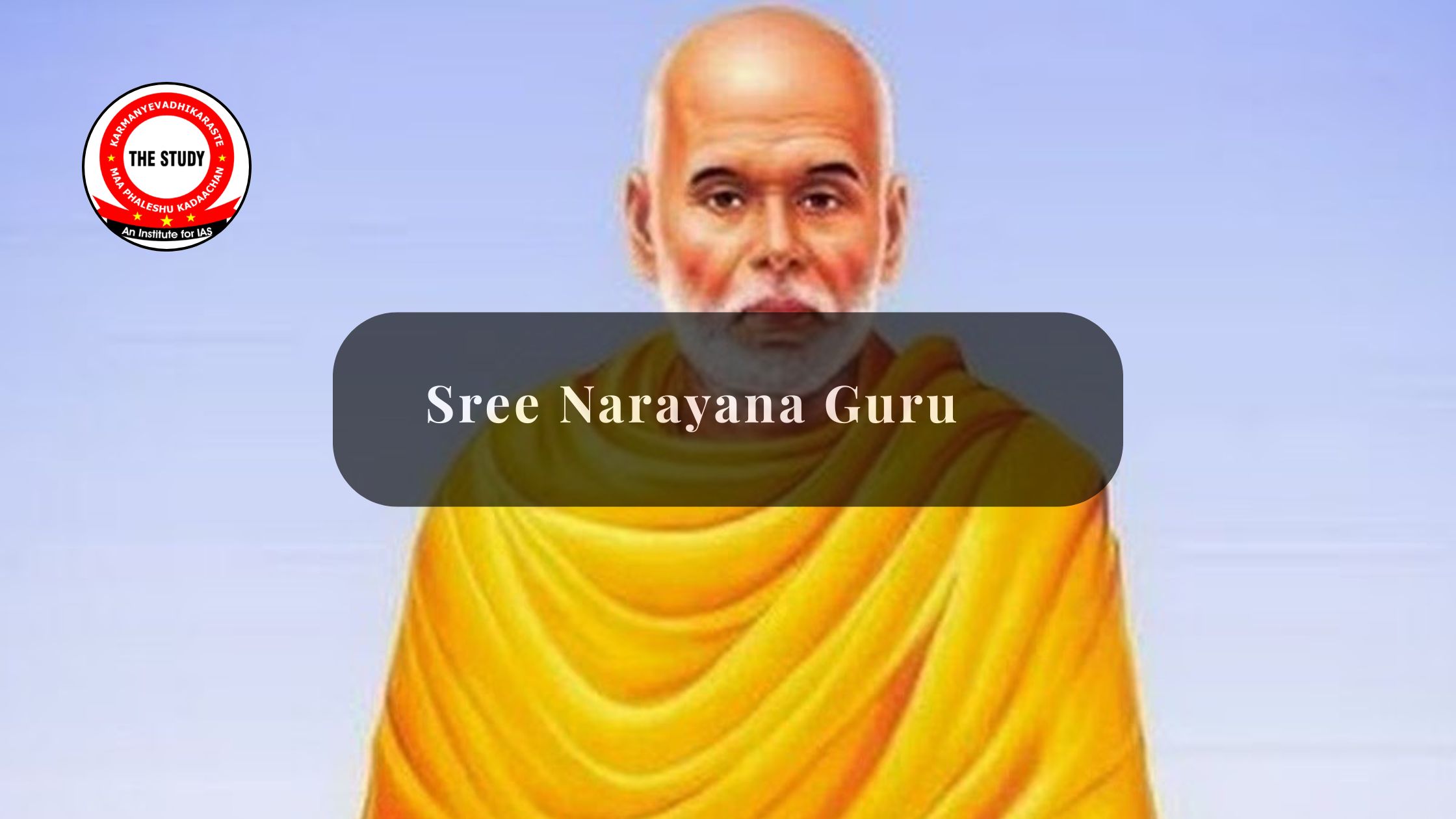
Sree Narayana Guru: Life, Teachings, Social Reforms & Importance for UPPSC
Introduction
Sree Narayana Guru (1856–1928) was one of India's greatest social reformers, philosopher-saints, and spiritual leaders. Born in Kerala, he dedicated his life to eradicating caste discrimination, promoting social equality, and spreading the ideals of education, morality, and universal brotherhood.
His famous message, "One Caste, One Religion, One God for Humanity," became a powerful slogan for social reform and continues to inspire movements for equality and justice. Through his teachings and institutions, Sree Narayana Guru played a pivotal role in uplifting marginalized communities and transforming Kerala's social landscape.
Early Life
- Born: 20 August 1856
- Birthplace: Chempazhanthy, near Thiruvananthapuram, Kerala
- Parents: Madan Asan and Kuttiyamma
From an early age, Narayana Guru displayed exceptional intelligence and a deep interest in spirituality, philosophy, and Sanskrit. He received traditional education and later spent years in meditation and self-study before beginning his mission of social reform.
Social Conditions During His Time
During the 19th century, Kerala's society was marked by rigid caste divisions and widespread social inequality. Lower-caste communities faced severe discrimination in education, employment, and access to temples and public spaces.
Sree Narayana Guru challenged these discriminatory practices through peaceful reform, emphasizing that all human beings are equal regardless of caste or religion.
Major Teachings of Sree Narayana Guru
1. Equality of All Human Beings
The central principle of Narayana Guru's philosophy was that every individual deserves equal dignity and respect. He rejected caste-based discrimination and encouraged people to judge others by their character rather than their birth.
2. One Caste, One Religion, One God for Humanity
His most famous teaching was:
"One Caste, One Religion, One God for Humanity."
This message emphasized universal brotherhood and promoted harmony among different communities while discouraging social divisions.
3. Importance of Education
Narayana Guru believed education was the most effective means of social transformation. He encouraged marginalized communities to pursue learning as a path to self-respect, economic progress, and empowerment.
4. Social Service
He advocated charity, community service, and ethical living. According to him, true spirituality should improve both the individual and society.
5. Religious Tolerance
He respected all religions and promoted mutual understanding among different faiths. His philosophy emphasized that spiritual truth transcends sectarian differences.
Temple Entry and Religious Reforms
One of Narayana Guru's most significant contributions was challenging the monopoly of upper castes over religious worship.
In 1888, he consecrated a Shiva idol at Aruvippuram, an act that questioned traditional caste restrictions on temple rituals. This event became a landmark in Kerala's social reform movement, demonstrating that spiritual authority was not limited by caste.
He later established several temples where people from all communities could worship without discrimination.
Formation of SNDP Yogam
To organize social reform efforts, the Sree Narayana Dharma Paripalana Yogam (SNDP Yogam) was established in 1903.
The organization worked to:
- Promote education.
- Improve social equality.
- Encourage economic development.
- Reform discriminatory customs.
- Empower marginalized communities.
SNDP Yogam became one of Kerala's most influential social reform organizations.
Literary Contributions
Sree Narayana Guru authored several philosophical and devotional works in Sanskrit and Malayalam. His writings focused on spirituality, ethics, self-realization, and social harmony.
Some of his notable works include:
- Atmopadesa Satakam
- Daiva Dasakam
- Jati Nirnayam
These texts continue to be studied for their philosophical depth and social message.
Impact on Indian Society
Sree Narayana Guru's reforms had a profound influence on Kerala's social development.
His contributions include:
- Reducing caste discrimination.
- Promoting universal education.
- Encouraging women's participation in society.
- Inspiring peaceful social reform.
- Strengthening movements for equality and justice.
His philosophy also influenced many later reformers and leaders working toward social inclusion.
Recognition and Legacy
Sree Narayana Guru is remembered as one of India's foremost champions of social justice. His birthday is celebrated with great reverence, particularly in Kerala, and his teachings continue to inspire educational, cultural, and social institutions across India.
His ideals remain relevant in discussions on equality, secularism, and inclusive development.
Importance for UPPSC and Other Competitive Exams
Questions on Sree Narayana Guru frequently appear in:
- UPPSC
- UPSC
- State PCS examinations
- SSC
- Teaching eligibility tests
- General Knowledge examinations
Candidates should remember:
- He was a social reformer from Kerala.
- He opposed caste discrimination.
- He founded the SNDP Yogam.
- His famous slogan was "One Caste, One Religion, One God for Humanity."
- He consecrated the Aruvippuram Shiva Temple in 1888.
Quick Facts for UPPSC Prelims
- Birth: 20 August 1856
- Birthplace: Chempazhanthy, Kerala
- Died: 20 September 1928
- Profession: Philosopher, Saint, and Social Reformer
- Famous Slogan:"One Caste, One Religion, One God for Humanity"
- Organization: SNDP Yogam (Sree Narayana Dharma Paripalana Yogam)
- Major Reform: Fought against caste discrimination and promoted social equality
- Famous Temple: Aruvippuram Shiva Temple
Previous Year Exam-Oriented Points
- Sree Narayana Guru belonged to Kerala.
- He worked for the upliftment of socially marginalized communities.
- He promoted education, equality, and religious harmony.
- The SNDP Yogam was established to advance his reform movement.
- The Aruvippuram Temple consecration (1888) is regarded as a landmark event in Kerala's social history.
FAQs
1. Who was Sree Narayana Guru?
Sree Narayana Guru was a philosopher, saint, and social reformer from Kerala who worked to eradicate caste discrimination and promote equality, education, and spiritual unity.
2. What is Sree Narayana Guru's famous slogan?
His famous message was "One Caste, One Religion, One God for Humanity."
3. What is the significance of the Aruvippuram Temple?
In 1888, Sree Narayana Guru consecrated a Shiva idol at Aruvippuram, challenging caste-based restrictions on temple worship and symbolizing equal access to spirituality.
4. What is SNDP Yogam?
The Sree Narayana Dharma Paripalana Yogam (SNDP Yogam), founded in 1903, is a social reform organization inspired by Sree Narayana Guru's ideals of equality, education, and community development.
5. Why is Sree Narayana Guru important for UPPSC?
He is an important topic in Modern Indian History and Social Reform Movements because of his contributions to social equality, educational advancement, religious reform, and the upliftment of marginalized communities.
Subscribe to our Youtube Channel for more Valuable Content – TheStudyias
Download the App to Subscribe to our Courses – Thestudyias
The Source’s Authority and Ownership of the Article is Claimed By THE STUDY IAS BY MANIKANT SINGH