Nordic Countries and India
16 May 2026
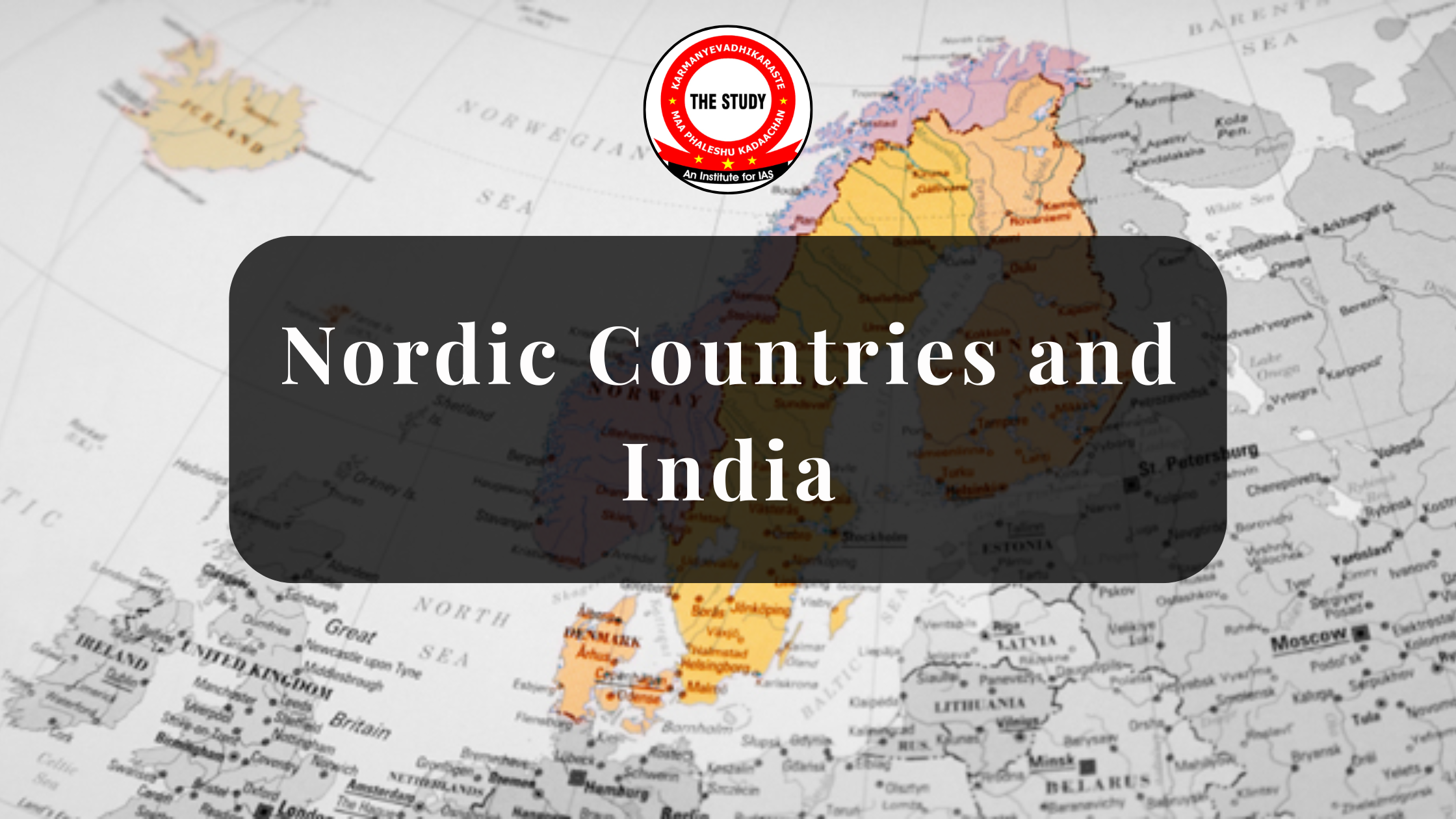
Nordic Countries and India: The Emerging Green Strategic Partnership
Prime Minister Narendra Modi’s visit to Oslo for the India-Nordic Summit marks an important diplomatic and strategic development in India’s foreign policy. The summit reflects India’s growing engagement with the Nordic region and signals a shift toward a broader Green Strategic Partnership based on technology, sustainability, innovation, climate cooperation, and long-term investments.
The Nordic countries, primarily Norway, Sweden, Denmark, Finland, and Iceland—may be relatively small in population, but they possess advanced technological capabilities, strong governance systems, and global leadership in sustainability and climate innovation.
For India, cooperation with Nordic countries has become strategically important in the context of:
- Green energy transition
- Climate change mitigation
- Sustainable infrastructure
- Blue economy development
- Arctic research
- Long-term investments
- Technological modernisation
Why Nordic Countries Matter for India
Strategic Importance of Nordic Countries for India
The importance of Nordic countries and India relations lies in the complementarity between the two regions.
India offers:
- A massive market
- Large-scale manufacturing potential
- Rapid urbanisation
- Expanding infrastructure
- Skilled human resources
Nordic countries contribute:
- Advanced green technologies
- Sustainable governance models
- Innovation ecosystems
- Climate expertise
- Long-term institutional capital
This creates strong opportunities for mutually beneficial partnerships.
Nordic Green Technology and India’s Energy Transition
Green Technology Cooperation Between India and Nordic Countries
One of the biggest strengths of Nordic countries is their leadership in green and sustainable technologies.
Nordic nations are global pioneers in:
- Offshore wind energy
- Carbon capture and storage (CCS)
- Hydrogen technologies
- Green shipping corridors
- Circular economy systems
- Sustainable urban planning
These sectors align closely with India’s decarbonisation and industrial transition goals.
India aims to achieve:
- Net-zero emissions by 2070
- Rapid renewable energy expansion
- Green industrialisation
- Sustainable transportation
- Energy security
Nordic expertise can significantly accelerate India’s green transformation.
Offshore Wind and Renewable Energy Cooperation
India-Nordic Renewable Energy Partnership
Countries like Denmark and Norway are global leaders in offshore wind energy technology.
India possesses enormous offshore wind potential along:
- Gujarat coast
- Tamil Nadu coast
- Arabian Sea region
- Bay of Bengal region
However, India still requires:
- Technology transfer
- Financing
- Technical expertise
- Infrastructure support
Partnerships with Nordic countries can help India develop large-scale offshore renewable energy infrastructure.
Carbon Capture and Sustainable Industrialisation
Nordic countries are among the most advanced nations in carbon capture and storage technologies.
This is highly relevant for India because sectors such as:
- Steel
- Cement
- Thermal power
- Heavy manufacturing
remain difficult to decarbonise fully through renewables alone.
Collaboration in CCS technology can support India’s industrial growth while reducing carbon emissions.
EFTA-India TEPA and Economic Cooperation
Trade and Investment Opportunities
The proposed EFTA-India Trade and Economic Partnership Agreement (TEPA) is expected to deepen economic cooperation between India and the European Free Trade Association countries.
EFTA includes:
- Norway
- Switzerland
- Iceland
- Liechtenstein
The agreement can boost:
- Trade flows
- Technology partnerships
- Manufacturing cooperation
- Green investments
- Innovation ecosystems
For India, TEPA could help attract patient long-term capital required for infrastructure and green-tech development.
Norway’s Sovereign Wealth Fund and India
Government Pension Fund Global
Norway manages one of the world’s largest sovereign wealth funds, the Government Pension Fund Global.
The fund has the potential to become a major investor in:
- Indian infrastructure
- Renewable energy
- Smart cities
- Green mobility
- Technology start-ups
Such long-term institutional investments are crucial for India’s sustainable growth ambitions.
Blue Economy and Maritime Cooperation
India-Nordic Maritime Partnership
Maritime cooperation represents another critical area in Nordic countries and India relations.
Norway possesses world-class expertise in:
- Sustainable shipping
- Fisheries management
- Maritime logistics
- Port technology
- Ocean sustainability
This complements India’s coastal economic development plans, particularly in states such as:
- Kerala
- Tamil Nadu
- Gujarat
Possible cooperation areas include:
- Fisheries modernisation
- Green ports
- Sustainable coastal development
- Maritime safety
- Low-emission shipping corridors
As India expands its blue economy ambitions, Nordic maritime experience becomes increasingly valuable.
Arctic Cooperation and Climate Science
India and Nordic Arctic Research
The Arctic region has become highly important in global climate discussions.
Nordic countries, especially Norway and Iceland, possess deep expertise in:
- Arctic science
- Polar research
- Climate monitoring
- Cryosphere studies
For India, Arctic cooperation is strategically relevant because melting polar ice directly affects:
- Global weather systems
- Sea-level rise
- Indian monsoon patterns
- Climate variability
Joint research and scientific cooperation can strengthen India’s climate resilience and forecasting capabilities.
Governance and Democratic Values
Shared Commitment to Multilateralism
India and Nordic countries share several important political and diplomatic values, including:
- Support for multilateralism
- Rule-based international order
- Democratic governance
- Rule of law
- Institutional accountability
In an increasingly uncertain geopolitical environment, such partnerships become strategically important.
Nordic countries are often viewed as stable and reliable partners because of their strong institutions and predictable policy frameworks.
Lessons from Nordic Social and Institutional Models
Inclusive Development and Policy Innovation
The Nordic model is globally known for:
- Welfare systems
- Human development
- Public healthcare
- Education systems
- Gender equality
- Institutional trust
- Sustainable urban governance
While India’s scale and diversity are vastly different, several policy innovations from Nordic countries can offer useful lessons in:
- Public administration
- Urban planning
- Environmental governance
- Social welfare delivery
- Sustainable development
India can adapt selected elements suitable to its own socio-economic realities.
Challenges in India-Nordic Relations
Limitations and Constraints
Despite growing cooperation, several challenges remain.
Geographic Distance- Limited direct connectivity affects trade and people-to-people interactions.
Scale Differences- Nordic economies are relatively small compared to India’s market size.
Regulatory Complexities- Investment and technology collaborations often face procedural delays.
Limited Public Awareness- India-Nordic relations do not receive as much political or media attention compared to India-US or India-Europe ties.
However, increasing focus on climate diplomacy and green growth is gradually changing this dynamic.
Why the India-Nordic Partnership Matters Globally
Green Geopolitics and Strategic Cooperation
The emerging partnership between India and Nordic countries reflects the rise of “green geopolitics,” where:
- Climate cooperation
- Sustainable technology
- Energy transition
- Innovation ecosystems
are becoming central to foreign policy.
For India, Nordic partnerships can support:
- Climate commitments
- Technological modernisation
- Sustainable industrialisation
- Energy transition
- Blue economy development
For Nordic countries, India represents:
- A massive growth market
- A strategic Indo-Pacific partner
- A key player in global climate governance
Key Takeaways
- Prime Minister Narendra Modi’s Oslo visit marks a significant milestone in India-Nordic relations.
- Nordic countries are leaders in green technology, renewable energy, and sustainable development.
- Offshore wind, carbon capture, and circular economy cooperation align with India’s climate goals.
- EFTA-India TEPA can deepen trade and investment cooperation.
- Norway’s sovereign wealth fund could become an important source of long-term infrastructure investment.
- Maritime and blue economy cooperation is strategically important for India’s coastal development.
- Arctic research collaboration is vital because polar changes affect the Indian monsoon.
- Shared democratic values strengthen India-Nordic strategic partnerships.
Conclusion
The growing partnership between Nordic countries and India represents far more than traditional diplomacy. It reflects the emergence of a long-term strategic relationship centered on sustainability, climate resilience, technology, innovation, and institutional cooperation.
As global geopolitics increasingly shifts toward green transitions and climate security, Nordic countries offer India valuable expertise, capital, and technological capabilities.
For India, engaging deeply with the Nordic region can accelerate:
- Renewable energy expansion
- Industrial decarbonisation
- Maritime modernisation
- Climate adaptation
- Sustainable infrastructure development
The India-Nordic partnership therefore has the potential to become one of the most important pillars of India’s future green and strategic diplomacy.
FAQs on Nordic Countries
Which countries are considered Nordic countries?
Nordic countries include Norway, Sweden, Denmark, Finland, and Iceland.
Why are Nordic countries important for India?
Nordic countries are important for India because of their expertise in green technology, renewable energy, maritime sectors, climate science, and sustainable governance.
What is the India-Nordic Summit?
The India-Nordic Summit is a diplomatic platform for strengthening cooperation between India and Nordic countries across trade, technology, sustainability, and strategic issues.
What is EFTA-India TEPA?
It is a Trade and Economic Partnership Agreement between India and EFTA countries aimed at improving trade and investment cooperation.
How can Nordic countries help India’s green transition?
Nordic countries can provide advanced technologies in offshore wind, carbon capture, sustainable shipping, and circular economy systems.
Why is Arctic cooperation important for India?
Changes in the Arctic affect global climate systems and the Indian monsoon, making Arctic research strategically important for India.
Related Posts :
- Crowded Indian Prisons
- Integrated Theatre Commands (ITCs)
- India–Vietnam Relations
- Sustainable Urbanisation
- Governor’s Role in Government Formation
- UPSC Prelims Exam Day Instructions 2026
- UPSC Prelims Admit Card 2026
- VB-GRAM G Act 2025
- China Decree 834
- Public Office Appointments
- NEET-UG Paper Leak
- Presidential Impeachment
- Majoritarianism vs Constitutionalism
Subscribe to our YouTube Channel for more Valuable Content – TheStudyias
Download the App to Subscribe to our Courses – Thestudyias
The Source’s Authority and Ownership of the Article is Claimed By THE STUDY IAS BY MANIKANT SINGH
Comments (0)
Leave a Comment