Nizamuddin Auliya
7 Aug 2026
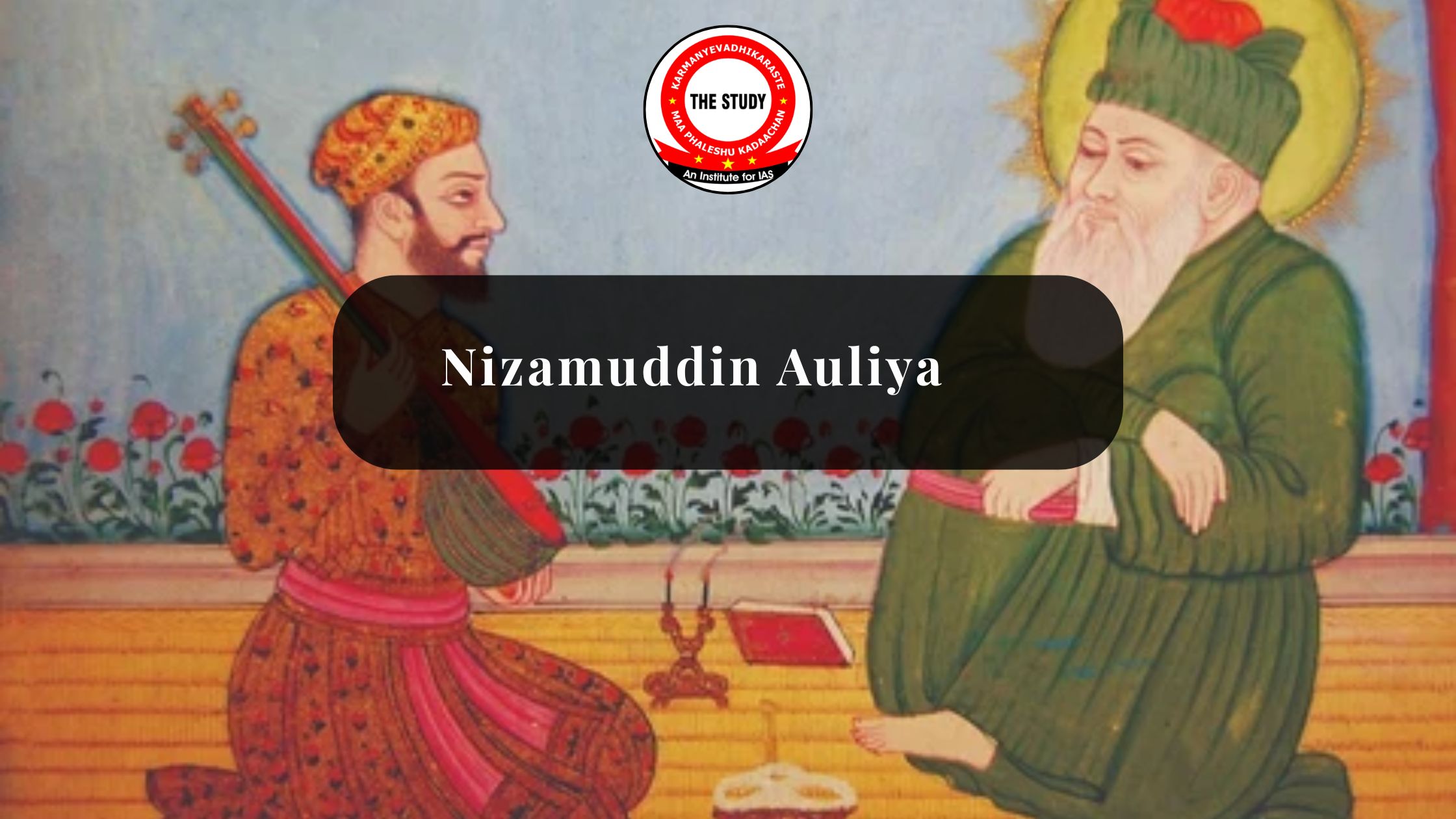
Nizamuddin Auliya: Life, Teachings, Contributions & Importance for UPPSC
Introduction
Nizamuddin Auliya (1238–1325 CE) was one of the most revered Sufi saints of medieval India and the most prominent spiritual leader of the Chishti Order after Fariduddin Ganjshakar. Renowned for his message of love, compassion, humility, and service to humanity, he played a significant role in spreading Sufism across northern India.
His Khanqah (Sufi hospice) in Delhi became a center for spiritual learning, charity, and social harmony, attracting people from all religions and social backgrounds.
Early Life
- Born: 1238 CE
- Birthplace: Badaun (present-day Uttar Pradesh)
- Father: Ahmad Bukhari (died when Nizamuddin was young)
- Mother: Bibi Zulaikha, who played a crucial role in his upbringing.
After receiving his early education in Badaun, Nizamuddin moved to Delhi, where he studied Islamic theology, law, and spirituality.
Association with the Chishti Order
Nizamuddin Auliya became a disciple of Fariduddin Ganjshakar (Baba Farid) at Ajodhan (now Pakpattan in Pakistan).
After Baba Farid's death, Nizamuddin became the leading spiritual guide of the Chishti Order in India. He emphasized:
- Love for all humanity
- Simplicity and humility
- Service to the poor
- Religious tolerance
- Spiritual devotion over worldly power
His teachings reflected the Chishti tradition of compassion, equality, and detachment from political authority.
Teachings of Nizamuddin Auliya
1. Universal Love
Nizamuddin believed that love for humanity was the highest form of worship. He welcomed people regardless of religion, caste, or social status.
2. Service to Humanity
He encouraged feeding the poor, helping the needy, and practicing charity. His khanqah served free meals to visitors and the underprivileged.
3. Religious Harmony
He promoted peaceful coexistence between different religious communities. His inclusive approach attracted both Muslims and Hindus.
4. Simplicity
He rejected luxury and believed that spiritual growth required humility, self-discipline, and detachment from material wealth.
5. Distance from Political Power
Unlike some religious leaders, Nizamuddin generally avoided close association with rulers and preferred to remain independent of the royal court.
Relationship with the Delhi Sultans
Nizamuddin Auliya lived during the reigns of several rulers of the Delhi Sultanate, including:
- Ghiyas ud din Balban
- Jalal ud din Khalji
- Alauddin Khalji
- Ghiyasuddin Tughlaq
- Muhammad bin Tughlaq
Although many rulers respected him, he maintained his distance from political affairs. A famous tradition attributes to him the phrase "Hunooz Dilli Door Ast" ("Delhi is still far away"), associated with Ghiyasuddin Tughlaq. While the story is popular, historians debate its authenticity.
Khanqah of Nizamuddin Auliya
His khanqah in Delhi became an important center of:
- Spiritual guidance
- Religious discussions
- Charity
- Community service
- Music and devotional gatherings
People from different regions visited to seek his blessings and spiritual advice.
Contribution to Sufism
Nizamuddin Auliya strengthened the Chishti Order by emphasizing:
- Equality among all people
- Peaceful preaching
- Compassion and forgiveness
- Devotional practices
- Service to society
His influence helped Sufism spread widely across northern India.
Association with Amir Khusrau
One of Nizamuddin Auliya's most famous disciples was Amir Khusrau.
Amir Khusrau is celebrated for:
- Persian poetry
- Hindavi literature
- Contributions to music
- Development of qawwali traditions (along with the broader Chishti musical culture)
The spiritual bond between Nizamuddin Auliya and Amir Khusrau is considered one of the most significant teacher-disciple relationships in medieval Indian history.
Death and Tomb
- Died: 1325 CE
- Burial Place: Nizamuddin Dargah
His dargah remains one of India's most visited Sufi shrines, attracting devotees from various faiths who come to offer prayers and participate in devotional music gatherings.
Historical Significance
Nizamuddin Auliya played a vital role in shaping India's spiritual and cultural traditions. His teachings promoted religious tolerance, compassion, and social equality at a time of political instability. Through his khanqah, he demonstrated that spirituality should be expressed through kindness, service, and love for humanity rather than through power or wealth.
His legacy continues to influence Indian culture, Sufi traditions, literature, and music.
Important Facts for UPPSC Prelims
- Birth: 1238 CE
- Birthplace: Badaun, Uttar Pradesh
- Sufi Order: Chishti
- Spiritual Mentor: Baba Farid (Fariduddin Ganjshakar)
- Famous Disciple: Amir Khusrau
- Main Teachings: Love, humanity, charity, tolerance, and service to mankind
- Died: 1325 CE
- Tomb: Nizamuddin Dargah, Delhi
Previous Year Exam Facts
- Nizamuddin Auliya belonged to the Chishti Sufi Order.
- His most famous disciple was Amir Khusrau.
- He emphasized love, compassion, and service to humanity.
- He generally avoided involvement in politics.
- His shrine is located in Delhi.
FAQs
1. Who was Nizamuddin Auliya?
Nizamuddin Auliya was a renowned Chishti Sufi saint of medieval India known for promoting love, charity, simplicity, and religious harmony.
2. Which Sufi order did Nizamuddin Auliya belong to?
He belonged to the Chishti Order, one of the most influential Sufi traditions in India.
3. Who was the famous disciple of Nizamuddin Auliya?
His most famous disciple was Amir Khusrau, a distinguished poet, scholar, and musician.
4. Where is Nizamuddin Auliya's tomb located?
His tomb is located at the Nizamuddin Dargah in Delhi, an important Sufi pilgrimage site.
5. Why is Nizamuddin Auliya important for UPPSC?
He is an important topic in Medieval Indian History because questions frequently cover the Chishti Sufi Order, Sufi saints, their teachings, and their contributions to India's social and cultural development.