NEET-UG Paper Leak
14 May 2026
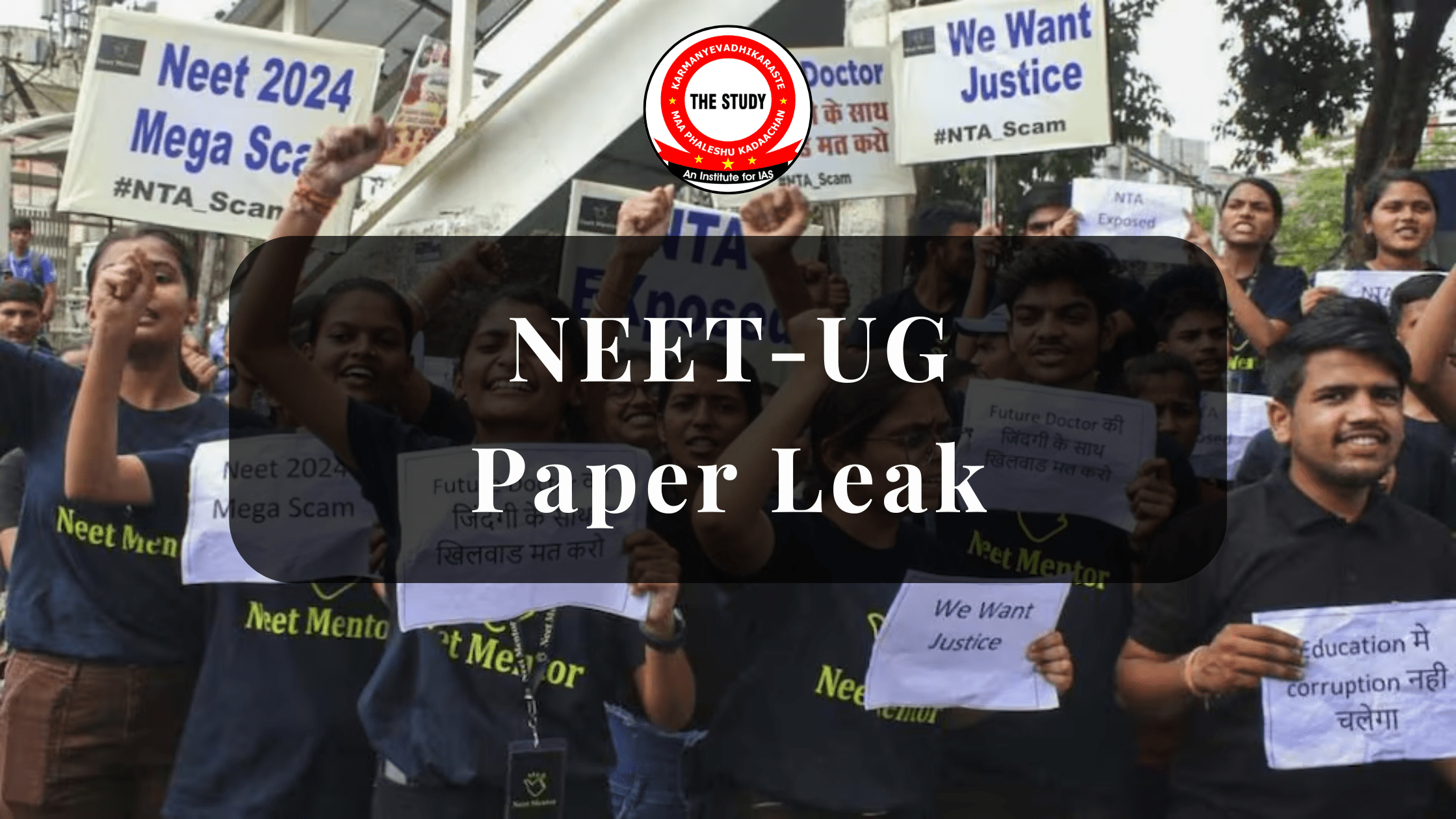
NEET-UG Paper Leak: Impact on Students, NTA Accountability and Exam Reforms
The alleged NEET-UG paper leak is not just an examination controversy. It is a deeper warning signal for India’s entire competitive examination ecosystem. When an exam like NEET-UG faces cancellation or credibility questions, the damage is not limited to one paper, one agency or one batch of students. It affects families, institutions, public trust and the idea of merit itself.
For lakhs of aspirants, NEET is not just an entrance test. It is the result of years of discipline, parental sacrifice, coaching expenses, emotional pressure and social expectations. When such an exam gets trapped in a paper leak controversy, the system does not merely fail administratively, it fails morally.
This issue is important for current affairs, especially for UPSC and State PCS aspirants, because it connects directly with governance, education policy, ethics, institutional accountability and social justice. At The Study IAS, such topics are not studied as isolated news events, but as examples of how governance systems function and where they break down.
What Are the Major Implications of the NEET-UG Paper Leak?
1. Emotional and Financial Burden on Students
The most immediate victims are students. More than 22 lakh aspirants prepared for NEET-UG with the hope that one fair exam would decide their future. A cancellation or re-examination situation pushes them back into uncertainty.
Many students spend one or two years preparing for NEET. Families invest heavily in coaching, study material, travel, accommodation and test series. For students from middle-class and lower-income backgrounds, this is not a small cost. A paper leak forces them to pay the price for a failure they did not create.
The emotional impact is equally serious. Anxiety, burnout, fear of re-test, loss of rhythm and mental exhaustion become real concerns.
2. Collapse of Trust in the Examination System
A competitive exam works only when students believe that the process is fair. Once a paper leak happens, even honest results become doubtful in public perception.
This is the biggest damage. The issue is not just whether some students got unfair access to the paper. The larger issue is that every student begins to question whether hard work is enough.
For a country like India, where competitive exams are seen as a path to social mobility, this trust deficit is dangerous. If students lose faith in public examinations, they also lose faith in institutions.
3. Pressure on NTA and Institutional Accountability
The National Testing Agency was created to bring standardisation, transparency and efficiency into entrance examinations. A major paper leak controversy directly questions its credibility.
The larger governance question is simple: who is accountable when a national-level examination fails?
Is the responsibility limited to the exam-conducting agency?
Should technology vendors, printing networks, transport chains and local administration also be examined?
Should there be independent audits of high-stakes exams?
These questions make the issue highly relevant for UPSC GS Paper 2 and Ethics.
4. Political Fallout and Governance Debate
Paper leaks quickly become political because they affect lakhs of young people. Opposition parties raise questions about administrative failure, while the government faces pressure to explain how such lapses happened.
But beyond politics, the real issue is governance capacity. India conducts some of the world’s largest competitive exams. If security, transparency and grievance redressal are weak, the system will repeatedly face credibility crises.
This is why examination reform is no longer a technical issue. It has become a public governance priority.
5. Credibility Crisis in Medical Admissions
NEET-UG is the entry point to medical education. If the entrance process becomes doubtful, the credibility of medical admissions also comes under pressure.
Medical education is directly linked to public health. Therefore, any compromise in the admission process creates concern about fairness, quality and public confidence.
The issue also revives larger concerns around medical counselling, seat allocation, vacant seats and the overall efficiency of India’s medical education system.
6. Wider Economic and Social Costs
Every paper leak creates direct and indirect costs.
The government may have to spend on re-examination, investigation, security, logistics and litigation. Students spend more on preparation. Families lose money. Coaching cycles get extended. Courts and institutions spend time resolving disputes.
The social cost is even bigger. Students from privileged backgrounds may recover faster, but weaker students often suffer more. A paper leak can push many aspirants out of the race completely.
Key Takeaways
- The NEET-UG paper leak is not merely an exam-related failure; it is a crisis of public trust.
- Students and families face emotional, financial and academic uncertainty because of such leaks.
- The credibility of NTA and India’s examination architecture comes under serious scrutiny.
- The controversy raises questions about accountability, transparency and technology-based exam security.
- Medical admissions become vulnerable when the entrance process itself is questioned.
- For UPSC aspirants, this issue is important for Governance, Ethics, Social Justice, Education and Essay preparation.
Way Forward
India needs a stronger examination security framework. This should include encrypted question paper handling, limited human access, real-time monitoring, independent audits and strict accountability at every stage.
There should also be faster grievance redressal for students. Aspirants should not be left confused for weeks while institutions remain silent.
The role of the NTA must be reviewed seriously. If reforms are needed, they should be structural, not cosmetic.
Most importantly, student welfare must be placed at the centre. In any examination crisis, communication must be clear, transparent and timely.
Conclusion
The NEET-UG paper leak controversy shows that India’s examination system needs urgent reform. For students, it is a question of dreams. For families, it is a question of sacrifice. For institutions, it is a question of credibility. For the state, it is a question of accountability.
A fair examination is not just an administrative process. It is a promise that hard work will be respected. When that promise breaks, the system must respond with honesty, speed and structural reform.
This is why the NEET-UG paper leak is an important current affairs issue for UPSC and State PCS aspirants. At The Study IAS, the focus should be on understanding the deeper governance lessons behind such events because current affairs is not about memorising headlines, but about understanding the system behind them.
FAQs on NEET-UG Paper Leak
1. What is the NEET-UG paper leak issue?
The NEET-UG paper leak issue refers to allegations that the question paper was accessed or circulated before the examination, raising concerns about fairness, transparency and the credibility of the exam process.
2. Why is the NEET-UG paper leak important?
It is important because NEET-UG decides admission to medical colleges across India. Any leak affects lakhs of students and damages trust in the examination system.
3. How does the paper leak affect students?
Students face emotional stress, financial burden, uncertainty, burnout and reduced preparation time for any possible re-test. Honest aspirants are forced to suffer because of systemic failure.
4. What questions does this raise about NTA?
The issue raises questions about NTA’s exam security, operational transparency, vendor management, accountability and ability to conduct high-stakes national examinations.
5. What reforms are needed to prevent paper leaks?
India needs stronger digital security, strict chain-of-custody protocols, independent exam audits, fast investigation, harsher punishment for organised fraud and better student communication.
Related Posts :
- Crowded Indian Prisons
- Integrated Theatre Commands (ITCs)
- India–Vietnam Relations
- Sustainable Urbanisation
- Governor’s Role in Government Formation
- UPSC Prelims Exam Day Instructions 2026
- UPSC Prelims Admit Card 2026
- VB-GRAM G Act 2025
- China Decree 834
- Public Office Appointments
Subscribe to our YouTube Channel for more Valuable Content – TheStudyias
Download the App to Subscribe to our Courses – Thestudyias
The Source’s Authority and Ownership of the Article is Claimed By THE STUDY IAS BY MANIKANT SINGH
Comments (0)
Leave a Comment