Lessons for UPSC from Mahabharata & Ramayana
11 Mar 2026
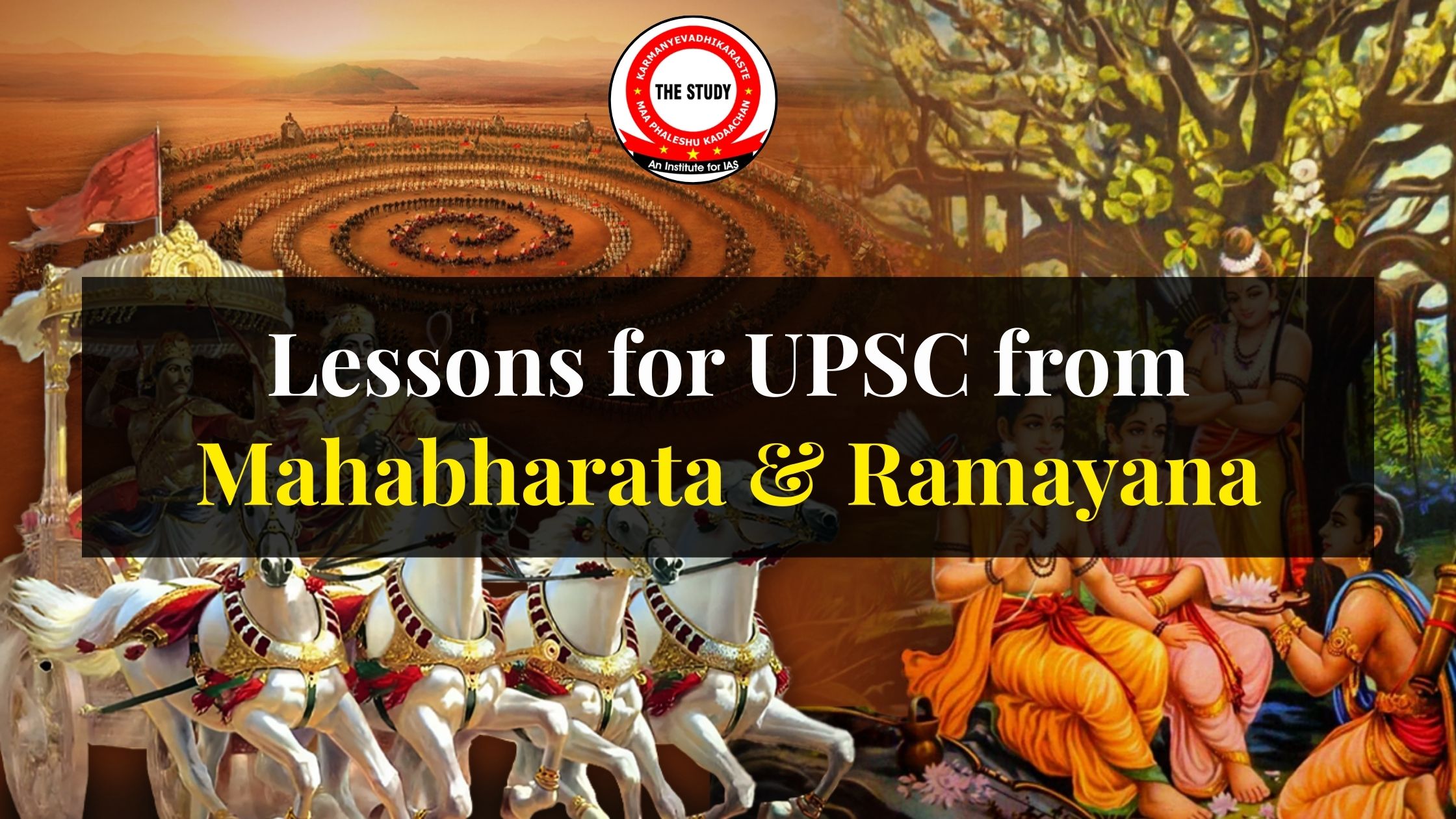
Lessons for UPSC from Mahabharata & Ramayana - Powerful Insights for Ethical Leadership and Governance
Introduction
India’s great epics are more than stories. They’re powerful sources of wisdom, ethics, and governance principles. For aspirants preparing for the Civil Services Examination, understanding the Lessons for UPSC from Mahabharata & Ramayana can provide valuable insights into leadership, ethics, diplomacy, and decision-making.
These epics reflect the moral and administrative ideals that shaped Indian civilization. Even today, many principles of governance, justice, and public duty discussed in these texts align closely with the values expected from civil servants.
The Lessons for UPSC from Mahabharata & Ramayana help aspirants write stronger answers in General Studies, Essay papers, and especially the Ethics (GS-IV) paper. They demonstrate cultural understanding, ethical reasoning, and analytical thinking—qualities the UPSC examination rewards.
In this article, we’ll explore some powerful lessons from the two epics that can strengthen both UPSC preparation and administrative thinking.
For historical context about these epics, you can explore this detailed reference:
https://www.britannica.com/topic/Mahabharata
Why Epics Matter for UPSC Preparation?
Role of Epics in Indian Philosophy and Administration
Indian epics like the Ramayana and the Mahabharata are deeply rooted in the philosophical concept of Dharma. Dharma refers to duty, righteousness, and ethical conduct.
The Lessons for UPSC from Mahabharata & Ramayana demonstrate how leaders must balance morality with practicality.
Key philosophical lessons include:
- Duty before personal comfort
- Justice over favoritism
- Accountability of rulers
- Consequences of unethical leadership
These ideas form the foundation of ethical governance in India.
Here are the epic examples and governance lessons written in clear points:
- Rama accepting exile – Shows that leaders must respect rule of law and duty above personal interest.
- Yudhishthira’s commitment to truth – Teaches the importance of integrity and honesty in leadership.
- Krishna’s diplomacy – Demonstrates the value of strategic negotiation and peaceful conflict resolution.
- Ravana’s downfall – Highlights how arrogance and misuse of power lead to the collapse of leadership.
These narratives help aspirants understand how ethical dilemmas arise in governance.
Importance in Ethics Paper (GS-IV)
The Lessons for UPSC from Mahabharata & Ramayana are especially useful in the Ethics paper.
UPSC often asks questions about:
- Moral dilemmas
- Public service values
- Emotional intelligence
- Ethical leadership
Examples from these epics make answers richer and culturally rooted.
Example:
Ethics Question:
A civil servant must choose between loyalty to a superior and public interest.
Epic Reference:
Vibhishana leaving Ravana’s kingdom shows loyalty should never override righteousness. Such examples demonstrate ethical reasoning, which UPSC examiners appreciate.
Leadership Lessons from Ramayana for Civil Servants
The Ramayana offers profound insights into leadership and governance. The Lessons for UPSC from Mahabharata & Ramayana often highlight Rama as the ideal ruler.
Duty Above Personal Interest
One of the most powerful moments in the Ramayana is Rama accepting exile. Despite being the rightful heir to the throne, he willingly went into exile to honor his father’s promise. Leadership lessons:
- Respect for constitutional authority
- Personal sacrifice for public trust
- Upholding institutional credibility
For a civil servant, this represents the principle:
Public duty is above personal ambition.
Compassionate Governance Rama’s rule, often described as Ram Rajya, represents an ideal welfare state. Characteristics included:
- Justice for all
- Protection of the weak
- Transparent governance
- Prosperity for citizens
Civil servants today must aim for similar values:
- Inclusive development
- Social justice
- Citizen-centric administration
These insights remain among the most practical Lessons for UPSC from Mahabharata & Ramayana.
Strategic Alliances
Rama built alliances with Sugriva and the Vanara army. This teaches a crucial administrative principle: Successful leadership requires collaboration.
Modern parallels include:
- Inter-departmental coordination
- International diplomacy
- Cooperative federalism
A civil servant must learn to work with multiple stakeholders.
Trust and Teamwork
Rama trusted Hanuman with the mission to locate Sita. Lessons for administrators:
- Delegate responsibilities
- Trust capable team members
- Encourage initiative
Effective governance isn’t about controlling everything, it’s about empowering teams. These leadership principles are central Lessons for UPSC from Mahabharata & Ramayana.
Governance and Political Lessons from Mahabharata
While the Ramayana focuses on ideal leadership, the Mahabharata explores complex political realities.
The Lessons for UPSC from Mahabharata & Ramayana are particularly powerful in understanding power, politics, and ethics.
Dharma vs Power
The Mahabharata constantly asks one question:
Should leaders pursue power at any cost?
The Kauravas pursued power without morality.
Consequences included:
- War
- destruction
- collapse of a kingdom
The lesson for administrators:
Power without ethics leads to institutional failure.
Crisis Decision-Making
During the Kurukshetra war, leaders faced extremely difficult decisions.
For example:
- Arjuna’s moral dilemma
- Krishna’s strategic guidance
Key governance lessons include:
- Leaders must act decisively in crises.
- Moral clarity helps decision-making.
- Advisors play a crucial role.
Civil servants often face similar dilemmas during:
- disasters
- policy conflicts
- political pressure
Thus, the Lessons for UPSC from Mahabharata & Ramayana remain highly relevant.
Diplomacy and Negotiation
Before the war, Krishna tried multiple diplomatic efforts to avoid conflict.
These included:
- Peace negotiations
- compromise proposals
- mediation
However, Duryodhana refused even minimal compromise.
Administrative lesson
Rigid leadership destroys negotiation opportunities.
Modern diplomacy requires:
- patience
- communication
- flexibility
Consequences of Bad Governance
The Kaurava court ignored injustice repeatedly:
- Draupadi’s humiliation
- corruption in leadership
- silence of elders
Lessons for civil servants:
- Silence against injustice is complicity
- Institutions must protect dignity
- Ethical courage is essential
These themes remain core Lessons for UPSC from Mahabharata & Ramayana.
Ethical Lessons for UPSC Ethics Paper
The Ethics paper in UPSC focuses heavily on values like integrity, empathy, and accountability. The Lessons for UPSC from Mahabharata & Ramayana provide excellent examples for such answers.
Importance of Truth and Justice
Yudhishthira is often remembered as a symbol of truth. However, the Mahabharata also shows how even righteous people can face ethical dilemmas.
This teaches aspirants:
- Ethics is not always black and white
- Decisions require contextual judgment
Civil servants must balance:
- legality
- morality
- Practicality
Emotional Intelligence
Both epics highlight emotional intelligence.
Examples include:
- Krishna calming Arjuna
- Rama understanding citizens’ concerns
- Vidura advising the king wisely
For administrators, emotional intelligence means:
- empathy
- listening
- self-control
- conflict management
These qualities define good governance.
Conflict Resolution
Many conflicts in the epics arise from ego, greed, or miscommunication. Lessons for administrators:
- Address grievances early.
- Encourage dialogue.
- Promote fairness.
Ignoring problems often leads to larger crises.
Thus, the Lessons for UPSC from Mahabharata & Ramayana emphasize proactive governance.
Practical Ways to Use Epic Lessons in UPSC Answers
Knowing epic stories isn’t enough. Aspirants must learn how to use them effectively in answers.
Using Quotations and Examples
Example answer enrichment:
Instead of writing:
“A good leader must be ethical.”
You can write:
“Like Rama in the Ramayana, leaders must prioritize duty over personal gain.”
This makes answers:
- culturally rooted
- more memorable
- analytically stronger
Such examples highlight the Lessons for UPSC from Mahabharata & Ramayana effectively.
Linking to Modern Governance
Here are the epic lessons with their modern governance applications in clear points:
- Rama’s duty – Teaches constitutional morality, where leaders follow rules and uphold the constitution above personal interests.
- Krishna’s diplomacy – Reflects international relations, emphasizing negotiation, dialogue, and strategic decision-making between nations.
- Vidura’s wisdom – Represents ethical bureaucracy, where administrators provide honest advice and act with integrity.
- Kaurava arrogance – Shows the danger of abuse of political power, where pride and injustice can lead to conflict and institutional failure.
This connection strengthens UPSC answers significantly.
Case Study Applications
In ethics case studies, epic references can help explain solutions.
Example:
Case:
A civil servant must oppose corruption despite pressure.
Epic Insight:
Vidura in the Mahabharata stood against injustice despite political pressure.
Therefore:
Integrity must override fear of authority.
These approaches showcase the depth of Lessons for UPSC from Mahabharata & Ramayana.
Conclusion
The Ramayana and the Mahabharata are timeless guides to leadership, ethics, and governance. For UPSC aspirants, the Lessons for UPSC from Mahabharata & Ramayana offer far more than cultural knowledge.
They provide:
- ethical frameworks
- leadership models
- governance insights
- conflict resolution strategies
These lessons remain deeply relevant for modern public administration.
Civil servants are expected to combine integrity, compassion, and courage—the very qualities celebrated in these epics.
By thoughtfully incorporating the Lessons for UPSC from Mahabharata & Ramayana into preparation and answer writing, aspirants can demonstrate both intellectual depth and ethical maturity.
And ultimately, that’s exactly what the UPSC examination seeks.
Frequently Asked Questions (FAQs)
1. Why are Ramayana and Mahabharata relevant for UPSC preparation?
They provide examples of ethics, leadership, diplomacy, and governance. These insights help in GS papers, essays, and the Ethics paper.
2. Can epic examples improve UPSC answers?
Yes. Well-used examples from epics demonstrate cultural awareness and ethical reasoning, improving answer quality.
3. Which paper benefits most from epic lessons?
The Ethics (GS-IV) paper benefits the most, but examples can also be used in essays and governance questions.
4. How many epic examples should be used in answers?
Usually one concise example is enough. Overusing them may reduce analytical depth.
5. Are epic references accepted by UPSC examiners?
Yes, as long as they are relevant, concise, and linked to modern governance concepts.
6. What is the most important lesson from these epics for civil servants?
The most important lesson is ethical leadership guided by Dharma, which is the core of the Lessons for UPSC from Mahabharata & Ramayana.
Subscribe to our YouTube Channel for more Valuable Content – TheStudyias
Download the App to Subscribe to our Courses – Thestudyias
The Source’s Authority and Ownership of the Article is Claimed By THE STUDY IAS BY MANIKANT SINGH
Comments (0)
Leave a Comment