India–US Defence Ties
21 May 2026
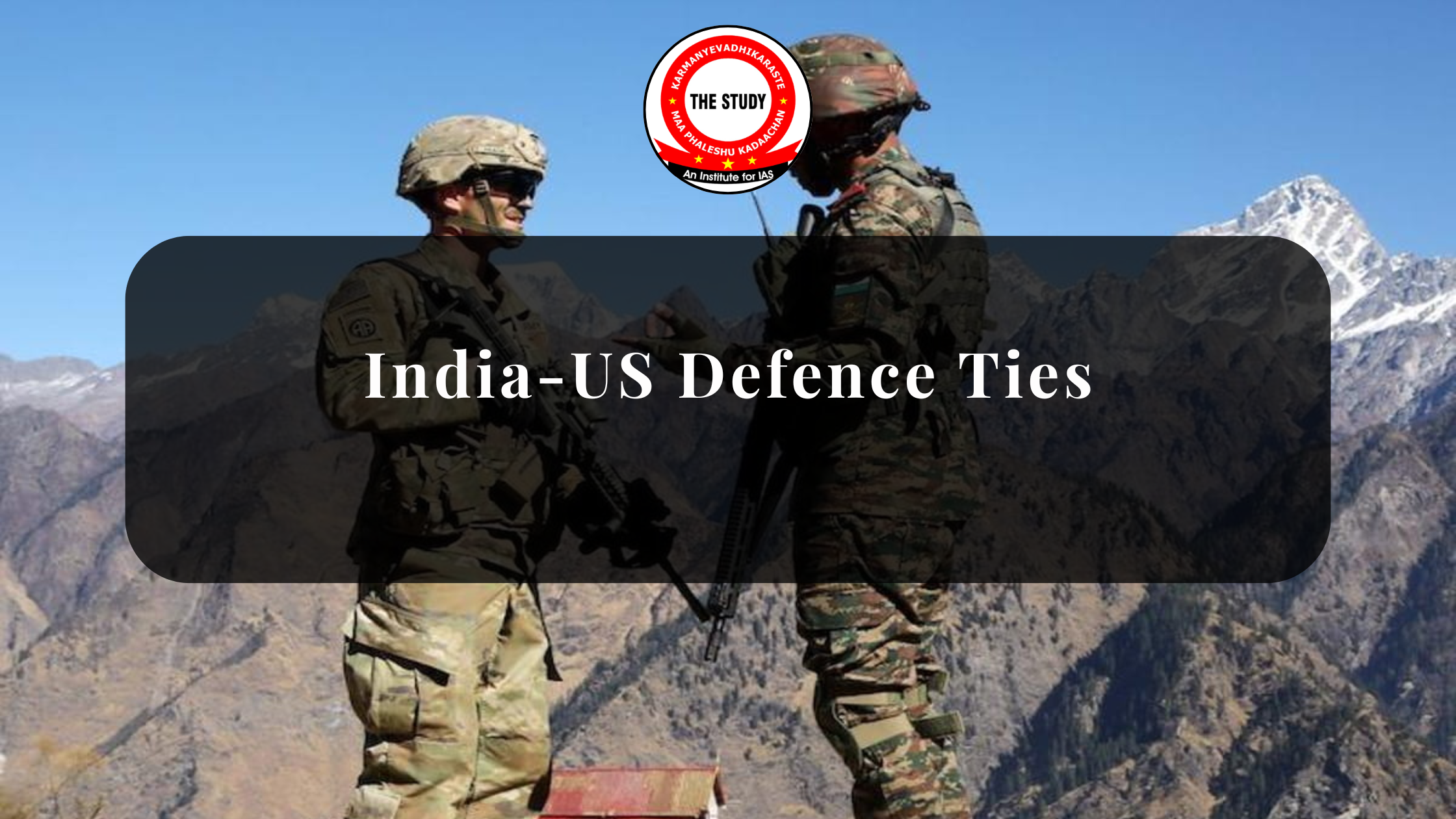
India–US Defence Ties: Evolution of a Strategic Partnership
Introduction: Context Behind India–US Defence Cooperation
The United States Department of State has approved proposed foreign military sales to India involving sustainment and support services for AH-64E Apache attack helicopters worth approximately $198.2 million and long-term support for M777A2 ultra-light howitzers valued at nearly $230 million.
The development highlights the growing depth of India–US defence cooperation, which has evolved from limited Cold War-era engagement into a comprehensive strategic partnership involving defence trade, interoperability, military exercises, technology transfer, and Indo-Pacific security cooperation.
For UPSC aspirants, India–US defence ties are important from the perspective of International Relations, Security, Defence Technology, Indo-Pacific Strategy, and India’s Strategic Autonomy.
Evolution of India–US Defence Relations
Cold War Era: Limited Engagement and Strategic Distrust
During the Cold War, defence relations between India and the US remained weak and often distrustful.
Major Reasons
- India followed a policy of Non-Alignment.
- India maintained close defence ties with the Soviet Union.
- The US viewed Pakistan as a strategic ally during the Cold War.
- Differences emerged over nuclear policy and regional security issues.
As a result, defence cooperation remained minimal for decades.
Post-Cold War Thaw (1990s–2000)
Pokhran Tests and Initial Sanctions
India’s 1998 Pokhran-II nuclear tests initially led to US sanctions under non-proliferation laws.
However, the sanctions phase gradually transformed into strategic engagement.
Strategic Reassessment by the United States
By the early 2000s, the US began viewing India as:
- A rising global power.
- A democratic partner in Asia.
- A strategic counterbalance to China.
This shift laid the foundation for deeper defence engagement.
Next Steps in Strategic Partnership (NSSP)
In 2004, the two countries launched the NSSP framework.
Areas Covered Under NSSP
- Civilian nuclear cooperation
- Civilian space programmes
- Missile defence dialogue
- High-technology trade
This marked the beginning of structured strategic cooperation.
Civil Nuclear Agreement and Strategic Reset (2005–2015)
India–US Civil Nuclear Deal
The 2005 Civil Nuclear Cooperation Agreement became a major turning point in bilateral relations.
The agreement was finalised in 2008 and allowed India access to civilian nuclear technology despite not being a signatory to the Nuclear Non-Proliferation Treaty (NPT).
Strategic Significance
- Ended India’s nuclear isolation.
- Increased global acceptance of India’s nuclear status.
- Deepened political trust between the two countries.
- Opened pathways for defence and technology cooperation.
Defence Trade and Technology Initiative (DTTI)
Technology Collaboration
In 2011, India and the US launched the Defence Trade and Technology Initiative (DTTI).
Objectives of DTTI
- Promote co-development of defence technologies.
- Encourage joint production.
- Expand defence industrial cooperation.
- Reduce buyer-seller dependency.
The initiative aimed to move the relationship beyond simple arms sales.
Major Defence Framework Agreements
Defence Procurement and Production Protocol (2012)
The agreement focused on:
- Defence manufacturing cooperation
- Industrial collaboration
- Joint defence projects
Framework for the US–India Defence Relationship (2015)
The 2015 framework elevated India–US defence cooperation into a long-term strategic partnership.
Key Areas of Cooperation
- Maritime security
- Counter-terrorism
- Intelligence sharing
- Defence innovation
- Joint military exercises
Foundational Agreements and Interoperability (2016–2020)
A major breakthrough in India–US defence relations occurred through the signing of foundational defence agreements.
These agreements significantly enhanced interoperability between the two militaries.
Logistics Exchange Memorandum of Agreement (LEMOA), 2016
Purpose of LEMOA
LEMOA allows the armed forces of both countries to use each other’s military facilities for:
- Refuelling
- Replenishment
- Logistics support
- Repairs
Strategic Importance
- Improves operational reach.
- Enhances naval cooperation in the Indo-Pacific.
- Facilitates joint exercises and humanitarian missions.
The agreement does not permit permanent basing of troops.
Communications Compatibility and Security Agreement (COMCASA), 2018
Purpose of COMCASA
COMCASA enables India to access secure and encrypted communication systems on US-origin defence platforms.
Benefits for India
- Real-time secure military communication.
- Better coordination during operations.
- Enhanced capability of US-origin platforms such as:
- Apache helicopters
- P-8I maritime aircraft
- MH-60R helicopters
This improved interoperability between the two militaries.
Basic Exchange and Cooperation Agreement (BECA), 2020
Geospatial Intelligence Sharing
BECA allows sharing of advanced geospatial intelligence and satellite data.
Importance of BECA
- Improves targeting accuracy.
- Enhances missile and drone operations.
- Strengthens navigation and surveillance capabilities.
This significantly upgraded India’s military situational awareness.
Growth in Defence Trade
Expansion of Arms Purchases
India has emerged as one of the largest importers of US defence equipment.
Major Acquisitions
- AH-64E Apache helicopters
- Chinook heavy-lift helicopters
- P-8I maritime surveillance aircraft
- M777 ultra-light howitzers
- MH-60R Seahawk helicopters
Defence trade between the two countries has expanded from near zero in the early 2000s to billions of dollars today.
Joint Military Exercises
Increasing Operational Coordination
India and the US regularly conduct advanced military exercises.
Important Exercises
- Yudh Abhyas (Army)
- Malabar Exercise (Naval)
- Cope India (Air Force)
- Tiger Triumph (Tri-services)
These exercises improve interoperability, coordination, and combat readiness.
Indo-Pacific and Strategic Convergence
Shared Concerns Over China
The rise of China has become a major driver of India–US strategic convergence.
Common Strategic Interests
- Freedom of navigation
- Maritime security
- Rules-based order
- Stability in the Indo-Pacific
India and the US increasingly cooperate through frameworks such as:
- QUAD
- Indo-Pacific initiatives
- Maritime domain awareness programmes
Challenges in India–US Defence Relations
Strategic Autonomy Concerns
India continues to maintain an independent foreign policy approach.
Key Challenges
- India’s defence ties with Russia.
- CAATSA-related concerns.
- Technology transfer limitations.
- Dependence on imported platforms.
India seeks cooperation without entering into alliance structures.
Technology Transfer and Industrial Cooperation
Need for Deeper Defence Manufacturing
India aims to use defence ties to strengthen indigenous defence production under:
- Make in India
- Atmanirbhar Bharat
Areas Requiring Progress
- Jet engine technology
- Drone systems
- Semiconductor ecosystem
- Advanced defence electronics
Greater technology sharing remains a key Indian expectation.
Key Takeaways
Important Points for UPSC Preparation
- India–US defence relations transformed after the Cold War.
- NSSP in 2004 marked the beginning of strategic engagement.
- The 2005 Civil Nuclear Deal fundamentally reset ties.
- DTTI promotes defence technology cooperation.
- LEMOA, COMCASA, and BECA improved interoperability.
- Defence trade has expanded significantly.
- Indo-Pacific concerns and China factor drive strategic convergence.
- India continues balancing partnership with strategic autonomy.
Conclusion
India–US defence relations have evolved into one of the most significant strategic partnerships of the 21st century. What began as limited engagement shaped by Cold War mistrust has transformed into deep cooperation involving defence trade, intelligence sharing, logistics support, joint exercises, and strategic convergence in the Indo-Pacific.
At the same time, the partnership remains distinct from traditional alliance systems. India continues to preserve its strategic autonomy while selectively expanding cooperation with the United States in areas aligned with national interests.
The future trajectory of India–US defence ties will likely depend on deeper technology collaboration, defence industrial integration, and coordination in managing emerging geopolitical challenges, particularly in the Indo-Pacific region.
FAQs On India–US defence relations
What is LEMOA?
LEMOA (Logistics Exchange Memorandum of Agreement) allows India and the US to use each other’s military facilities for logistics support, refuelling, and repairs.
What is COMCASA?
COMCASA enables India to access secure communication systems and encrypted equipment on US-origin military platforms.
What is BECA?
BECA facilitates sharing of geospatial intelligence, satellite data, and advanced navigation information between India and the US.
Why is the India–US Civil Nuclear Deal important?
The deal ended India’s nuclear isolation and became the foundation for broader strategic and defence cooperation.
Why are India–US defence ties strategically important?
They strengthen India’s defence capabilities, improve Indo-Pacific security cooperation, and support balance of power dynamics in Asia.
Related posts :
- Crowded Indian Prisons
- Integrated Theatre Commands (ITCs)
- India–Vietnam Relations
- Sustainable Urbanisation
- Governor’s Role in Government Formation
- UPSC Prelims Exam Day Instructions 2026
- UPSC Prelims Admit Card 2026
- VB-GRAM G Act 2025
- China Decree 834
- Public Office Appointments
- NEET-UG Paper Leak
- Presidential Impeachment
- Majoritarianism vs Constitutionalism
- India-Bangladesh Ties
- Nordic Countries and India
- Tackling Ocean Plastic Pollution
- India-Bhutan Ties
- India-UAE Ties
- India-Netherlands Ties
- Captagon: The “Jihadi Drug”
- Bioenergy Systems
- Transforming the Brahmaputra
- India–Africa Forum Summit
Subscribe to our YouTube Channel for more Valuable Content – TheStudyias
Download the App to Subscribe to our Courses –Thestudyias
The Source’s Authority and Ownership of the Article is Claimed By THE STUDY IAS BY MANIKANT SINGH
Comments (0)
Leave a Comment