India China Border
22 Aug 2026
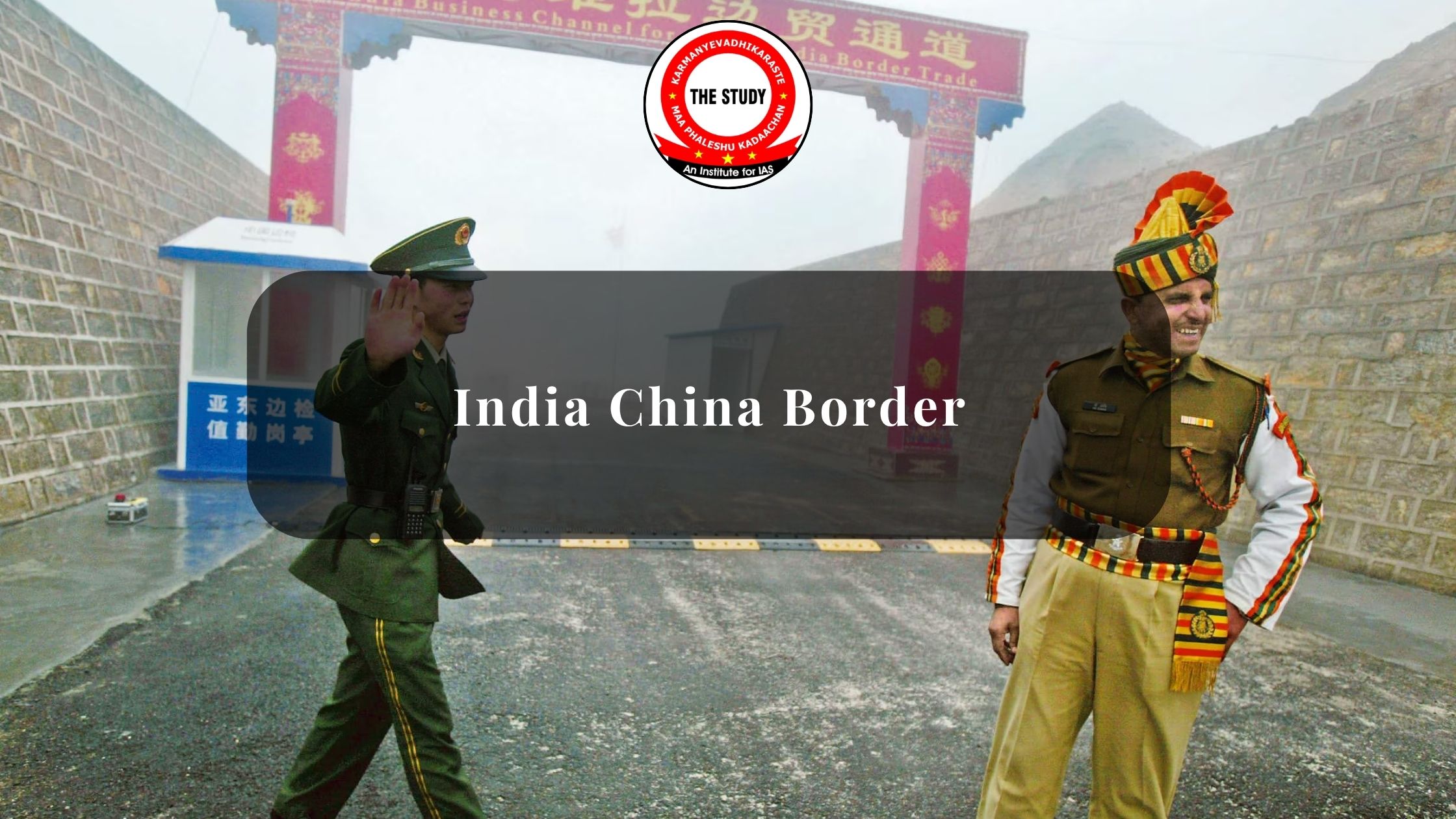
India–China Border Beyond: LAC, Disputes, Strategic Challenges & Way Forward
Introduction
The India–China border dispute is one of the most consequential territorial and strategic issues in Asia. It is not merely a question of disputed territory; it involves geography, national security, Tibet, water resources, infrastructure, trade, diplomacy and the wider balance of power in the Indo-Pacific.
India and China share a long, high-altitude frontier, but the two countries do not have a mutually agreed boundary. The Line of Actual Control (LAC) represents the line separating areas under the effective control of the two sides, but its alignment is not mutually accepted in several areas. The Government of India has explicitly noted that differing perceptions of the LAC have historically resulted in patrol confrontations and transgressions.
The problem became particularly serious after the 2020 eastern Ladakh crisis, when China undertook attempts to alter the status quo in the western sector, according to the Government of India. After prolonged diplomatic and military negotiations, India and China reached an agreement on 21 October 2024 regarding patrolling arrangements in Depsang and Demchok, which led to disengagement from the remaining friction points of 2020.
However, disengagement should not be confused with a final settlement of the boundary dispute. In August 2026, India again emphasized that peace and tranquillity along the border remain essential for the overall development of India–China relations, amid renewed tensions surrounding Arunachal Pradesh.
For UPSC and UPPSC aspirants, the India–China border must therefore be studied as a dynamic geopolitical issue, combining static geography with contemporary international relations and national security.
Understanding the India–China Border: From LAC to Strategic Competition
What is the India–China boundary dispute?
The India–China boundary dispute concerns competing territorial claims along three broad sectors:
- Western Sector: Ladakh and the Aksai Chin region
- Middle Sector: Himachal Pradesh and Uttarakhand
- Eastern Sector: Arunachal Pradesh and the adjoining Himalayan region
The western sector has been the most militarily sensitive in recent years. India claims Aksai Chin as part of Ladakh, while China administers the region and regards it as part of Xinjiang.
In the eastern sector, China claims large parts of Arunachal Pradesh, referring to it as “Zangnan”. India maintains that Arunachal Pradesh is an integral part of India. The dispute is therefore simultaneously territorial and strategic.
Why is the LAC different from an international border?
A common examination mistake is to treat the LAC as an internationally agreed boundary.
It is not.
The LAC is essentially the line separating the areas under the respective control of India and China. Both sides have differing perceptions of its alignment in certain stretches. This creates what is often described as “differing perceptions of the LAC”, contributing to patrolling confrontations.
The 1993 Agreement specifically recognized the need to maintain peace along the LAC while leaving the final boundary question unresolved. It also stated that references to the LAC would not prejudice either side's position on the boundary dispute.
How did the 2020 crisis change India–China border relations?
The 2020 crisis marked a major deterioration in bilateral relations.
The eastern Ladakh confrontation resulted in prolonged military deployments, infrastructure construction and negotiations at multiple levels. According to the Indian government, Chinese attempts to unilaterally alter the status quo from April–May 2020 seriously disturbed peace and tranquillity along the LAC.
The crisis also demonstrated that the earlier assumption that border agreements alone could guarantee stability was insufficient.
It pushed India towards:
- Greater border infrastructure development
- Enhanced surveillance
- Faster troop mobilisation
- Improved roads and bridges
- Greater strategic preparedness
- Stronger diplomatic coordination
What was the significance of the 2024 Depsang–Demchok agreement?
The 21 October 2024 agreement was an important development after years of military tension.
India and China agreed on patrolling arrangements in Depsang and Demchok. The Government of India subsequently stated that the agreement resulted in disengagement from all friction points associated with the 2020 crisis, while earlier disengagement arrangements continued to apply in relevant areas.
However, this should be interpreted carefully.
Disengagement ≠ de-escalation ≠ boundary settlement.
Disengagement removes troops from particular confrontation points. De-escalation involves reducing broader military tensions. A final boundary settlement would require agreement on the disputed boundary itself.
This distinction is extremely useful in a UPSC Mains answer.
What are the major challenges facing India along the China border?
India faces several interconnected challenges:
- Difficult Himalayan terrain
- China's superior infrastructure in some border areas
- Differing perceptions of the LAC
- Military asymmetry
- Rapid Chinese infrastructure construction
- Border villages and demographic concerns
- Strategic pressure in the Indian Ocean
- China's growing relations with India's neighbours
- Unresolved boundary claims in Arunachal Pradesh and Ladakh
Therefore, the solution cannot depend exclusively on military deployment. It requires a combination of infrastructure, diplomacy, intelligence, economic resilience and regional partnerships.
What is the Importance for UPPSC and Other Competitive Exams?
India–China relations are highly relevant for UPSC, UPPSC, SSC, CDS, CAPF and other competitive examinations.
For Prelims, focus on:
- LAC
- Aksai Chin
- Arunachal Pradesh
- Ladakh
- Border agreements
- Himalayan geography
- Important passes and rivers
- Tibet
- Depsang and Demchok
For Mains, connect the issue with:
GS-I: Himalayan geography and border regions
GS-II: India–China relations and diplomacy
GS-III: National security, border infrastructure and defence
Essay: Strategic autonomy, Asian geopolitics and peaceful coexistence
What are the Quick Facts for UPPSC Prelims?
- Western Sector: Ladakh/Aksai Chin
- Middle Sector: Himachal Pradesh and Uttarakhand
- Eastern Sector: Arunachal Pradesh
- LAC: Line separating areas under respective control; not a mutually agreed international boundary
- 1993: Peace and Tranquillity Agreement
- 1996: Military Confidence-Building Measures Agreement
- 2005: Political Parameters and Guiding Principles Agreement
- 2013: Border Defence Cooperation Agreement
- 2024: Patrolling agreement concerning Depsang and Demchok
What are the Previous Year Exam-Oriented Points?
Aspirants should remember these conceptual distinctions:
- LAC is not the same as the final international boundary.
- The boundary dispute is divided into western, middle and eastern sectors.
- Aksai Chin is central to the western-sector dispute.
- Arunachal Pradesh is central to the eastern-sector dispute.
- The 1993, 1996 and 2005 agreements created important confidence-building mechanisms.
- The 2020 crisis significantly altered the security environment.
- The 2024 Depsang–Demchok agreement addressed patrolling arrangements, not the final boundary dispute.
- Border peace remains an important condition for broader improvement in bilateral relations.
What should India do going forward?
A sustainable Indian strategy should combine deterrence with dialogue.
India needs to continue strengthening border infrastructure and surveillance while maintaining diplomatic and military communication mechanisms with China. At the same time, economic diversification, resilient supply chains, stronger partnerships with neighbouring countries and deeper engagement with the Indo-Pacific can reduce strategic vulnerabilities.
The objective should not be permanent confrontation. It should be to create conditions in which peace is preserved without compromising India's territorial integrity or strategic interests.
FAQs
1. What is the LAC?
The LAC is the line separating areas under Indian and Chinese control along their disputed frontier. Its alignment is not mutually accepted in several areas.
2. Which are the three sectors of the India–China border?
The western, middle and eastern sectors.
3. Why is Aksai Chin important?
Aksai Chin lies in the western sector and is strategically important because of its location and connectivity between China's Xinjiang and Tibet regions.
4. Why is Arunachal Pradesh important in India–China relations?
China claims large parts of Arunachal Pradesh, while India considers the state an integral part of its territory.
5. Did the 2024 agreement settle the India–China boundary dispute?
No. It concerned patrolling arrangements in Depsang and Demchok and facilitated disengagement; it did not constitute a final settlement of the boundary dispute.
6. What is the most important lesson for UPSC preparation?
Do not study India–China relations only as a current-affairs topic. Combine map-based geography, border agreements, 1962 war, LAC, Tibet, 2020 crisis, 2024 disengagement and contemporary diplomacy.
Final Verdict
The India–China border issue goes far beyond a territorial dispute. It represents a long-term test of India's ability to combine military preparedness, diplomatic engagement, infrastructure development and strategic autonomy.
For an aspirant, the best preparation strategy is to build the topic in layers: map → history → LAC → agreements → 2020 crisis → 2024 disengagement → current developments → strategic way forward. This converts a frequently changing current-affairs issue into a stable, answer-ready framework.
Most importantly, remember one distinction: the border dispute remains unresolved even when particular friction points are disengaged. India's long-term objective therefore has to be both peaceful border management and protection of sovereignty.
Subscribe to our Youtube Channel for more Valuable Content – TheStudyias
Download the App to Subscribe to our Courses – Thestudyias
The Source’s Authority and Ownership of the Article is Claimed By THE STUDY IAS BY MANIKANT SINGH
Comments (0)
Leave a Comment