Independence Day 2026
11 Aug 2026
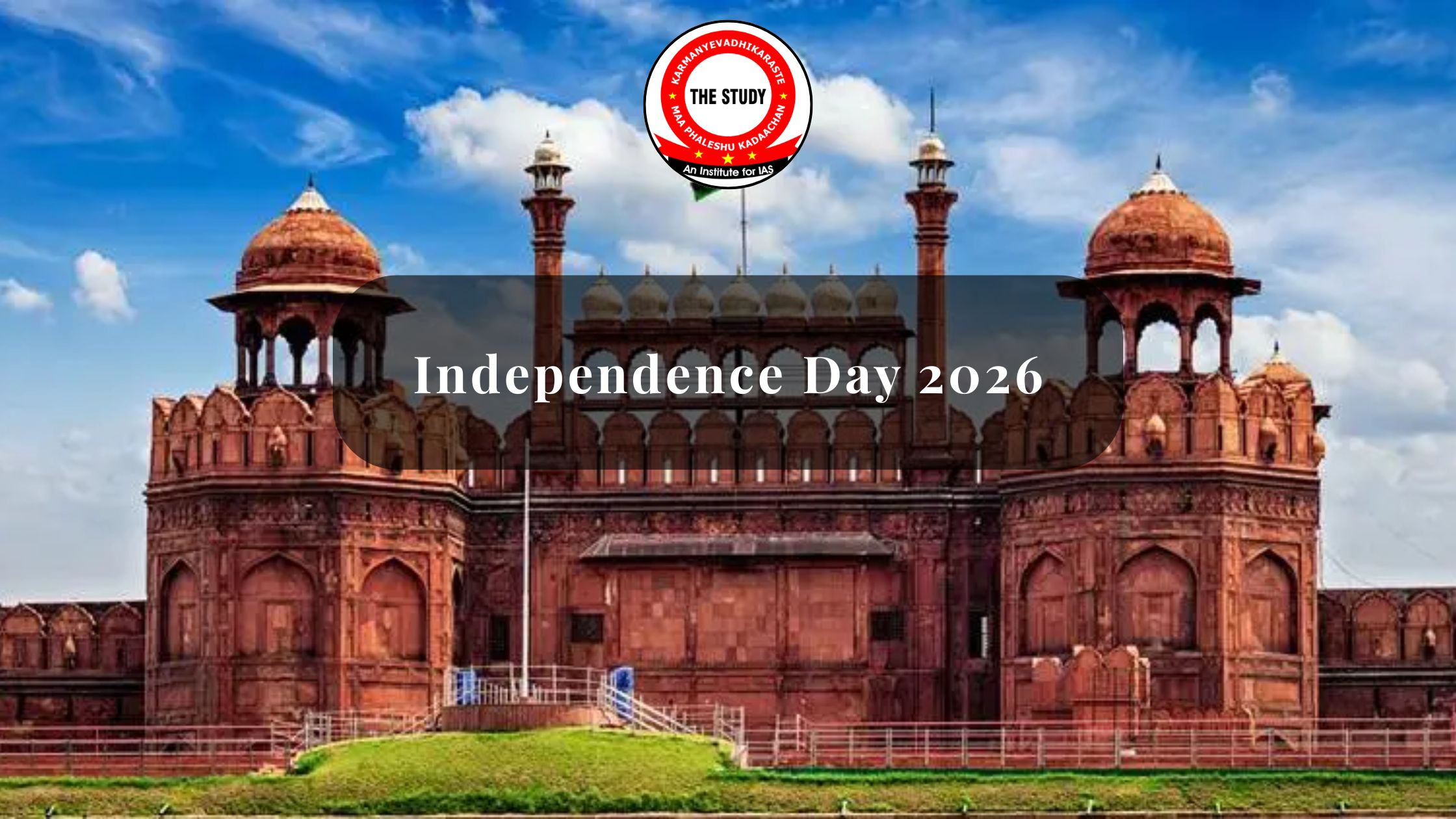
Independence Day 2026: Date, History, Significance, Celebrations and Important Facts
Independence Day 2026 will be celebrated across India on Saturday, August 15, 2026. The day commemorates India's independence from British colonial rule on August 15, 1947, and serves as a reminder of the sacrifices, struggles, hopes, and aspirations that shaped the country's freedom movement. The National Portal of India describes Independence Day as a reminder of a new beginning after more than two centuries of British colonial rule.
The year 2026 is particularly significant because it marks India's 80th Independence Day celebration. Counting August 15, 1947, as the first Independence Day, August 15, 2026, represents the 80th anniversary of independence. Across the country, the occasion will bring together government institutions, schools, colleges, communities, families, and citizens in celebrations centered on the National Flag, patriotism, freedom, unity, and India's continuing journey as an independent nation.
"Freedom is a precious inheritance. Let us honor it through responsible citizenship, respect for diversity, and service to our nation. Happy Independence Day!"
The best celebration is ultimately not the loudest one. It is the one that makes us think about what freedom means and what we can do with it.
Independence Day 2026 – Overview
Independence Day is one of India's most important national occasions. Unlike an ordinary public holiday, it carries a powerful historical meaning: it marks the moment when India became free from British rule and began its journey as an independent country. Every year, August 15 provides an opportunity to remember the freedom fighters who endured imprisonment, violence, sacrifice, exile, and hardship while working toward independence.
Independence Day 2026 Date and Day
Independence Day 2026 will be observed on Saturday, August 15, 2026. It will be India's 80th Independence Day. The central national celebration traditionally takes place at the historic Red Fort in New Delhi, where the Prime Minister unfurls the National Flag and addresses the nation. In the previous year, 2025, the government officially described August 15 as the 79th Independence Day and held the principal ceremony at the Red Fort.
For citizens, the day is observed through flag-hoisting ceremonies, patriotic programmes, cultural performances, speeches, competitions, and community activities. Schools and educational institutions often use the occasion to help younger generations understand the freedom struggle and the responsibilities associated with citizenship.
Why August 15 Is Celebrated
India became independent from British rule on August 15, 1947. The date therefore represents a historic turning point in the country's history. It was not simply a change in government; it marked the end of colonial sovereignty and the beginning of India's independent political journey.
The National Flag itself had been formally adopted in its present form by the Constituent Assembly on July 22, 1947, only a few weeks before independence. The flag subsequently became one of the most recognizable symbols of India's sovereignty and national identity.
History of Indian Independence Day
British Rule in India
The story behind Independence Day 2026 stretches back well before 1947. British political influence in India expanded over several centuries, particularly through the activities of the East India Company. Following the Revolt of 1857, authority was transferred from the Company to the British Crown, beginning a period commonly referred to as the British Raj.
During colonial rule, India experienced profound economic, political, social, and administrative changes. Railways, modern institutions, and new systems of administration developed alongside economic exploitation, political discrimination, and restrictions on Indian participation in governance. Over time, opposition to colonial rule grew into a broad national movement.
Growth of the Freedom Movement
Indian resistance to British rule took many forms. Political organizations, revolutionary groups, reformers, workers, farmers, students, writers, journalists, and ordinary citizens all contributed to the freedom struggle in different ways.
The formation of the Indian National Congress in 1885 provided an important political platform. Over subsequent decades, nationalist politics developed from petitions and constitutional demands toward mass movements seeking self-government and complete independence.
The freedom movement was never a single straight road. It contained different philosophies and strategies, including constitutional politics, revolutionary activity, non-violent civil disobedience, mass mobilization, and armed resistance during the Second World War.
Role of Mahatma Gandhi
Mahatma Gandhi became one of the most influential leaders of India's independence movement. His approach emphasized non-violence, civil disobedience, mass participation, and non-cooperation. Movements such as the Non-Cooperation Movement, Civil Disobedience Movement, and Quit India Movement brought millions of Indians into active political participation.
Gandhi's methods transformed the freedom struggle from an activity largely involving political leaders and educated groups into a mass movement. His emphasis on peaceful resistance became internationally influential and remains an important part of how India's independence movement is remembered.
The Road to Independence
The Second World War dramatically changed the political situation. Britain's economic and military difficulties, growing Indian demands for independence, the activities of nationalist leaders, and international changes all contributed to the weakening of British imperial control.
The Quit India Movement of 1942 represented one of the most significant mass challenges to British rule. Meanwhile, Subhas Chandra Bose and the Indian National Army pursued another strategy, seeking to challenge British rule through armed struggle with external support.
After the war, Britain's ability to maintain its empire weakened considerably. Political negotiations eventually resulted in the decision to transfer power.
Independence on August 15, 1947
At midnight between August 14 and August 15, 1947, India entered a new era. Jawaharlal Nehru delivered his famous "Tryst with Destiny" speech, marking the beginning of independent India.
However, independence came with the enormous human tragedy of Partition. British India was divided into India and Pakistan, triggering widespread communal violence and one of the largest mass migrations in modern history.
Therefore, Independence Day is both a celebration of freedom and a moment for remembering the immense human cost associated with the transition from colonial rule to independence.
Why Is Independence Day Celebrated on August 15?
The Indian Independence Act
The legal framework for the transfer of British power was provided by the Indian Independence Act 1947, passed by the British Parliament. The legislation created the independent Dominions of India and Pakistan and provided for the end of British sovereignty.
August 15 was selected as the date for the transfer of power. Consequently, the date became permanently associated with India's independence.
Transfer of Power
The transfer of power was an extraordinary historical moment. For the first time in roughly two centuries of expanding British political dominance, India had an independent government responsible for its own sovereign affairs.
The celebrations of 1947 were filled with both excitement and uncertainty. Millions of people looked toward the future with hope, even as Partition created displacement and violence.
Significance of the Date
Every August 15 since 1947 has therefore represented more than a historical anniversary. It asks each generation to consider what independence means in its own time.
For the generation that experienced colonialism, freedom meant sovereignty and self-government. For later generations, it has also come to represent democracy, constitutional rights, social progress, economic opportunity, national unity, and individual responsibility.
Independence Day 2026 Celebrations
The central Independence Day 2026 celebrations will traditionally revolve around the national ceremony in New Delhi. Specific details about the 2026 programme, including the official theme, invited guests, ceremonial schedule, and other arrangements, should be taken from official government announcements as they are released.
Red Fort Ceremony
The Red Fort has become inseparably associated with India's Independence Day celebrations. The Prime Minister traditionally addresses the nation from its ramparts after the National Flag is unfurled.
The setting is symbolic. The monument represents a major chapter of India's history, while the flag ceremony represents the sovereignty of the modern Indian state. In the previous year's official programme, the Prime Minister unfurled the National Flag from the Red Fort and delivered the customary address to the nation.
Flag Hoisting
The unfurling of the Indian National Flag is the emotional center of the national ceremony. It is accompanied by ceremonial honours and patriotic observances.
The Tricolour represents India's sovereignty and national identity. Citizens across the country also participate in local flag-hoisting programmes, transforming the national celebration into a community experience.
Prime Minister's Address
The Prime Minister's Independence Day speech traditionally reviews India's achievements and challenges while presenting a vision for the future. It may address areas such as economic development, national security, education, infrastructure, technology, social welfare, governance, and India's international role.
For students and competitive-exam aspirants, the speech can also be useful because it often contains references to major government initiatives, national priorities, and contemporary policy issues.
Cultural and Patriotic Events
Independence Day celebrations extend far beyond Delhi. Schools, colleges, government offices, residential communities, cultural organizations, and local administrations commonly organize cultural programmes.
Typical activities include patriotic songs, dances, plays, speeches, essay competitions, quizzes, drawing competitions, debates, and presentations about freedom fighters. These events give young people a chance to connect historical events with their own lives.
Har Ghar Tiranga and Public Participation
Public participation has increasingly become an important part of national celebrations. Campaigns encouraging citizens to display the National Flag have helped bring Independence Day into homes and communities.
However, public participation should always go hand in hand with respect for the National Flag. Citizens should follow applicable flag etiquette and avoid treating the flag as a disposable decoration.
Importance of the Indian National Flag
History of the Tricolour
The Indian National Flag was adopted in its present form by the Constituent Assembly on July 22, 1947. It was therefore already the national symbol when India became independent less than a month later.
The flag consists of three horizontal bands—saffron, white, and green—with a navy-blue Ashoka Chakra at the center. The official National Portal of India notes that the flag's width-to-length ratio is 2:3 and that the Ashoka Chakra has 24 spokes.
Meaning of Saffron, White and Green
The three colors of the Tricolour have acquired deep symbolic associations. Saffron is commonly associated with courage and sacrifice, white with peace and truth, and green with prosperity and the fertility of the land.
These meanings help explain why the flag is much more than a piece of colored fabric. It represents the collective identity of a country whose people speak different languages, practice different religions, follow diverse traditions, and inhabit widely different landscapes.
Significance of the Ashoka Chakra
The navy-blue Ashoka Chakra at the center of the flag is based on the Dharma Chakra represented on the Lion Capital of Ashoka at Sarnath. It contains 24 spokes.
The wheel conveys ideas of movement and progress. A nation, like a wheel, cannot remain healthy if it stops moving. The symbol therefore fits naturally with the idea of an independent India continuously moving toward greater justice, development, opportunity, and social progress.
Flag Etiquette
Celebrating Independence Day should never mean disrespecting the National Flag. Citizens should handle and display the Tricolour appropriately and follow the applicable rules governing its use.
Using the flag responsibly is a simple but meaningful way of demonstrating that patriotism is not merely about displaying a symbol; it is also about respecting what that symbol represents.
Freedom Fighters and Their Contribution
Mahatma Gandhi
Gandhi's contribution to the independence movement is closely associated with non-violent mass mobilization. His leadership helped bring ordinary citizens into campaigns against colonial rule and gave the freedom movement a powerful moral and political vocabulary.
His ideas about Satyagraha, non-violence, self-reliance, and civil resistance influenced not only India but freedom and civil-rights movements around the world.
Subhas Chandra Bose
Subhas Chandra Bose represented a dramatically different approach. He believed that India's independence required a more forceful confrontation with British rule and became the leader of the Indian National Army (INA).
His famous appeal for sacrifice and his leadership of the INA made him one of the most prominent figures associated with India's struggle for freedom. His legacy continues to inspire discussions about nationalism, military resistance, and political leadership.
Bhagat Singh
Bhagat Singh became an iconic revolutionary figure. His writings, political ideas, courage, and willingness to sacrifice his life made him a powerful symbol for generations of Indians.
Although his methods differed sharply from Gandhi's philosophy of non-violence, his commitment to ending colonial rule made him an important part of the broader freedom struggle.
Sardar Vallabhbhai Patel
Sardar Vallabhbhai Patel played an important role in the nationalist movement and later in integrating hundreds of princely states into the Indian Union after independence.
His organizational skills and political leadership earned him the title "Iron Man of India." His contribution demonstrates that the work associated with independence did not end when the British left; building a united country was another enormous task.
Jawaharlal Nehru
Jawaharlal Nehru was a major Congress leader and became India's first Prime Minister after independence. His midnight speech on August 14–15, 1947, remains one of the most famous moments associated with the birth of independent India.
Nehru's leadership helped shape India's early institutions, foreign policy, economic planning, and democratic framework.
Contributions of Women Freedom Fighters
Women were indispensable to India's freedom movement. Figures such as Sarojini Naidu, Aruna Asaf Ali, Kasturba Gandhi, Kamaladevi Chattopadhyay, Sucheta Kriplani, and Rani Gaidinliu, among many others, contributed through political organizing, civil disobedience, underground activity, social mobilization, and public leadership.
Remembering Independence Day properly therefore requires more than listing a handful of famous male leaders. India's freedom struggle involved people from many regions, communities, social backgrounds, and generations.
Independence Day 2026 Theme and Current Context
What Is the Official Theme?
As of the latest official information available, a specific official theme for India's Independence Day 2026 should not be treated as confirmed unless announced by the Government of India. This distinction matters because Independence Day themes and campaign slogans can change from year to year.
For example, the government officially described the 2025 Independence Day theme as "Naya Bharat", while the 2024 celebrations used "Viksit Bharat @ 2047."
Therefore, websites should avoid presenting an unverified 2026 slogan as an official theme. For accurate information, readers should check government announcements as August 15 approaches.
Why Themes Matter
National themes help connect a historical celebration with contemporary national priorities. They give speeches, cultural events, educational programmes, and public campaigns a common direction.
The theme can also tell us something about how a country wants to think about its future. Independence is not only about remembering 1947; it is also about asking what kind of society citizens want to build today.
Viksit Bharat and National Aspirations
The concept of Viksit Bharat @ 2047 has been used by the government as a long-term national development vision. The 2024 Independence Day celebrations explicitly connected their theme with the objective of transforming India into a developed country by 2047.
That broader vision provides an interesting context for Independence Day 2026. Nearly eight decades after independence, national conversations increasingly focus on development, innovation, infrastructure, human capital, technology, sustainability, and India's position in the world.
How Schools and Colleges Celebrate Independence Day
Flag Hoisting
Educational institutions commonly begin their Independence Day programmes with flag hoisting, the national anthem, and ceremonial activities.
The ceremony gives students a direct connection to the national occasion. Instead of simply reading about independence in a textbook, they participate in an event that brings history into the present.
Speeches and Essay Competitions
Students often deliver speeches or write essays on topics such as Indian independence, freedom fighters, patriotism, democracy, national unity, and India's future.
These activities can be particularly valuable because they encourage students to think beyond memorized historical facts. What does freedom mean today? What responsibilities accompany rights? How can young citizens contribute to society? These are questions worth exploring.
Cultural Programmes
Patriotic songs, dances, skits, dramas, and historical presentations are common parts of school celebrations. A well-designed programme can introduce students to freedom fighters and historical events that may not receive extensive classroom discussion.
Cultural activities also highlight India's diversity. Different regional traditions can appear on the same stage, reinforcing the idea that national unity does not require cultural uniformity.
Quiz and Debate Activities
Independence Day quizzes can cover the freedom struggle, constitutional history, national symbols, important personalities, and major events between the Revolt of 1857 and 1947.
Debates can go further by asking questions about democracy, citizenship, economic development, social equality, and the responsibilities of an independent nation. Such discussions make Independence Day relevant rather than purely ceremonial.
How to Celebrate Independence Day 2026 Responsibly
Respect the National Flag
The easiest way to demonstrate patriotism is to respect national symbols. If you display the Tricolour, make sure it is treated properly and not discarded carelessly afterward.
A flag should represent dignity, not waste. This becomes especially important when large quantities of disposable decorations are used during public celebrations.
Support Local Communities
Independence Day can also become an opportunity for community service. Citizens can support local cleanliness drives, educational initiatives, blood donation programmes, environmental activities, or community welfare projects where appropriate.
Patriotism becomes more meaningful when it moves beyond words. A nation is ultimately built through the daily actions of its citizens.
Avoid Plastic Waste
Celebrations can generate significant waste through plastic flags, banners, packaging, and disposable decorations. Choosing reusable decorations and environmentally responsible alternatives can make celebrations more sustainable.
A cleaner neighborhood is itself a small contribution to the country. After all, independence is meaningful only when citizens take responsibility for the society they share.
Participate in Civic Activities
Citizens can observe Independence Day by learning about India's Constitution, understanding their rights and duties, visiting historical sites, reading about freedom fighters, or participating in community events.
You do not need to attend a massive ceremony to celebrate meaningfully. Sometimes reading a historical account with a child, helping a student understand the freedom movement, or volunteering locally can make the day more personal.
Conclusion
Independence Day 2026 will be observed on August 15, 2026, marking India's 80th Independence Day. The occasion commemorates the country's freedom from British rule in 1947 and provides an opportunity to remember the countless people who contributed to the freedom movement. From Gandhi's mass movements and Bhagat Singh's revolutionary legacy to Subhas Chandra Bose's leadership of the INA and the political work of countless less-famous citizens, India's independence was the result of a long and complex struggle.
The day also invites us to look beyond history. Nearly eight decades after independence, India continues to evolve through democratic institutions, technological progress, economic development, cultural diversity, and civic participation. The Tricolour flying over the Red Fort is therefore both a reminder of where the country came from and a symbol of where its citizens hope to go.
As Independence Day 2026 approaches, the most meaningful celebration is one that combines patriotism with responsibility. We can honor the past by learning its history, respect the present by participating constructively in society, and approach the future with the same courage and determination that earlier generations brought to India's freedom struggle.
Frequently Asked Questions About Independence Day 2026
1. When is Independence Day 2026 in India?
Independence Day 2026 will be celebrated on Saturday, August 15, 2026. It will mark the 80th Independence Day of India, commemorating independence from British rule on August 15, 1947.
2. Why is Independence Day celebrated on August 15?
India became independent from British rule on August 15, 1947 following the transfer of power under the Indian Independence Act 1947. Since then, August 15 has been observed annually as India's Independence Day.
3. Where is the main Independence Day celebration held?
The principal national Independence Day ceremony is traditionally held at the Red Fort in New Delhi. The Prime Minister unfurls the National Flag and addresses the nation from the Red Fort's ramparts. The 2025 official ceremony followed this tradition.
4. Is 2026 India's 80th Independence Day?
Yes. India achieved independence on August 15, 1947. Counting the 1947 celebration as the first, August 15, 2026, is the 80th Independence Day.
5. When was the Indian National Flag adopted?
The Indian National Flag was adopted in its present form by the Constituent Assembly on July 22, 1947, a few weeks before India became independent. The flag consists of saffron, white, and green horizontal bands with a navy-blue Ashoka Chakra containing 24 spokes.
Subscribe to our Youtube Channel for more Valuable Content – TheStudyias
Download the App to Subscribe to our Courses – Thestudyias
The Source’s Authority and Ownership of the Article is Claimed By THE STUDY IAS BY MANIKANT SINGH