FOPL Labels : Food Warning Labels
25 May 2026
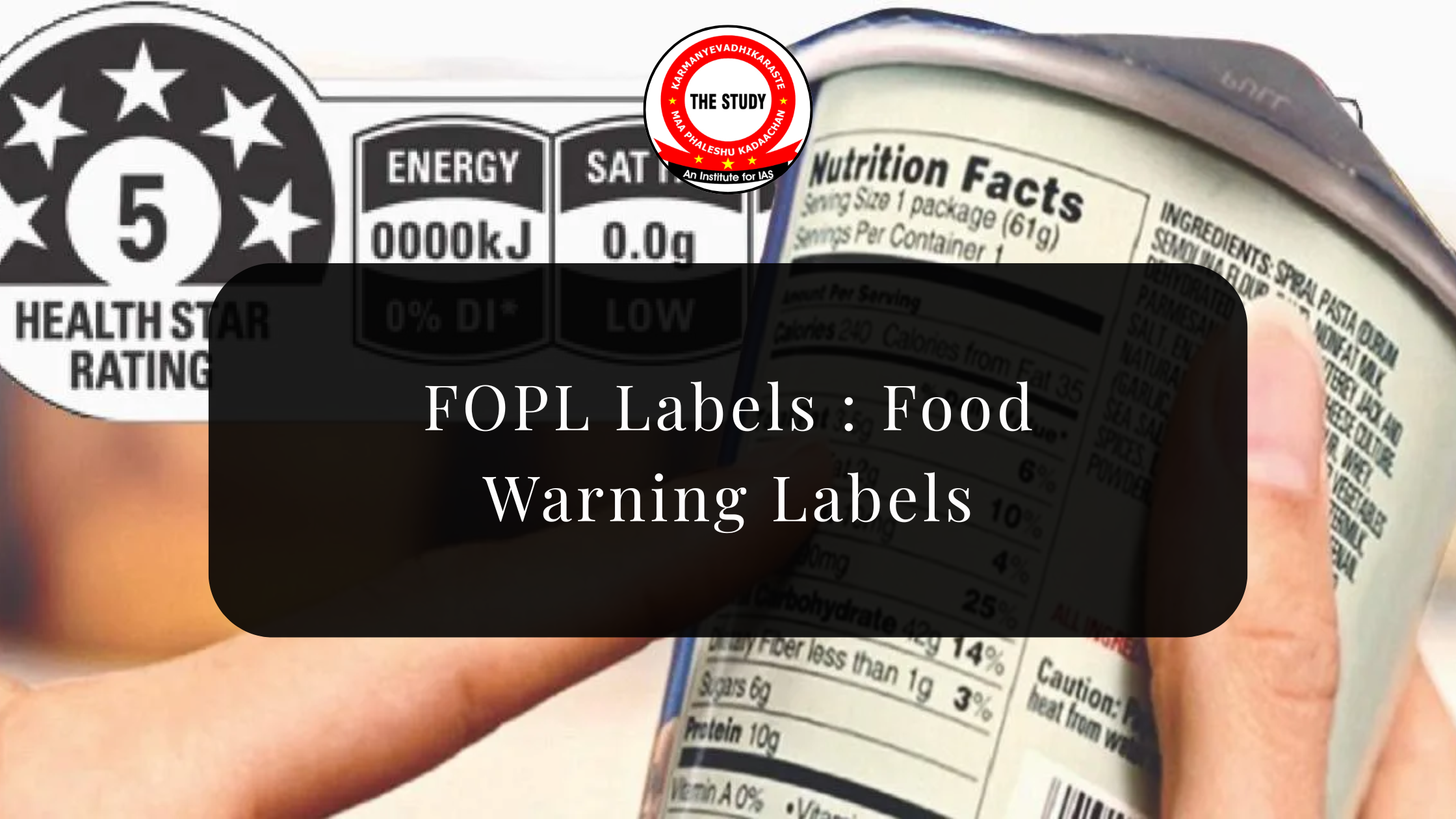
India’s Food Warning Labels (FOPL Labels): Why Front-of-Pack Labels Matter for Public Health
What Are FOPL Labels?
Front-of-Package Warning Labels (FOPL Labels) are warning symbols, alerts, or colour-coded indicators displayed prominently on the front side of packaged food products. These labels are designed to help consumers quickly identify foods that are high in sugar, salt (sodium), or saturated fats.
Unlike traditional nutrition information printed in small fonts on the back of food packets, FOPL labels provide instant clarity. Their primary objective is to make nutritional information simple enough for every consumer, including children to understand.
Countries across Latin America, Europe, and Asia already use front-of-package warning systems. India is now moving toward implementing mandatory FOPL labels after the Supreme Court directed the Food Safety and Standards Authority of India (FSSAI) to prioritize public health and consumer awareness.
Why Is India Introducing FOPL Labels?
Rising Consumption of Ultra-Processed Foods (UPFs)
India is witnessing a rapid rise in the consumption of ultra-processed foods (UPFs). These include:
- Chips
- Soft drinks
- Biscuits
- Packaged namkeens
- Ice creams
- Breakfast cereals
- Flavoured yoghurts
Experts warn that traditional Indian diets are increasingly being replaced by processed packaged foods loaded with unhealthy ingredients.
Growing Burden of Lifestyle Diseases
High consumption of sugar, salt, and saturated fats contributes to:
- Obesity
- Diabetes
- Hypertension
- Heart diseases
- Fatty liver disease
- Childhood obesity
Public health experts believe that clear warning labels can reduce unhealthy consumption patterns and improve dietary choices.
Supreme Court’s Intervention
The Supreme Court of India emphasized that warning labels are essential to protect citizens’ Right to Health under Article 21 of the Constitution.
The Court directed FSSAI to implement stronger front-of-package food labelling standards for consumer safety.
How Do FOPL Labels Work?
Simple Visual Warnings
FOPL labels are intentionally designed to be simple and visible. Common formats globally include:
Warning Symbols
Black triangles or stop-sign style labels warning consumers about high sugar, fat, or salt content.
Traffic Light System
Foods are categorized using:
- Red → High risk
- Yellow → Moderate
- Green → Healthy choice
Text-Based Warnings
Statements such as:
- “High in Sugar”
- “High in Sodium”
- “High in Saturated Fat”
Which Foods May Require FOPL Labels in India?
The proposed rules may apply to products such as:
- Carbonated beverages
- Energy drinks
- Instant noodles
- Packaged snacks
- Frozen foods
- Processed meats
- Sweetened dairy products
- Bakery items
- Sugary breakfast cereals
These products are often classified as ultra-processed foods.
Scientific Evidence Supporting FOPL Labels
Studies Conducted in India
A 2022 randomized study conducted across six Indian states found that warning labels were the most effective system for helping consumers identify unhealthy foods.
Triangle warning labels showing:
- High sugar
- High salt
- High fat
performed better than complex nutritional ratings.
Global Evidence
Countries like Chile, Mexico, and Peru have successfully used warning labels to:
- Reduce sugary drink consumption
- Improve consumer awareness
- Encourage healthier food manufacturing practices
Research also shows that front-of-package labels especially help:
- Children
- Adolescents
- Low-literacy populations
Why Are Health Experts Opposing Star Ratings?
Indian Nutrition Rating (INR) Debate
One alternative being discussed is the Indian Nutrition Rating (INR), which gives foods star ratings.
Health experts oppose this model because it can confuse consumers.
For example:
A product high in sugar may still receive a moderate star rating due to added vitamins or protein content.
Problems With Star-Based Systems
- Difficult to interpret
- Can mislead consumers
- Mixes healthy and unhealthy attributes
- Weakens warning impact
Experts argue that direct warning labels are clearer and scientifically more effective.
Economic Survey 2025-26 on FOPL Labels
India’s Economic Survey 2025-26 strongly recommended introducing front-of-package warning labels.
The Survey highlighted:
- Increasing obesity rates
- Rising healthcare burden
- High consumption of processed foods among youth
It recommended consumer-focused nutrition policies to reduce future public health costs.
Challenges in Implementing FOPL Labels in India
Resistance From Food Industry
Food companies fear:
- Reduced sales
- Brand image damage
- Consumer backlash
Many processed food manufacturers prefer softer rating systems instead of warning labels.
Consumer Awareness Gap
India still faces nutritional literacy challenges. Public education campaigns will be essential for effective implementation.
Regulatory Standardization
FSSAI will need to define:
- Sugar thresholds
- Sodium limits
- Fat benchmarks
- Label design standards
Uniform implementation across brands remains a major challenge.
Impact of FOPL Labels on Indian Consumers
Better Consumer Decision-Making
Consumers can instantly identify unhealthy products while shopping.
Protection of Children
Children are highly vulnerable to junk food marketing. Warning labels can discourage excessive consumption.
Encouraging Healthier Food Industry Practices
Food companies may reduce sugar, salt, and fat content to avoid warning labels.
This has already happened in countries where strict food labelling laws were introduced.
Key Takeaways
FOPL Labels Aim to Improve Public Health
India plans to introduce warning labels on packaged foods high in sugar, salt, and saturated fats.
Supreme Court Supports Stronger Food Warnings
The Court considers food warning labels essential for protecting citizens’ health rights.
Ultra-Processed Foods Are a Growing Concern
Experts warn that processed foods are replacing traditional diets and increasing lifestyle diseases.
Warning Labels Are More Effective Than Star Ratings
Research shows simple warning labels help consumers make healthier choices more effectively.
FSSAI Will Play a Central Role
India’s food regulator will determine the implementation framework and standards.
Conclusion
Front-of-Package Warning Labels (FOPL labels) represent an important public health reform in India. As lifestyle diseases rise rapidly due to increasing consumption of ultra-processed foods, clear nutritional warnings can empower consumers to make informed food choices.
Scientific studies, global experiences, and policy recommendations increasingly support warning-based systems over complex nutritional ratings. While implementation challenges remain, strong FOPL regulations could become a major step toward improving India’s long-term public health outcomes.
FAQs on FOPL Labels
What are FOPL labels?
FOPL labels are front-of-package warning labels placed on packaged foods to indicate high levels of sugar, salt, or saturated fats.
Why are FOPL labels important?
They help consumers quickly identify unhealthy foods and make informed dietary choices.
Which authority will implement FOPL labels in India?
The Food Safety and Standards Authority of India (FSSAI) will regulate and implement the system.
Which foods may carry warning labels?
Products like chips, soft drinks, packaged snacks, sugary cereals, and processed foods may require warning labels.
Why are health experts against star ratings?
Experts believe star ratings can confuse consumers because unhealthy foods may still receive moderate scores.
How do FOPL labels help children?
Warning labels discourage excessive junk food consumption and improve awareness among children and parents.
Related posts :
- Majoritarianism vs Constitutionalism
- India-Bangladesh Ties
- Nordic Countries and India
- Tackling Ocean Plastic Pollution
- India-Bhutan Ties
- India-UAE Ties
- India-Netherlands Ties
- Captagon: The “Jihadi Drug”
- Bioenergy Systems
- Transforming the Brahmaputra
- India–Africa Forum Summit
- India–US Defence Ties
Subscribe to our YouTube Channel for more Valuable Content – TheStudyias
Download the App to Subscribe to our Courses –Thestudyias
The Source’s Authority and Ownership of the Article is Claimed By THE STUDY IAS BY MANIKANT SINGH
Comments (0)
Leave a Comment