Data Centres
21 May 2026
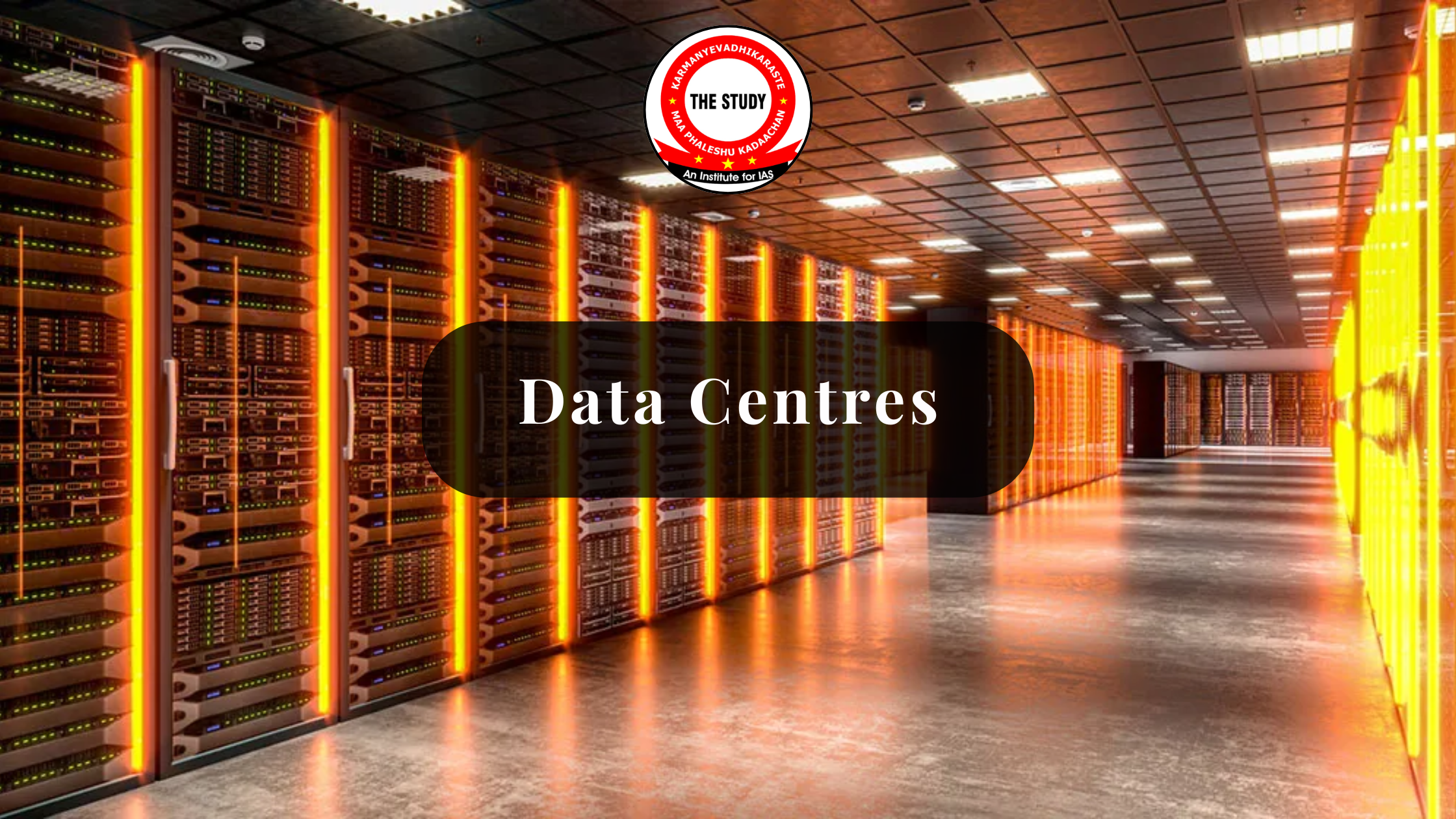
Data Centres: Rising Digital Infrastructure and Environmental Concerns
Introduction: Context Behind the Growing Debate on Data Centres
Researchers at Arizona State University recently reported that waste heat generated by data centres can raise temperatures in surrounding downwind neighbourhoods by as much as 4 degrees Fahrenheit. The finding has intensified global discussions regarding the environmental and infrastructural impact of rapidly expanding digital infrastructure.
As artificial intelligence, cloud computing, digital payments, streaming platforms, and data-driven governance expand worldwide, data centres have become the backbone of the modern digital economy. However, their growing scale has also triggered concerns related to energy consumption, water usage, carbon emissions, e-waste generation, land pressure, and cybersecurity vulnerabilities.
For UPSC aspirants, the issue is important from the perspective of Environment, Science & Technology, Infrastructure, Cybersecurity, Climate Change, and Sustainable Development.
What are Data Centres?
Meaning of Data Centres
Data centres are specialised facilities that store, process, manage, and distribute digital data and computing services.
They support:
- Cloud computing
- Artificial Intelligence (AI)
- Digital banking
- E-commerce
- Government digital services
- Social media platforms
- Online streaming and gaming
Components of a Data Centre
Core Infrastructure
- Servers
- Networking systems
- Storage systems
- Cooling infrastructure
- Backup power systems
Modern hyperscale data centres may contain hundreds of thousands of servers operating continuously.
Why are Data Centres Expanding Rapidly?
Growth of Artificial Intelligence
AI applications require enormous computational power and storage capacity.
AI-Driven Demand
- Large Language Models (LLMs)
- Machine learning systems
- Real-time analytics
- Cloud AI services
The expansion of AI has sharply increased the demand for high-performance data centres globally.
Digital Economy Expansion
Rapid digitalisation has accelerated demand for:
- Online services
- Digital payments
- Video streaming
- Remote work infrastructure
- E-governance systems
Countries increasingly view data centres as strategic infrastructure for economic growth and digital sovereignty.
Major Concerns Associated with Data Centres
Excessive Water Usage
Cooling Requirements
Data centres generate enormous amounts of heat, requiring continuous cooling to maintain server performance.
Water Usage Effectiveness (WUE)
The average data centre has a Water Usage Effectiveness (WUE) of approximately: 1.8 litres per 1 kWh
In several regions, data centres consume substantial portions of local potable water supplies.
Environmental Impacts
Key Concerns
- Groundwater depletion
- Competition with local communities
- Increased water stress in drought-prone regions
- Reduced agricultural water availability
In some regions, data centres reportedly consume up to 57% of potable cooling water, intensifying local water insecurity.
Carbon Emissions and Climate Impact
Rising Carbon Footprint
Data centres rely heavily on electricity, much of which still comes from fossil fuels.
Projected Emissions
By 2030, AI-driven data centres could emit: million metric tons of CO_2 annually
This is comparable to adding millions of vehicles to roads globally.
Climate Change Implications
Major Issues
- Increased greenhouse gas emissions
- Higher dependence on coal-based electricity
- Rising urban heat effects
- Challenges to net-zero commitments
The environmental cost of digital expansion is becoming a major sustainability concern.
High Energy Consumption
Massive Electricity Demand
According to the International Energy Agency (IEA), global data centres consumed approximately: 415 TWh in 2024
This accounted for nearly: 1.5% of global electricity consumption
Future Projections
By 2030, consumption could rise sharply due to AI expansion: 945 TWh by 2030
Impacts on Power Systems
Key Challenges
- Pressure on electricity grids
- Higher industrial electricity costs
- Increased residential tariffs
- Greater dependence on thermal power generation
This creates significant challenges for energy security and sustainability.
E-Waste and Hardware Lifecycle Problems
Rapid Server Replacement Cycles
Servers and hardware components are frequently replaced every 3–5 years to maintain efficiency and performance.
Growing E-Waste Crisis
Globally, electronic waste generation exceeds:
50 million metric tons annually50\text{ million metric tons annually}50 million metric tons annually
Less than: 20% formally recycled
Environmental Risks
Toxic Components
- Lead
- Mercury
- Cadmium
- Lithium-based battery waste
Improper disposal contaminates soil, water bodies, and ecosystems.
Infrastructure and Land Pressure
Demand for Large Land Parcels
Modern hyperscale data centres require:
- Vast physical infrastructure
- Continuous electricity supply
- Water access
- High-speed connectivity
Ecological and Urban Concerns
Major Problems
- Deforestation
- Urban sprawl
- Land-use conflicts
- Increased transmission infrastructure demand
Large projects can significantly alter local ecological landscapes.
Heat Pollution and Urban Warming
Waste Heat Generation
Data centres continuously release waste heat into surrounding environments. The recent Arizona State University study highlighted measurable warming effects in nearby neighbourhoods.
Consequences
Environmental Effects
- Urban heat island intensification
- Increased cooling demand in cities
- Reduced local air quality
- Heat stress for surrounding populations
This adds another layer to climate adaptation challenges.
Cybersecurity Risks
Strategic Importance of Data Centres
Data centres store highly sensitive:
- Personal data
- Financial records
- Government information
- Military and strategic communications
Rising Cyber Threats
As cloud computing and AI systems expand, data centres increasingly become targets for:
- Cyberattacks
- Data theft
- Ransomware
- State-sponsored hacking
National Security Concerns
Key Risks
- Data sovereignty issues
- Vulnerability of critical infrastructure
- Cross-border data access concerns
- Strategic cyber warfare threats
Data centres are therefore becoming central to both economic and national security discussions.
India’s Data Centre Expansion
Growing Indian Digital Economy
India is witnessing rapid growth in:
- Cloud infrastructure
- AI services
- Fintech
- Digital governance platforms
Government initiatives such as:
- Digital India
- Data localisation policies
- Semiconductor missions
are driving major investments into the data centre sector.
Emerging Challenges for India
Key Concerns
- Water stress in urban centres
- Dependence on coal-based electricity
- Need for renewable-powered infrastructure
- Data protection and cybersecurity preparedness
Balancing digital growth with sustainability will be a major policy challenge.
Sustainable Solutions for Data Centres
Renewable Energy Integration
Green Data Centres
Companies are increasingly shifting toward:
- Solar power
- Wind energy
- Battery storage systems
This can reduce carbon intensity significantly.
Efficient Cooling Technologies
Alternative Cooling Systems
Emerging Technologies
- Liquid cooling
- Air-side cooling
- Immersion cooling
- Waste heat reuse systems
These technologies reduce water and energy consumption.
Circular Economy and E-Waste Recycling
Sustainable Hardware Management
Improved recycling systems can:
- Recover critical minerals
- Reduce toxic pollution
- Extend hardware lifecycle
Formal e-waste management is essential for sustainable digital infrastructure.
Strong Cybersecurity Frameworks
Securing Critical Infrastructure
Governments and companies need:
- Advanced encryption systems
- AI-driven threat monitoring
- Cyber resilience planning
- Data protection regulations
Cybersecurity must evolve alongside digital infrastructure expansion.
Key Takeaways
Important Points for UPSC Preparation
- Data centres are critical digital infrastructure facilities.
- AI expansion is sharply increasing energy demand.
- Data centres consume massive electricity and water resources.
- Waste heat contributes to urban warming.
- E-waste management remains a major challenge.
- Cybersecurity risks are increasing with cloud infrastructure growth.
- Sustainable and renewable-powered data centres are becoming essential.
Conclusion
Data centres have become indispensable pillars of the modern digital economy, powering everything from artificial intelligence and digital payments to governance systems and global communication networks. However, their rapid expansion is creating significant environmental, infrastructural, and cybersecurity challenges.
The future of digital infrastructure will depend on balancing technological growth with sustainability. Policymakers must therefore focus on renewable energy integration, efficient cooling technologies, e-waste management, and stronger cybersecurity frameworks to ensure that digital transformation does not come at the cost of ecological and social stability.
For countries like India, which are rapidly digitising their economies, sustainable data centre development will be critical to achieving both technological leadership and climate commitments.
FAQs
What is a data centre?
A data centre is a facility that stores, processes, and manages digital data and computing services using servers and networking infrastructure.
Why do data centres consume large amounts of water?
Data centres require extensive cooling systems to prevent servers from overheating, leading to high water consumption.
How do data centres contribute to climate change?
They consume enormous electricity, often generated from fossil fuels, leading to significant carbon emissions and heat pollution.
Why are data centres important for cybersecurity?
They store critical personal, financial, and government data, making them major targets for cyberattacks and data breaches.
What are green data centres?
Green data centres use renewable energy, efficient cooling systems, and sustainable technologies to reduce environmental impact.
Related posts :
- Crowded Indian Prisons
- Integrated Theatre Commands (ITCs)
- India–Vietnam Relations
- Sustainable Urbanisation
- Governor’s Role in Government Formation
- UPSC Prelims Exam Day Instructions 2026
- UPSC Prelims Admit Card 2026
- VB-GRAM G Act 2025
- China Decree 834
- Public Office Appointments
- NEET-UG Paper Leak
- Presidential Impeachment
- Majoritarianism vs Constitutionalism
- India-Bangladesh Ties
- Nordic Countries and India
- Tackling Ocean Plastic Pollution
- India-Bhutan Ties
- India-UAE Ties
- India-Netherlands Ties
- Captagon: The “Jihadi Drug”
- Bioenergy Systems
- Transforming the Brahmaputra
- India–Africa Forum Summit
- India–US Defence Ties
Subscribe to our YouTube Channel for more Valuable Content – TheStudyias
Download the App to Subscribe to our Courses –Thestudyias
The Source’s Authority and Ownership of the Article is Claimed By THE STUDY IAS BY MANIKANT SINGH
Comments (0)
Leave a Comment